I never thought this would actually work. Gamjatang takes a long time. You are supposed to simmer pork spine bones for hours until everything breaks down and the broth turns milky with collagen. So when I tried throwing this together in 15 minutes with beef slices and store-bought broth, I was not expecting much.
But it works. And that surprised me more than anything.
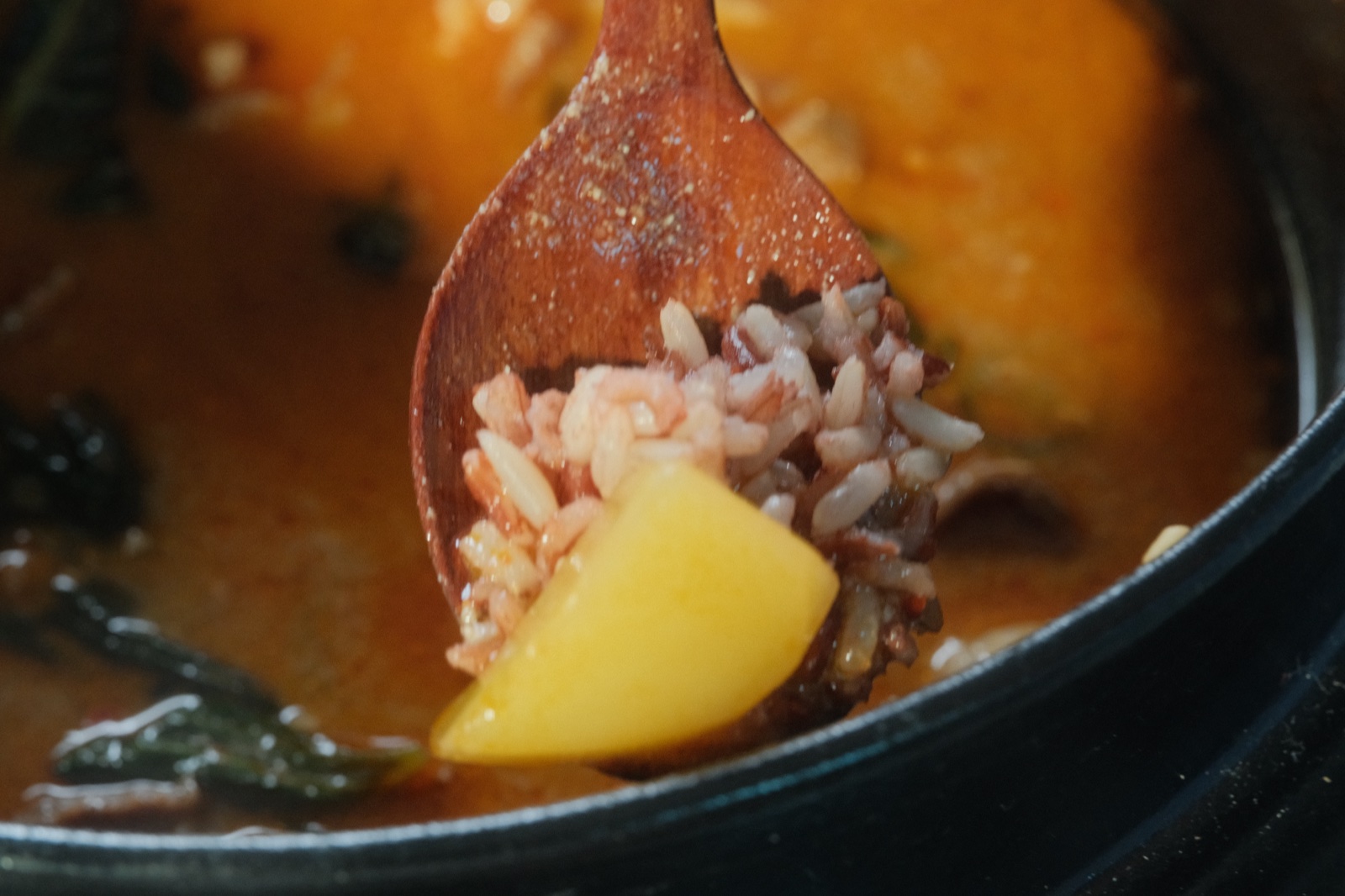
The reason it works is that gamjatang’s signature flavour does not actually come from the bones. It comes from two ingredients most people outside Korea have never cooked with: perilla seed powder and doenjang. That combination of nutty, earthy, and deeply fermented is what separates gamjatang from every other Korean stew. And those two ingredients do not need hours to develop. They hit the broth immediately.
If you have been craving gamjatang in Singapore but do not want to deal with pork spine bones or a three-hour cook, this shortcut gets you remarkably close to the real thing on a weeknight.
What Stays the Same (and What Changes)
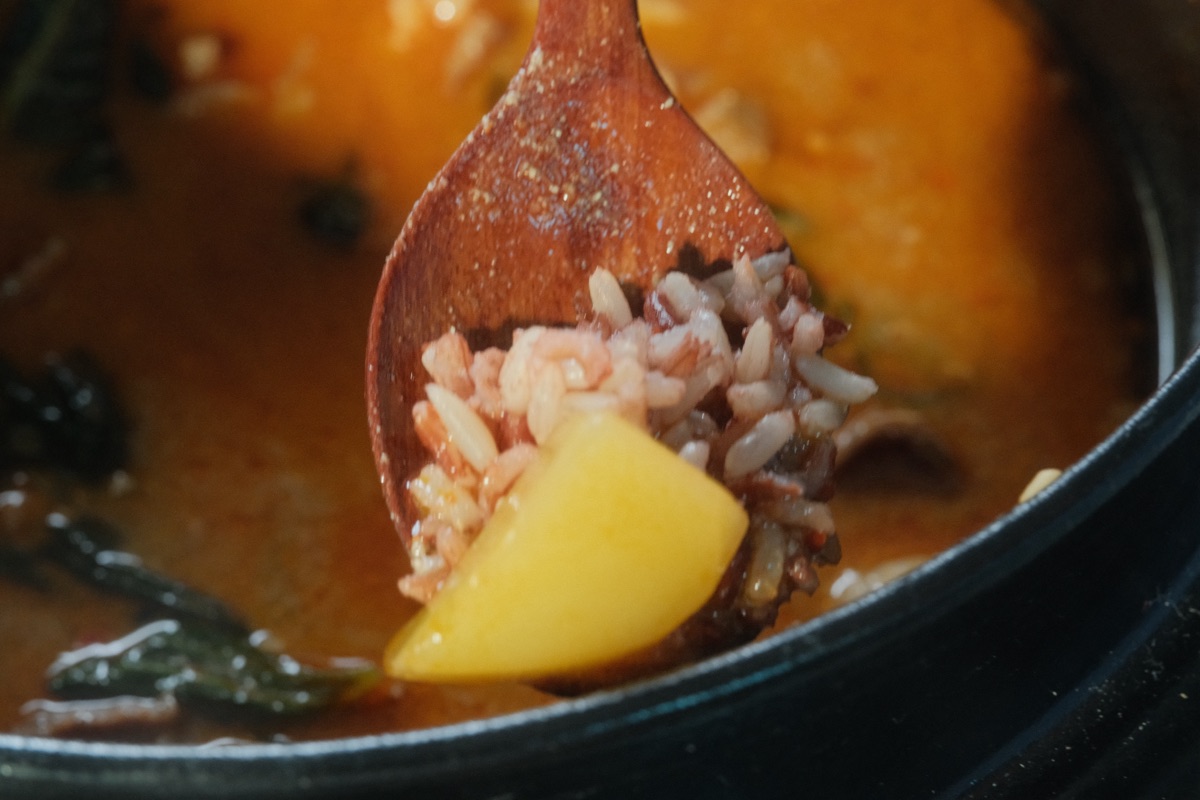
What is identical: The flavour base. Doenjang, gochugaru, garlic, and perilla seed powder. This is the soul of gamjatang. The perilla leaves stirred in at the end. The potatoes, which cook in the broth until they are just soft enough to break apart with your spoon. The overall character: savory, nutty, hearty, and deeply warming.
What is different: Beef slices instead of pork spine bones. Store-bought sagol gomtang (beef bone broth) stands in for a homemade bone broth. And the cook time drops from 2-3 hours to 15 minutes.
What You’ll Need
- 2 potatoes, chopped
- 300g beef slices
- 500ml beef bone broth (sagol gomtang)
- 1.5 tbsp doenjang
- 1 tbsp minced garlic
- 1 anchovy stock coin
- 2 tbsp gochugaru
- 1.5 tbsp soy sauce
- Ground black pepper, to taste
- 8-10 perilla leaves
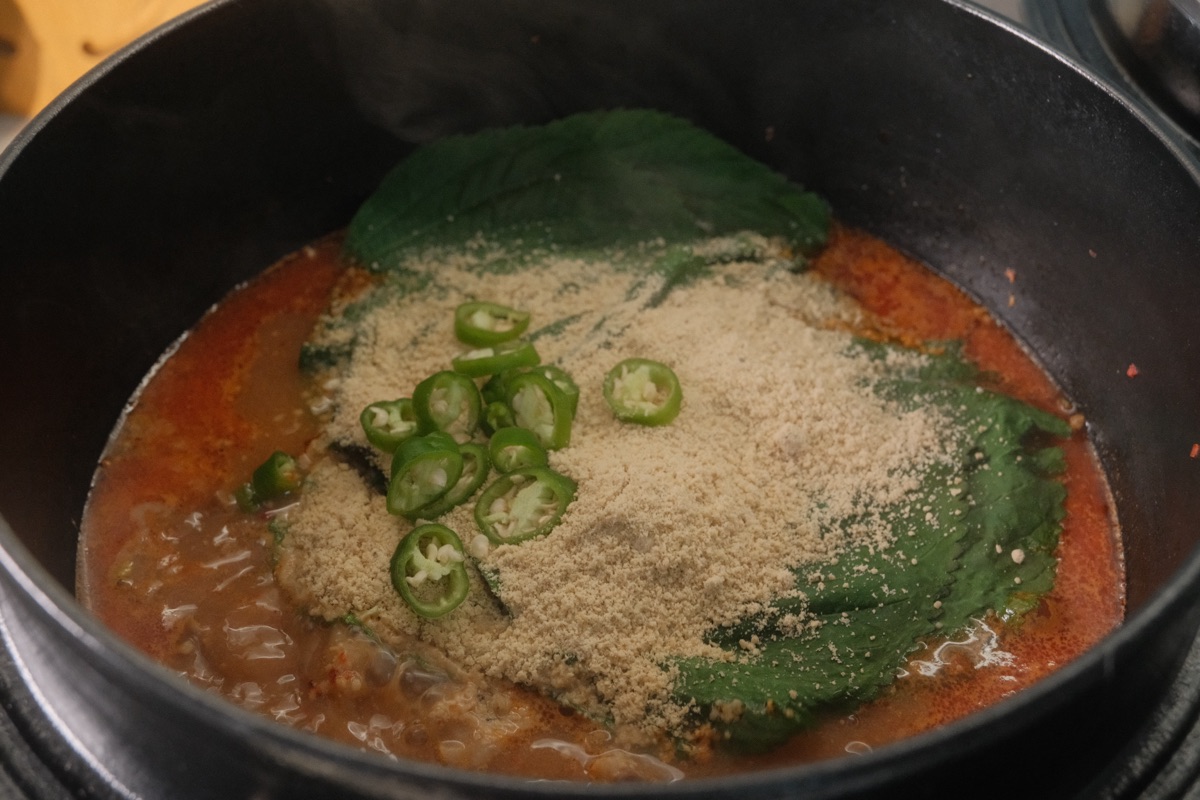
- 2 tbsp perilla seed powder
- 1 green chili, chopped
Let’s Cook
- Add the chopped potatoes to a pot first so they get a head start cooking.
- Pour in the beef bone broth, then add the beef slices.
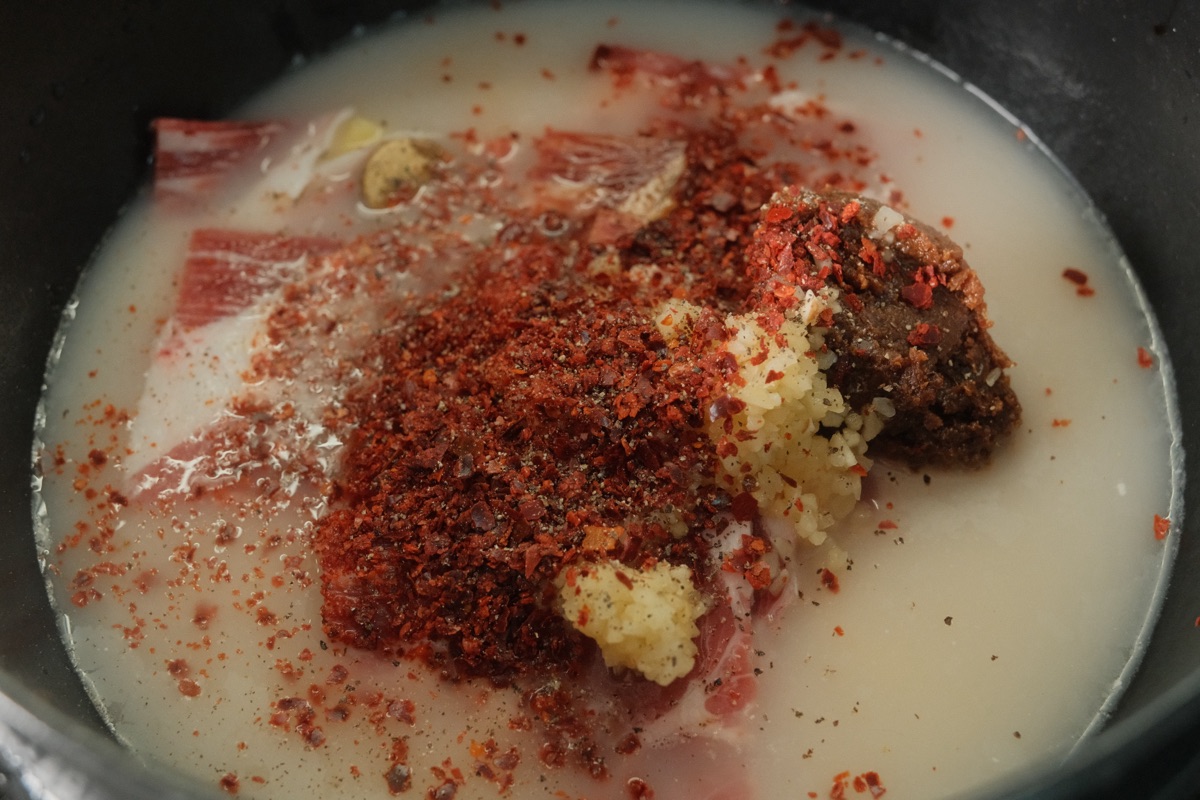
- Add the doenjang, minced garlic, anchovy stock coin, gochugaru, soy sauce, and ground black pepper.
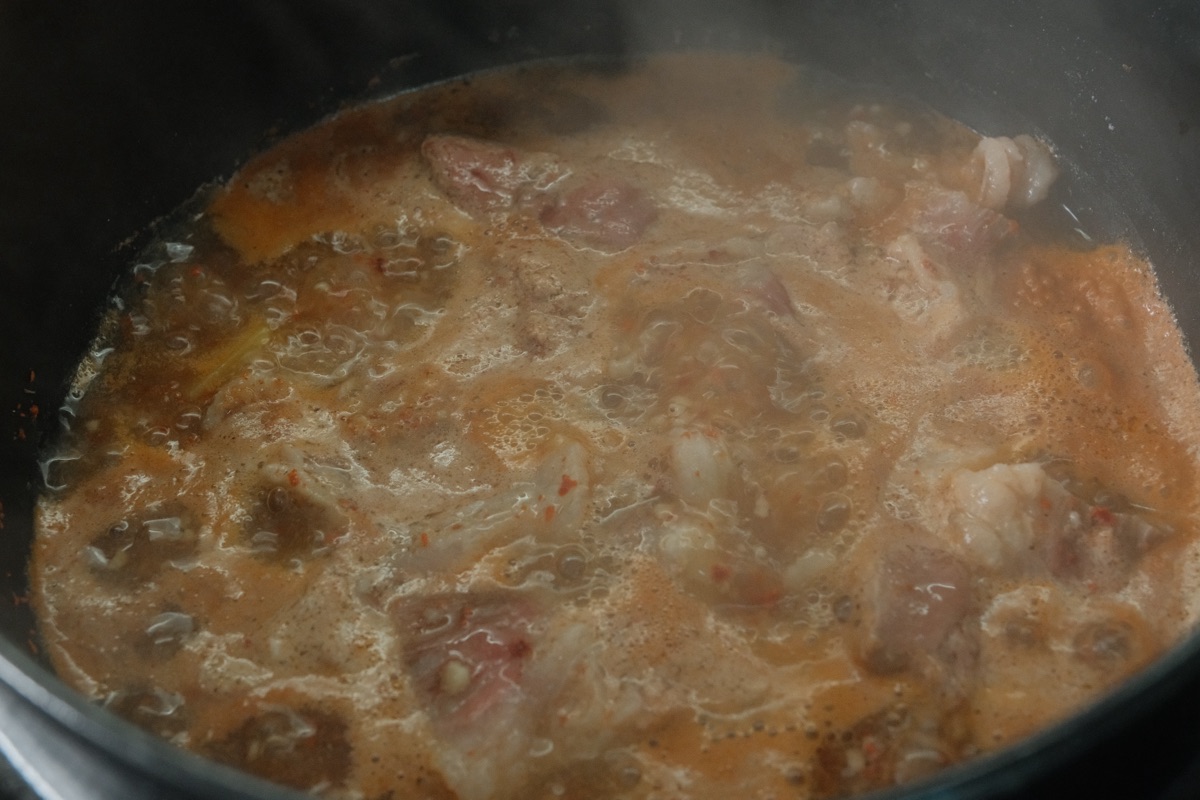
- Cover with a lid and let everything cook until the flavours come together and the potatoes begin to soften.
- Add the perilla leaves, perilla seed powder, and chopped green chili.
- Continue cooking until the potatoes are almost soft and the broth tastes rich and savory.
- Serve hot with rice.
Singapore Swaps
Sagol gomtang (beef bone broth): Bibigo’s version is concentrated and rich. Grab it on Shopee or from Korean grocery stores around Beauty World.
Perilla seed powder: The single most important ingredient in this recipe. Cyfood brand on Shopee is what I use.
Doenjang: CJ brand is widely available from Don Don Donki.
Perilla leaves: Available at FairPrice and Cold Storage in their Korean food section.
Anchovy stock coins: Any Korean mart will have these.
Tips
Do not skip the perilla seed powder. It is the single ingredient that separates this from a generic beef stew.
Cut the potatoes small. Smaller pieces cook faster and absorb more broth flavour. Aim for 2cm cubes.
Adjust the gochugaru to your heat level. 2 tbsp gives a mild-medium heat. Go to 3 tbsp if you want it closer to the spicy versions you get at Korean restaurants.
The Bottom Line
This is not a compromise version or a “healthy substitute.” It is a practical shortcut that respects the original flavour profile of gamjatang while making it possible on a Tuesday night in Singapore. Savory, nutty, hearty, and incredibly comforting for 15 minutes of work.