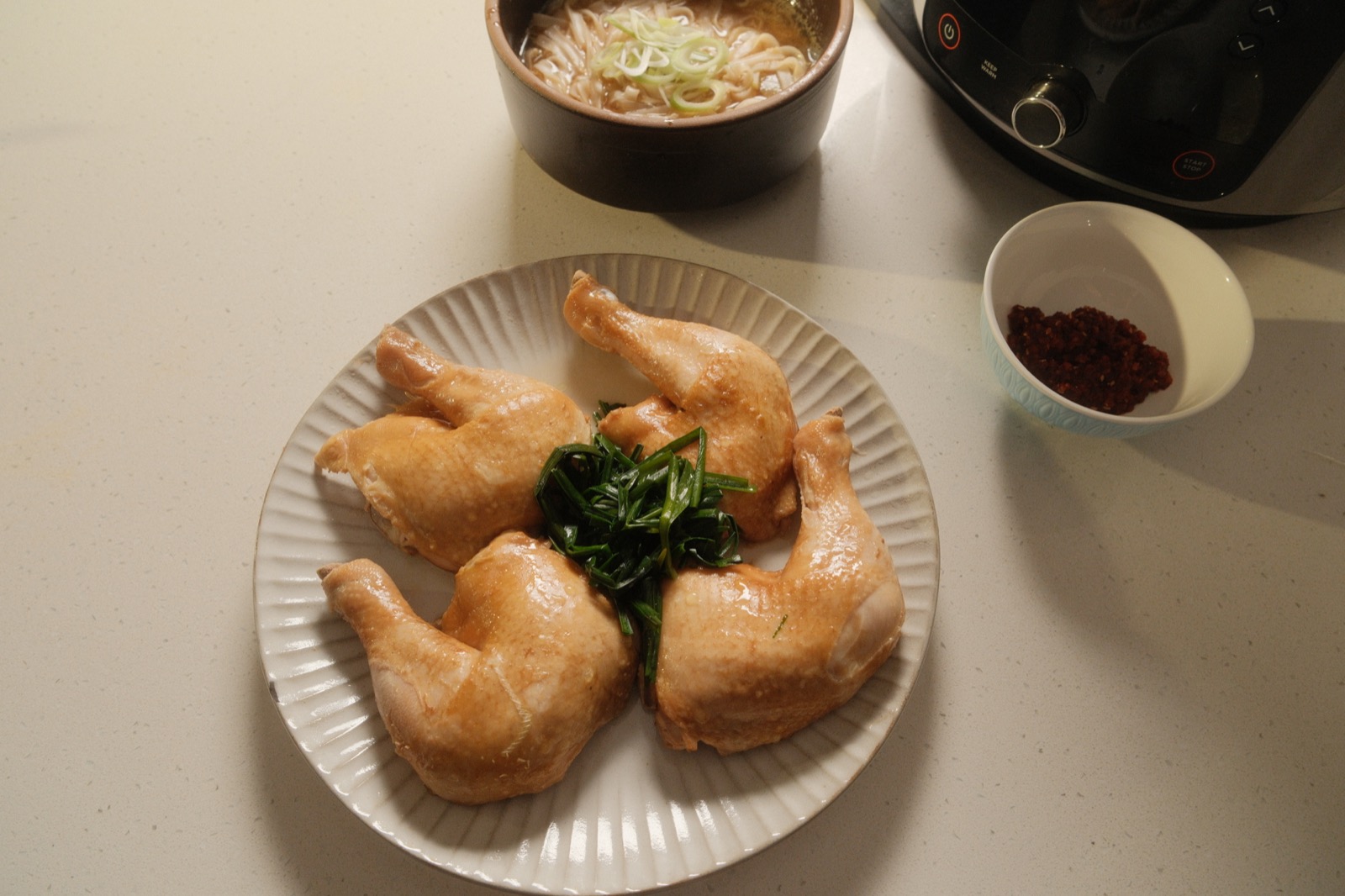
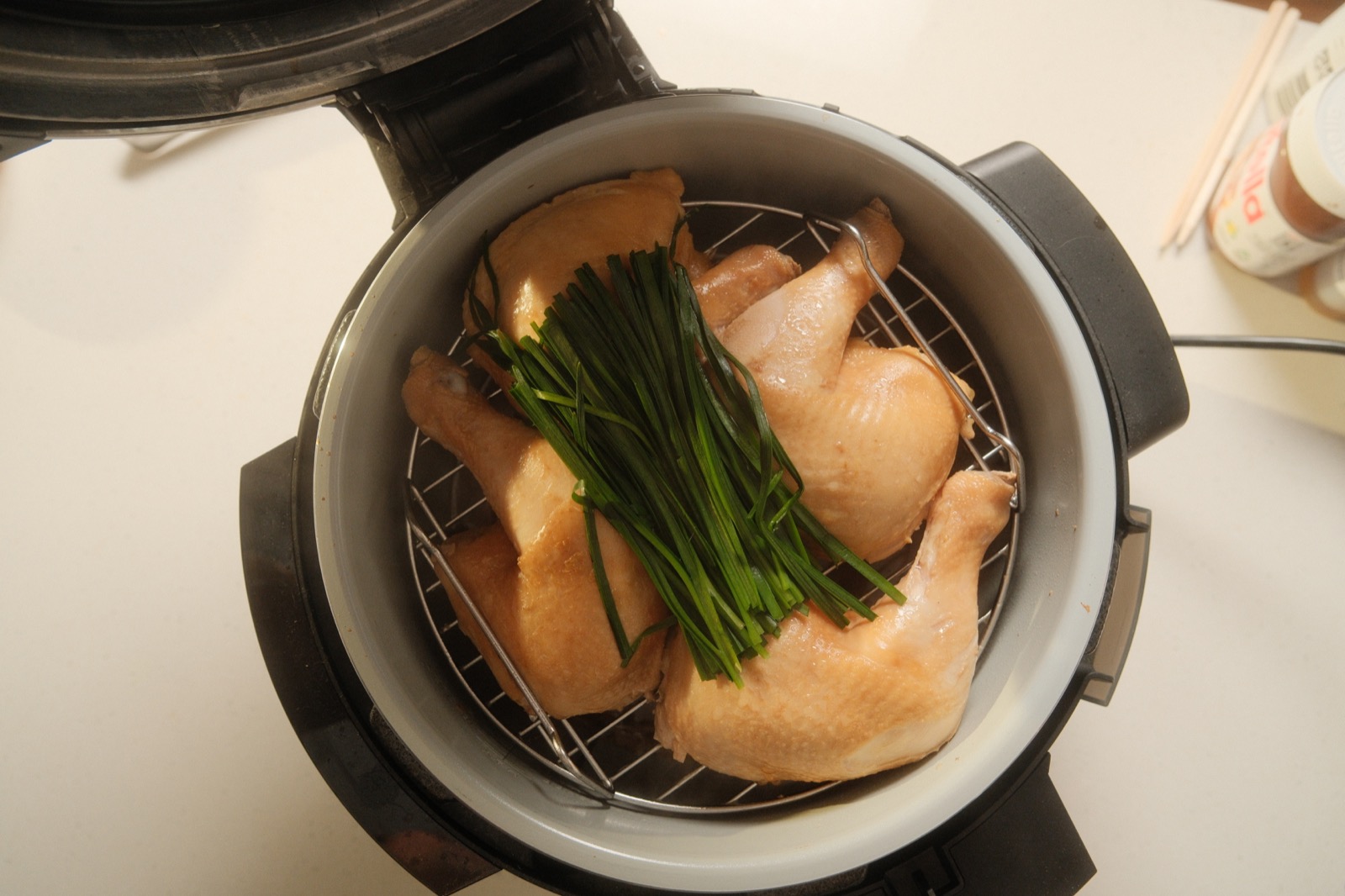
I like recipes that do more than one job, but they still have to taste deliberate. This North Korean steamed chicken recipe earns its place because the chicken is not only the main dish. As it steams on the rack, the marinade and rendered fat drip into the water below, so the broth starts building before you have even touched a noodle.
That is what makes it so useful in a Singapore kitchen. You get tender glazed chicken for dipping, a hot bowl of kalguksu broth for the table, and very little cleanup. It feels generous rather than thrifty, which is why it works. Two dishes, one cook, zero extra pots.
Why This Recipe Works
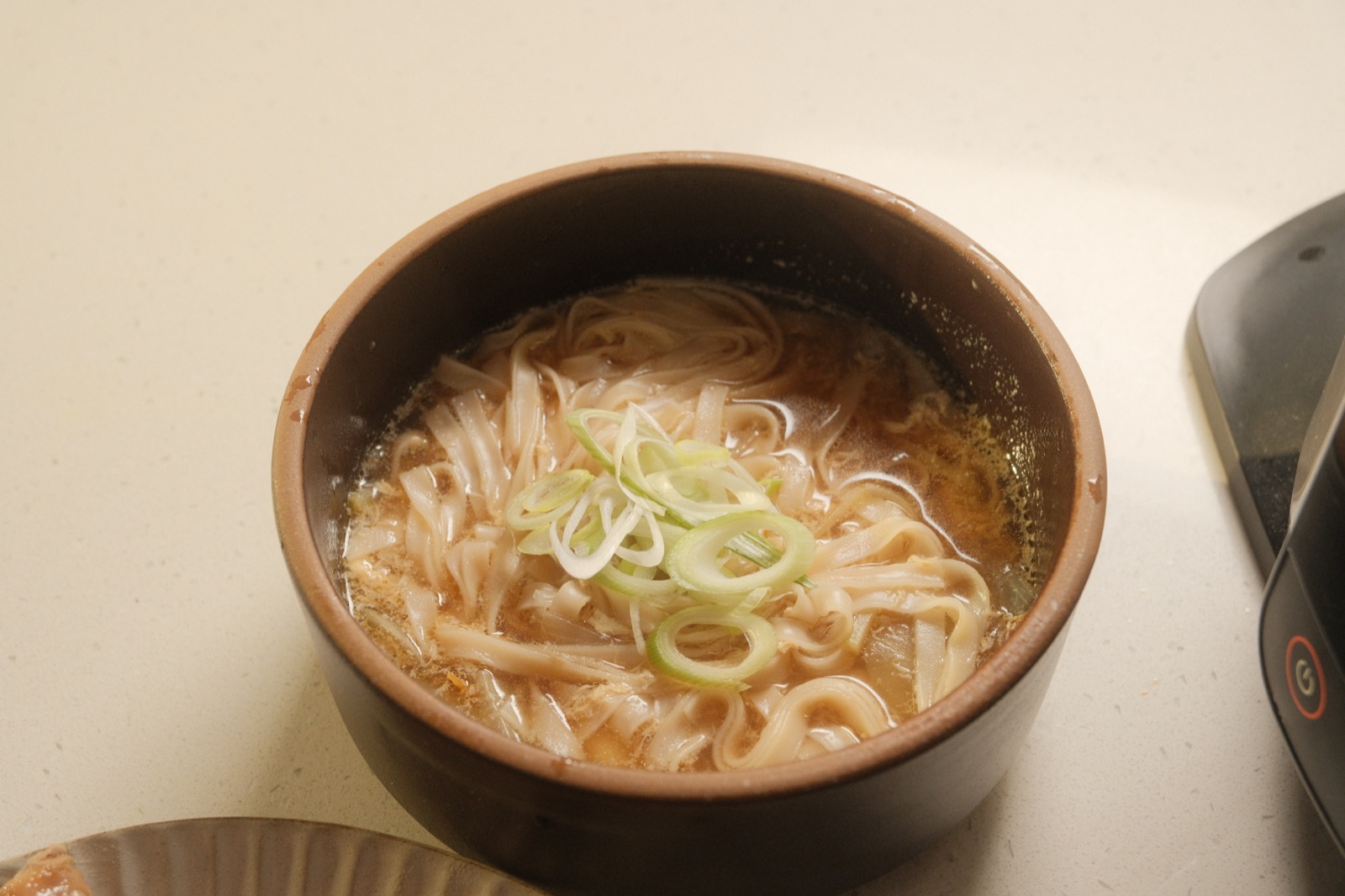
A lot of shortcut recipes lose the point of the original on the way to saving time. This one does not. The broth works because the chicken cooks over it, not beside it. Soy sauce, sesame oil, garlic, and the chicken fat all fall into the pot as the steam builds, so the liquid tastes seasoned before the anchovy stock coin ever goes in.
The second reason it works is contrast. The chicken is glossy and rich, the kalguksu broth stays clear and savory, and the dipping sauce brings back heat and acid right at the end. You are not eating one heavy bowl. You are eating a proper Korean-style spread with different textures and temperatures in the same meal.
What Stays the Same / What Changes
What stays the same is the double-duty logic. The chicken does not just cook here. It seasons the broth as it cooks. That part is the whole point of the dish, and it is what makes the setup feel smarter than a regular steamed chicken recipe.
What changes is the shortcut. Instead of building a separate stock from scratch, you let the drippings do the first round of work, then reinforce them with an anchovy stock cube, onion, zucchini, carrot, and green onion. It keeps the flavour clean, practical, and weeknight-friendly without losing the point of the dish.
What You’ll Need
Chicken
- 4 chicken legs
- 3 tbsp Korean dark soy sauce
- 1 tbsp sesame oil
- 2 tbsp mirin or cooking wine
- 1 tbsp sugar or allulose
- 4 garlic cloves
- Chives
Broth
- 800ml water
- 1 anchovy dashi stock cube
- 1 onion
- 1 small zucchini
- 1 carrot
- 1 green onion
- 1 egg, whisked
- Dried seaweed, optional
- Salt, to taste
- Soy sauce, to taste
- Knife-cut noodles
Dipping Sauce
- 1 tbsp gochugaru
- 2 tbsp soy sauce
- 1 tbsp vinegar
- 1 garlic clove, minced
- 1 tsp mustard
- 1 tsp sesame seeds
Let’s Cook
The order matters here. You want the chicken steaming while the liquid below stays ready to become broth.
- Marinate the chicken legs with soy sauce, sesame oil, mirin, sugar or allulose, and the garlic.
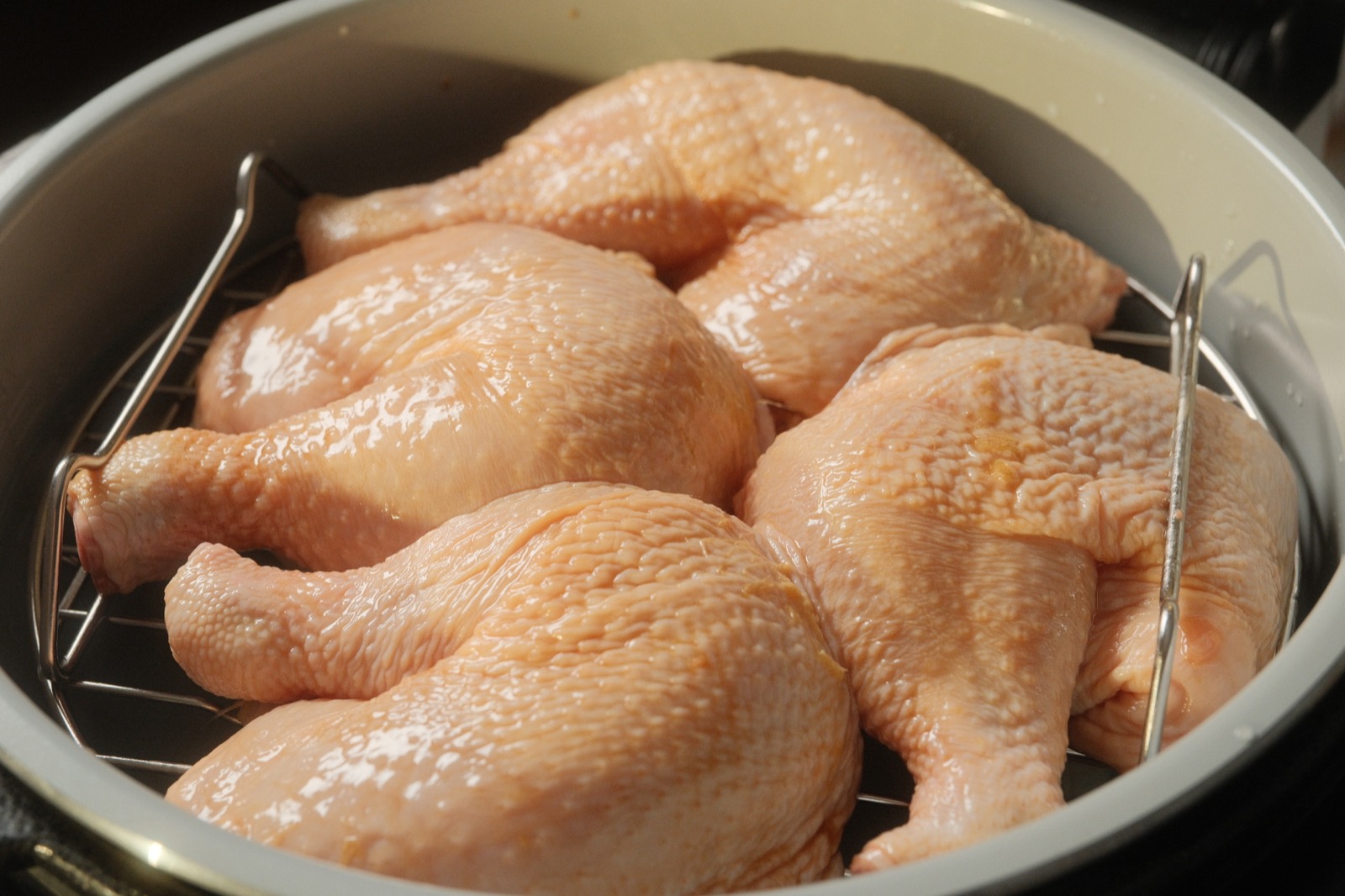
- Add water and a splash of mirin to the Ninja Foodi inner pot, then place the metal rack inside.
- Lay the chicken on the rack and steam on high for 50 minutes.
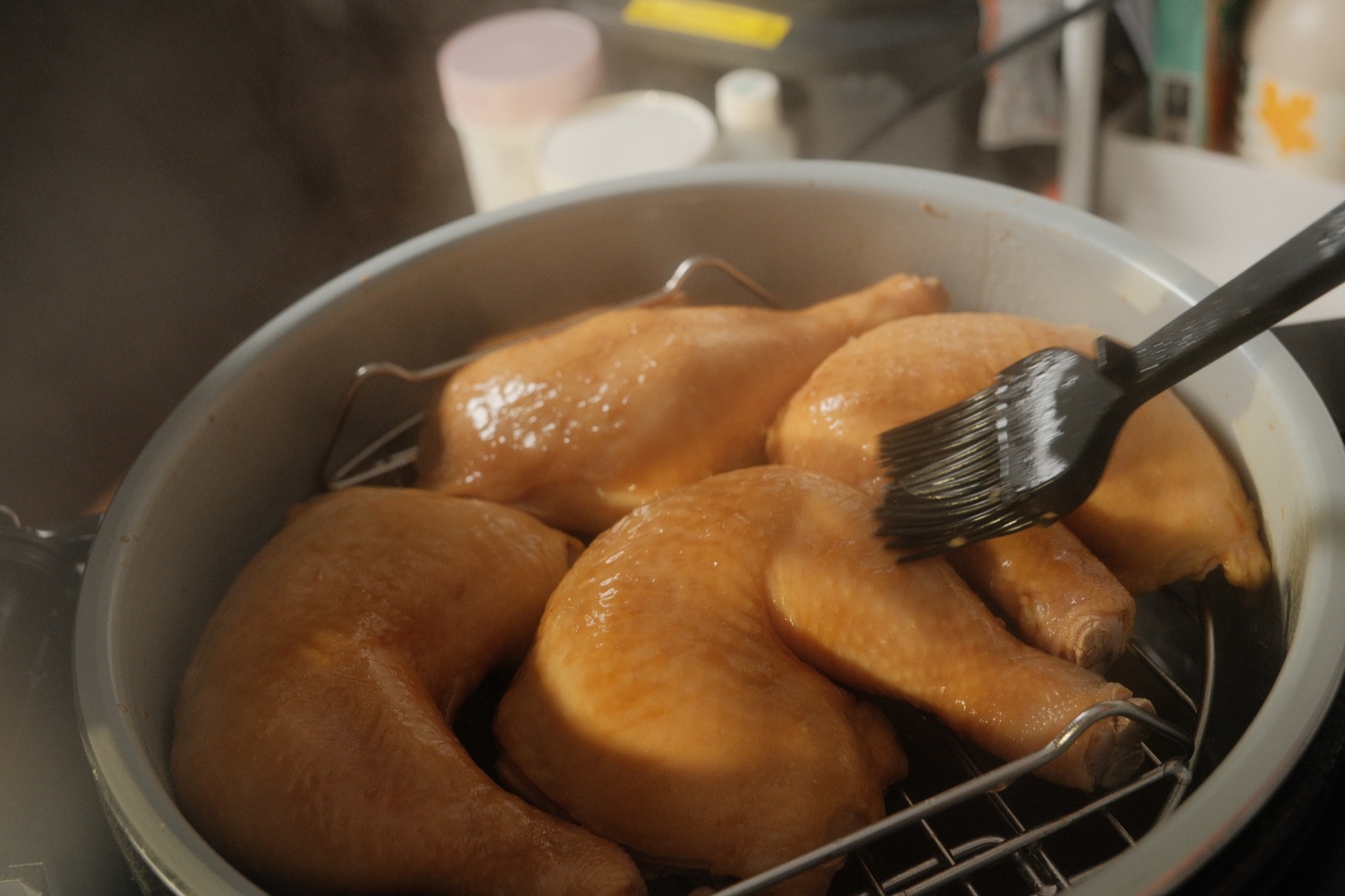
- Open the lid and brush the chicken with more marinade three or four times as it cooks so the surface stays glossy.
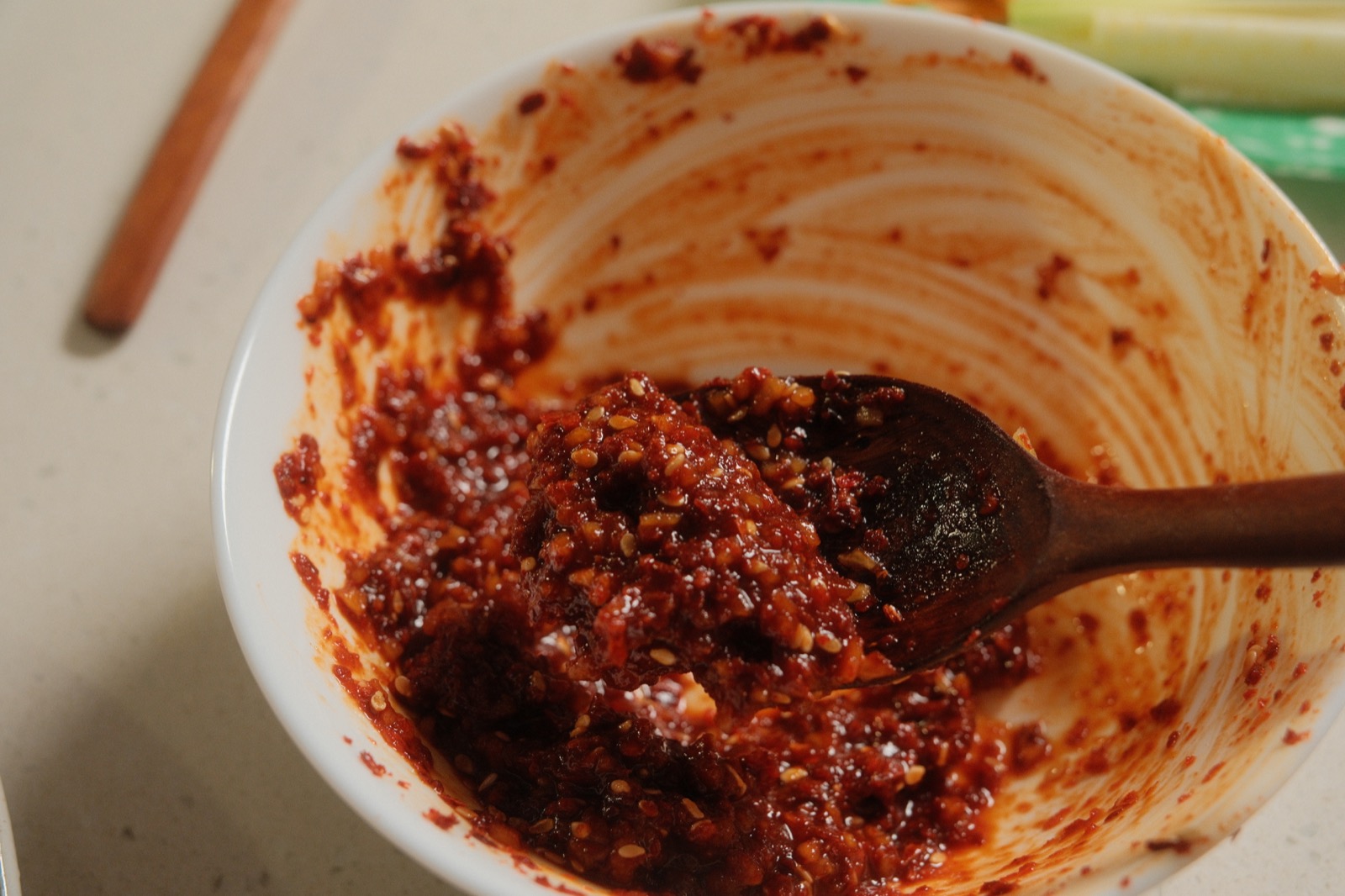
- Mix the dipping sauce in a small bowl and set it aside.
- Brush the chicken one more time, scatter chives over the top, and steam for a final 5 minutes.
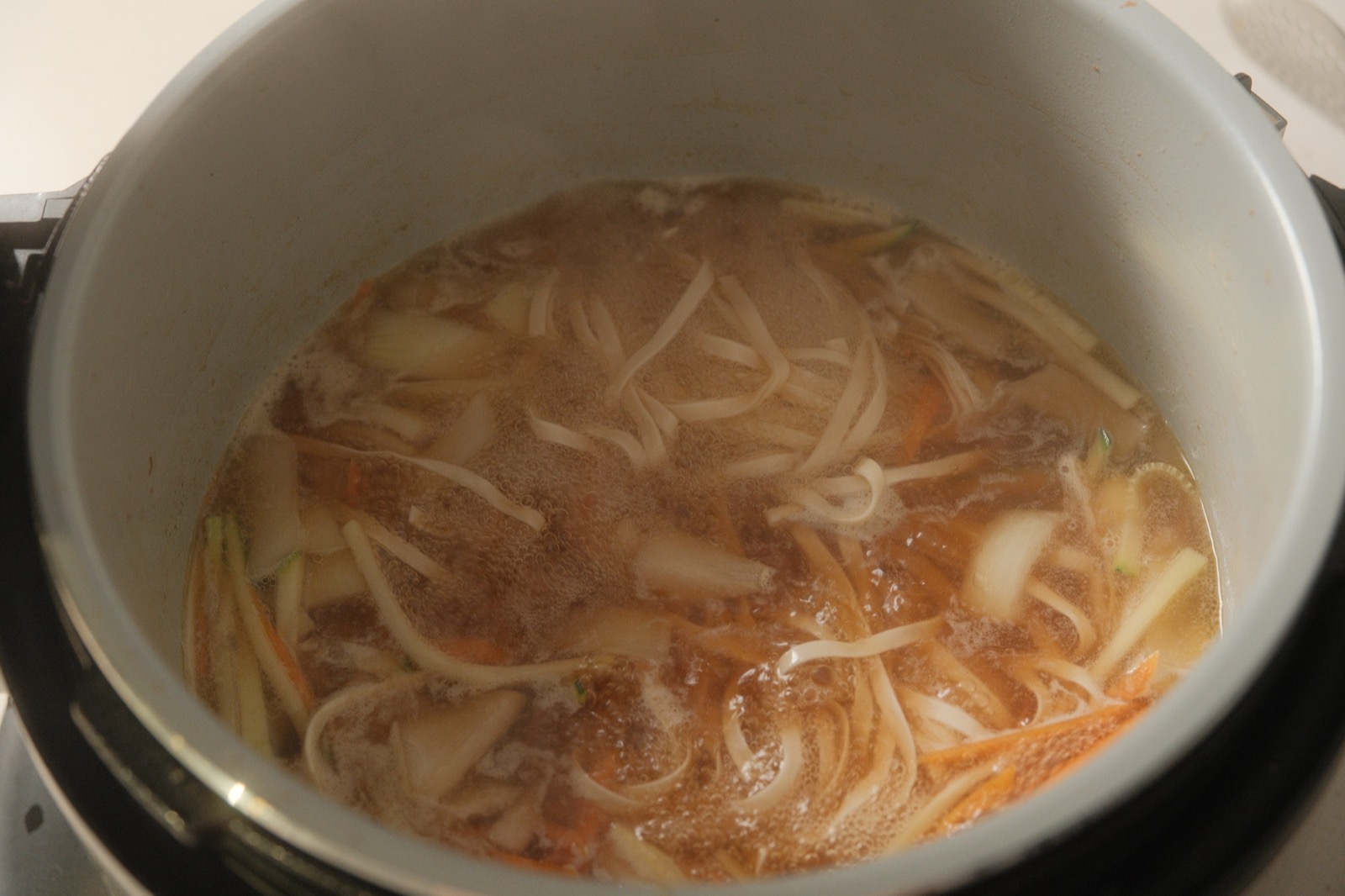
- Lift the rack out. Add the anchovy stock cube, sliced onion, julienned zucchini, and carrot to the drippings below. Season with salt or soy sauce to taste.
- Drop in the knife-cut noodles and cook for 3 to 5 minutes, then add the chopped green onion.
- Swirl in the whisked egg while the broth is still hot, then serve the chicken, broth, and dipping sauce together.
Singapore Swaps
If you already keep a few Korean staples in My Pantry, this becomes the kind of recipe you can repeat without planning too far ahead.
Sesame oil: Use a Korean toasted sesame oil here, not a neutral oil. It gives the marinade the nutty finish that makes the chicken smell right the moment the lid opens.
Allulose: If you want the same gloss with less sweetness, allulose works cleanly in place of sugar. It also keeps the marinade from reading too heavy once it drips into the broth.
Soy sauce: Korean soy sauce gives you the salt and colour you need without turning the broth muddy. Keep one bottle specifically for soups, marinades, and namul.
Korean knife-cut noodles: Fresh or frozen kalguksu noodles from Korean marts are ideal, but the dried knife-cut versions sold online also work as long as you watch the cooking time closely.
Anchovy stock coin: This is the weeknight shortcut that keeps the broth clean and savory without making anchovy stock from scratch.
How to Serve It
Serve the chicken on one plate and the noodles in separate bowls so each part keeps its own texture. Spoon a little broth over the chicken if you want it softer, or keep it dry and dip each bite into the sauce. This recipe comfortably feeds two hungry people, or up to four if you are serving it with banchan on the side.
Tips
If you want the chicken to look lacquered rather than just steamed, do not skip the repeated brushing. The extra layers are what give the skin that glossy finish.
Salt the broth at the end, not at the beginning. The drippings are already seasoned, and the stock cube adds more salt once it dissolves.
If you are using dried knife-cut noodles, start checking them early. They can go from chewy to heavy quite quickly once the starch starts releasing into the broth.
Add the egg last and stir gently. You want soft ribbons in the broth, not a cloudy scramble.
The Bottom Line
This is one of those rare shortcuts that actually earns the word hack. The chicken is tender, the broth is richer than it has any right to be, and the dipping sauce sharpens the whole meal. If you want a North Korean-style chicken recipe that also gives you kalguksu in one go, this is a very good place to start.