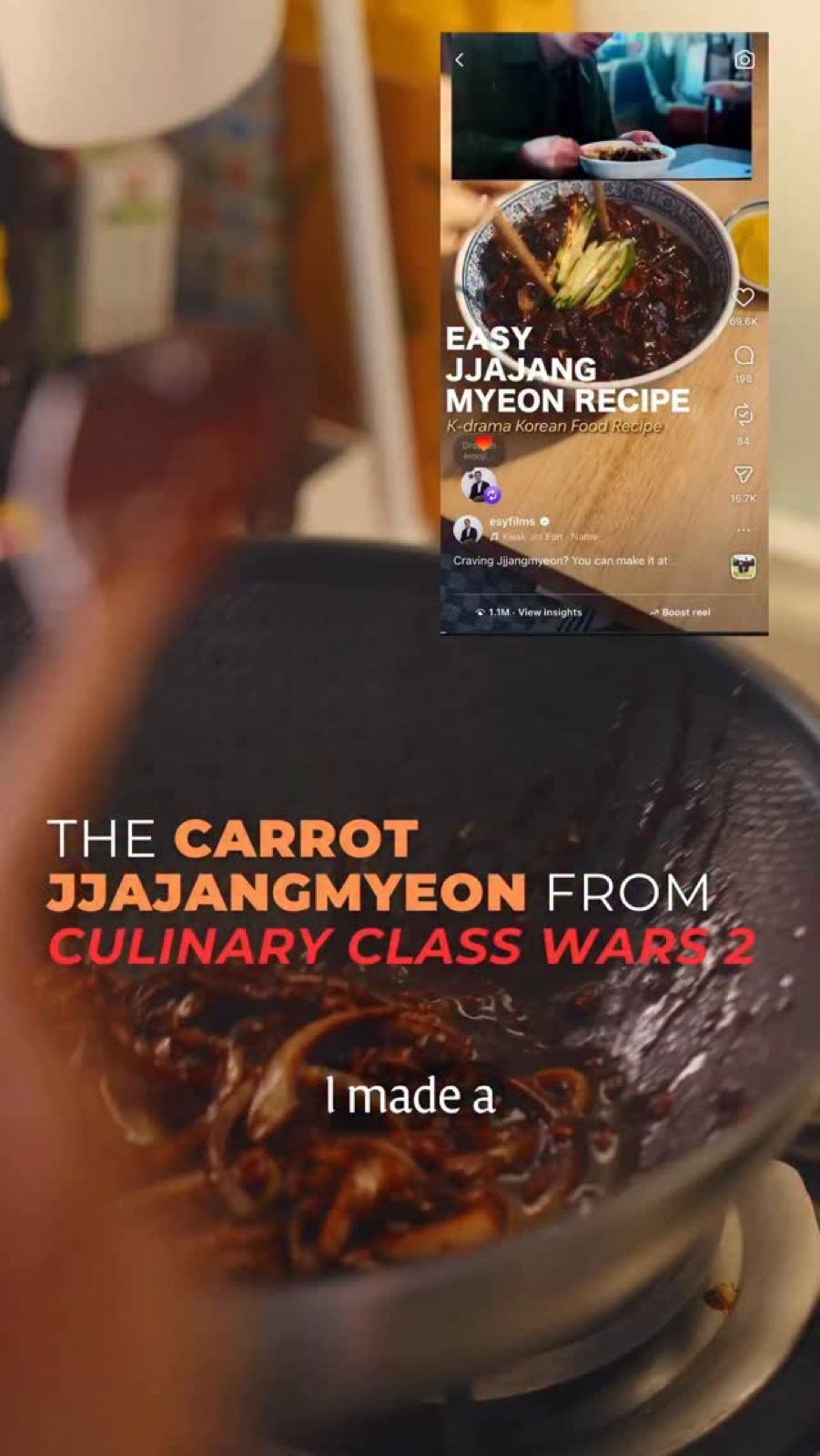
Carrot noodle jjajangmyeon replaces the usual wheat noodles with paper-thin steamed carrot ribbons, then keeps the part that matters most: a deep, glossy Korean black bean sauce. This version was inspired by Chef Hou’s carrot-noodle twist on Culinary Class Wars 2 and tests whether a lighter base can still read clearly as jjajangmyeon.
The answer depends on two things. The carrots need to be sliced extremely thin and steamed only until flexible, while the chunjang needs to be fried before the pork, onion, water and oyster sauce build the finished sauce. The carrots do not copy the texture of noodles exactly, but they carry the sauce well and make a lighter alternative.
Why Use Carrots Instead of Noodles?
The carrot ribbons give this jjajangmyeon a lighter base without removing the black bean sauce that defines the bowl. Two large carrots are peeled, sliced into paper-thin ribbons and steamed for five minutes before the hot sauce goes over them.
This is not a claim that carrots become identical to wheat noodles. In the tasting, the carrots remained firmer than noodles. The useful result was that they still carried the jjajang sauce, so the finished dish continued to taste and feel recognisably like jjajangmyeon even with a different texture underneath.
The swap works best when it is treated as its own version rather than a perfect imitation. The carrots bring a fresh, lighter base, while the pork, chunjang, onion and oyster sauce keep the savoury centre of the dish. If you want the traditional noodle format, see the K-drama-style jjajangmyeon recipe. For another Korean noodle variation, the gochujang chilli oil noodles use a different spicy sauce and regular noodles.
What Ingredients Do You Need?
The recipe uses seven ingredients. The carrot ribbons replace the noodles, while the remaining ingredients form the pork and black bean sauce.
For the carrot noodles:
- 2 large carrots, peeled
For the jjajang sauce:
- 2 tablespoons cooking oil
- 2 tablespoons chunjang, Korean black bean paste
- 100g pork belly or pork shoulder, finely chopped
- 1/2 onion, thinly sliced
- 2 to 3 tablespoons water
- 1/2 teaspoon oyster sauce
The recipe gives pork belly or pork shoulder as the two meat options. Whichever you use, chop it finely before it goes into the pan. The onion is also sliced thinly so it can soften and begin to melt into the pork as the sauce develops.
There is no added sugar, starch slurry or garnish in this version. Keep the ingredient list to what is supplied and let the fried chunjang, browned pork, onion and oyster sauce provide the sauce’s depth.
How Thin Should the Carrot Ribbons Be?
Slice the peeled carrots into paper-thin ribbons. A mandoline is the suggested tool, although a sharp knife may also be used. Thinness matters because the ribbons need to bend and carry the sauce rather than remain like thick raw vegetable strips.
Take time with this stage. The spoken account notes that the carrots were not sliced as well as intended, which reinforces the written instruction that texture is central to the result. Aim for even ribbons so they steam at the same rate.
Keep the ribbons long enough to lift and eat in a noodle-like way. The recipe does not specify an exact width or thickness, so paper-thin is the useful cue. Do not invent a measurement. Focus instead on making the slices consistently thin from one end of each carrot to the other.
Once both carrots are sliced, separate any ribbons that cling together. They are then ready for the short steaming stage.
How Long Should You Steam the Carrots?
Steam the carrot ribbons for five minutes. The target is flexible and tender but not soft or mushy. Set them aside as soon as they reach that point.
The five-minute limit protects the texture that makes this swap work. Thick or overcooked carrots would not give the same result, while under-steamed ribbons could stay too rigid. Begin with paper-thin slices, then use the stated time and the flexible-not-soft cue together.
Do not add the sauce during steaming. The ribbons are cooked separately and held until the pork and chunjang sauce has reduced. Keeping the two parts apart means the hot sauce can be poured over the prepared carrots immediately before serving.
There is no instruction to rinse or chill the steamed ribbons. Simply set them aside while you make the sauce, taking care not to let them continue cooking until mushy.
Why Fry the Chunjang First?
Fry the chunjang in cooking oil for one to two minutes before adding the pork. This opens the flavour and aroma of the Korean black bean paste and establishes the base of the sauce.
Heat two tablespoons of oil in a pan, add two tablespoons of chunjang and stir it through the oil. Continue for the stated one to two minutes, until fragrant. Do not add the water at this stage because the paste needs its own frying step first.
Once the chunjang is fragrant, add the finely chopped pork. Cook until the meat is nicely browned and caramelised. Browning the pork after frying the paste gives the sauce its next layer before the onion and small amount of water enter the pan.
The order is deliberate: oil, chunjang, pork, onion, water, then oyster sauce. Following that sequence keeps the paste-frying step distinct and lets the meat brown before the sauce is loosened.
How Do You Build the Pork and Onion Sauce?
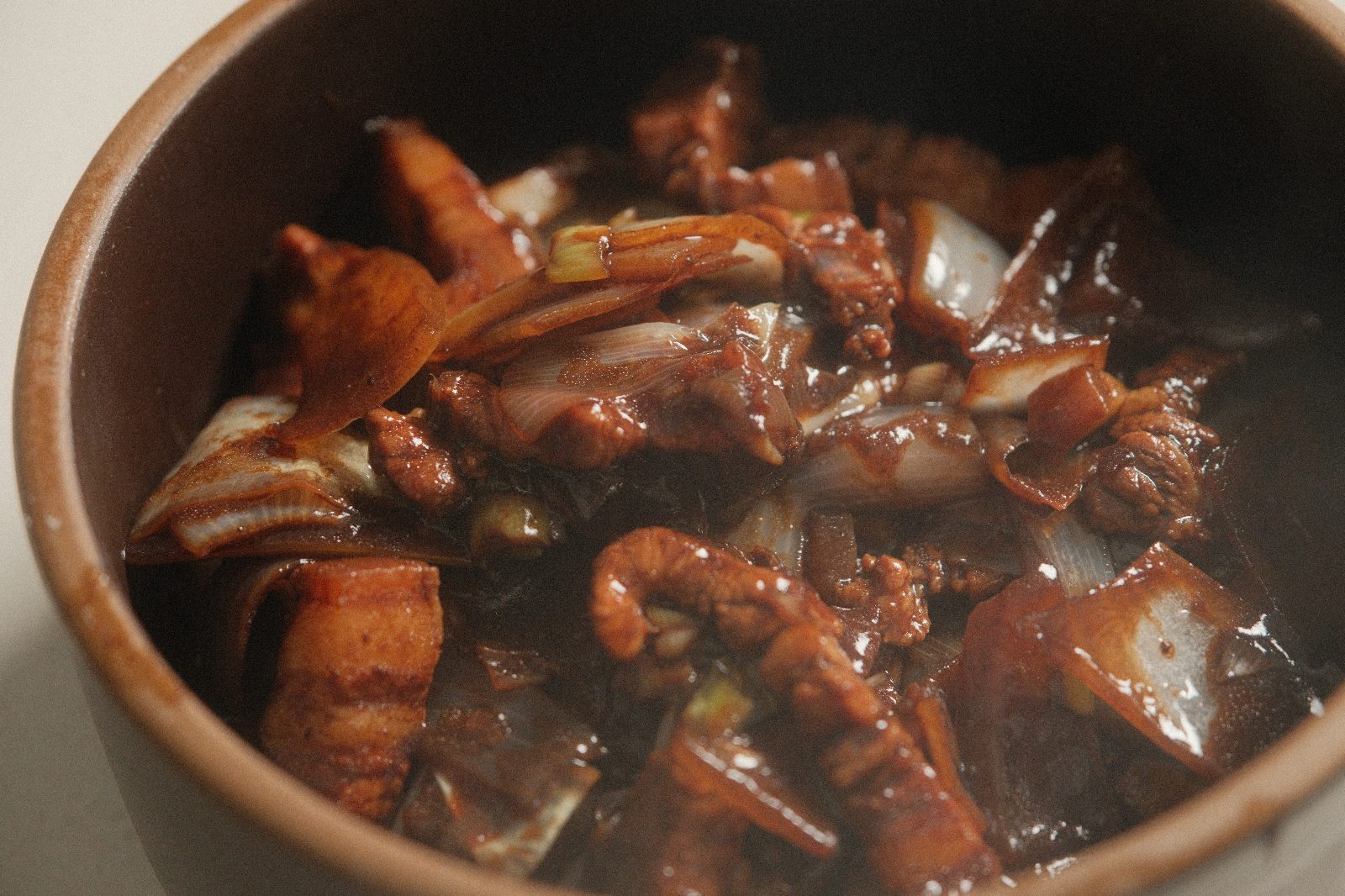
After the pork has browned, add half a thinly sliced onion. Stir until the onion softens and starts to melt into the pork, then add two to three tablespoons of water and let everything simmer gently.
The water amount is intentionally small. It loosens the fried paste and helps the pork and onion become a sauce without turning the pan watery. Start within the stated two-to-three-tablespoon range and keep the simmer gentle.
Stir in half a teaspoon of oyster sauce. Continue cooking until the sauce reduces to a thick, glossy consistency. The finished sauce needs enough body to sit over the carrot ribbons and cling to them rather than run straight to the bottom of the bowl.
No fixed simmering time is given after the water and oyster sauce go in. Use the given visual endpoint instead. The sauce is ready when it looks thick and glossy.
How Do You Assemble Carrot Noodle Jjajangmyeon?
Place the steamed carrot ribbons in a serving bowl and pour the hot jjajang sauce over them. Serve immediately so the sauce is hot and the carrots retain the flexible but firm texture created by the short steam.
Mix the sauce through the ribbons before eating. The carrots are meant to carry the pork and black bean sauce, even though their bite remains firmer than regular noodles. Expect a lighter bowl that still reads as jjajangmyeon because the sauce remains deep, savoury and glossy.
The tasting described the result as not bad and acknowledged that carrots cannot replace noodles exactly. That is the honest frame for this recipe. It is a healthier alternative for someone who wants to eat the carrot base together with a proper jjajang sauce, not a claim that the difference disappears.
Serve the dish as soon as it is assembled. The recipe does not provide toppings, side dishes or storage instructions, so none are required to complete this version.
What Are the Key Cooking Cues?
Keep these recipe-backed cues in view from slicing to serving:
- Slice the carrots paper-thin because texture is central to the swap.
- Steam the ribbons for five minutes, until flexible but not soft.
- Fry the chunjang in oil for one to two minutes, until fragrant.
- Cook the finely chopped pork until browned and caramelised.
- Let the thin onion soften and begin to melt into the pork.
- Use only two to three tablespoons of water for the gentle simmer.
- Reduce the oyster-sauce mixture until thick and glossy.
- Pour the hot sauce over the carrots and serve immediately.
These cues matter more than adding extra ingredients. The recipe succeeds through thin slicing, controlled steaming, frying the paste first and reducing the sauce to the right consistency.
FAQ
Are the carrots supposed to taste exactly like noodles?
No. The tasting found the carrots firmer than noodles. They work here because they carry the jjajang sauce and create a lighter alternative, not because their texture becomes identical.
How long should I steam the carrot ribbons?
Steam them for five minutes. They should be flexible and tender but not soft or mushy.
Can I use pork shoulder instead of pork belly?
Yes. The recipe lists either pork belly or pork shoulder, using 100g finely chopped.
When is the jjajang sauce ready?
Reduce it until it is thick and glossy. The recipe gives that visual cue rather than a fixed final simmering time.