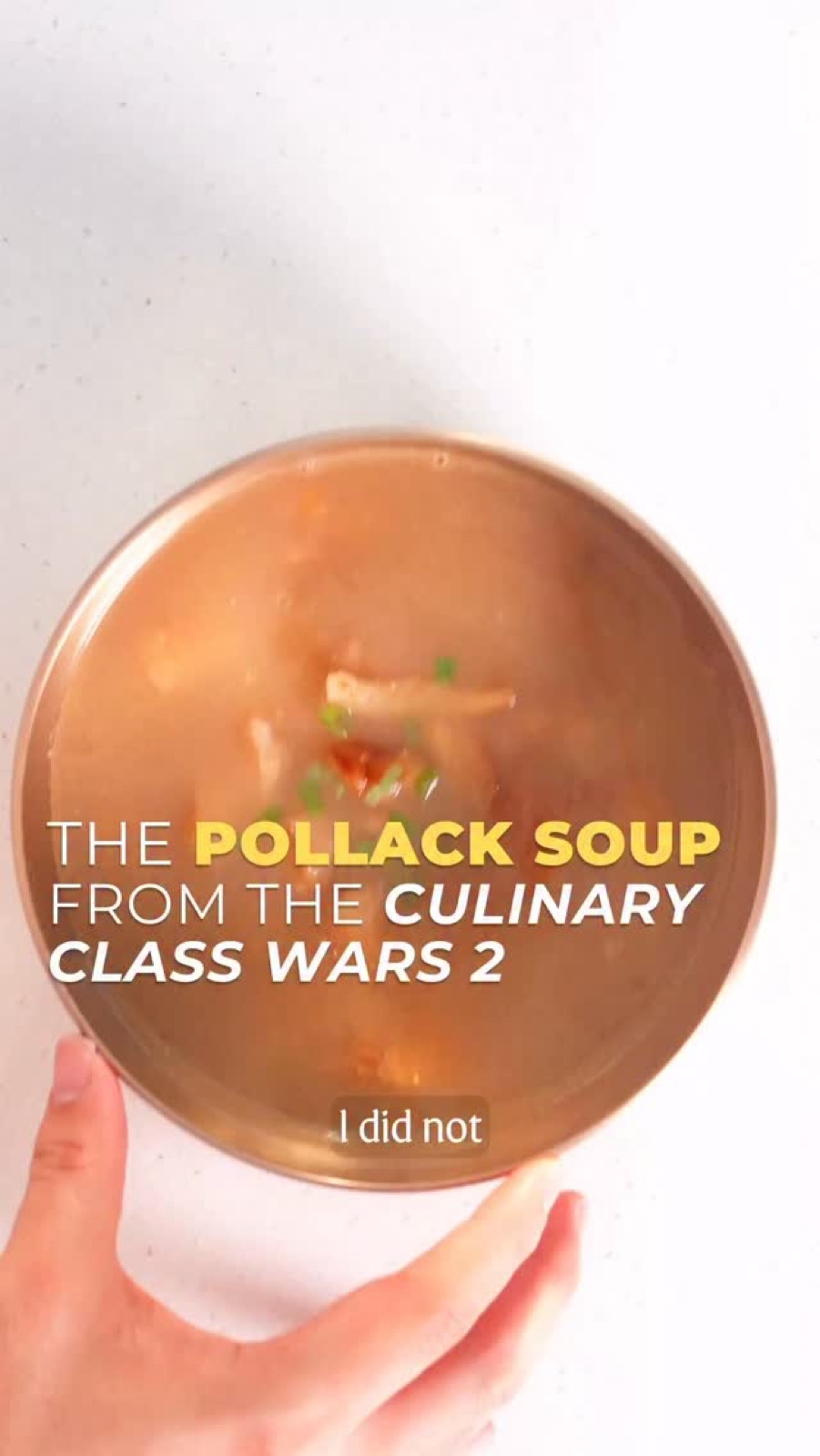
Hwangtae haejangguk turns dried pollack, potatoes and rice water into a cloudy Korean hangover soup with the look and body of a much heavier broth. This version, featured by Brewmaster Yun on Culinary Class Wars 2, builds flavour from the fish itself rather than meat bones.
The surprising part is the method. The pollack bones and head are toasted, potatoes are worked slowly with rice water, and the pressure-cooked broth is added back to the seasoned fish one ladle at a time. The result is clean and savoury, yet rich enough to resemble seolleongtang.
Why Does This Pollack Soup Turn Milky?
The cloudy broth comes from a deliberate sequence using dried pollack, potatoes and rice water. First, the reserved pollack bones and head are lightly toasted. Separately, diced potatoes are cooked over low heat in perilla oil while rice water is stirred in one spoonful at a time.
The potato mixture then goes into a pressure cooker with the toasted fish bones, pollack head, dried kelp, a whole cheongyang chilli and the remaining rice water. After ten minutes at high pressure and a natural release, the broth should already look cloudy and creamy.
This is the moment that makes the recipe unusual. The written recipe describes a soup that rivals traditional seolleongtang in richness, even though the base is dried fish rather than meat bones. The demonstrated method reinforces the same visual cue: opening the pressure cooker reveals a broth that is already milky.
What Ingredients Do You Need for Hwangtae Haejangguk?
You need only the ingredients named in the recipe:
- 2 whole dried pollack, gutted and cleaned
- 2 medium potatoes, sliced or diced for cooking
- 1 to 2 tablespoons perilla oil
- 2 litres rice water, taken from rinsing rice
- 1 piece dried kelp
- 1 whole cheongyang chilli, or another green chilli
- Soy sauce, for seasoning the pollack meat
- Sea salt, to taste
- Thinly sliced spring onions, for finishing
The written recipe also allows MSG or soy sauce as a final seasoning adjustment. It does not give a serving yield, total cooking time or exact quantity of soy sauce and salt, so those details stay open rather than being guessed.
For more Korean soup ideas, see the Okdongsik pork gukbap recipe and gochujang jjigae in The Hansang’s Cook collection.
How Should You Prepare the Dried Pollack?
Break down both dried pollack before starting the broth. Remove the heads, tails, gills and skin. Keep the meat separate, then reserve the heads and bones because they become the foundation of the pressure-cooked stock.
Place the reserved bones and heads in a dry pan and toast them lightly until aromatic. The written recipe identifies this as the step that builds a deeper fish flavour. Do not discard these pieces after separating the meat, because the broth depends on them.
The reserved pollack meat is handled later. Slice it, coat it lightly with soy sauce and keep it ready for the second stage of cooking. Separating the fish into broth parts and serving meat lets each part receive a different treatment.
How Do You Build the Potato and Rice-Water Base?
Cook the potatoes gently in perilla oil over low heat. The written recipe calls them diced in the method, while the ingredient list says sliced, so cut them into pieces that can soften as you stir. Keep the heat gentle throughout this stage.
Add the rice water slowly, one spoonful or scoop at a time, and stir constantly. Continue until the potatoes become soft and translucent. The gradual addition matters because this is not simply a matter of pouring all two litres into the pan at once.
Rice water is the starchy water collected from rinsing rice. Use the full two litres across the potato stage and pressure-cooker stage. The recipe does not provide a substitute, so preserve this ingredient if you want to follow the demonstrated method.
Once the potatoes have softened and turned translucent, transfer the entire mixture to the pressure cooker. This forms the starchy base that joins the toasted fish parts for the next stage.
What Goes Into the Pressure Cooker?
Add the softened potato mixture, toasted pollack bones, pollack head, dried kelp and whole cheongyang chilli to the pressure cooker. Pour in the rest of the rice water, then seal the cooker.
Cook on high pressure for ten minutes and allow the pressure to release naturally. When the cooker opens, look for a cloudy, creamy broth. The written recipe compares its appearance to bone broth, while the demonstrated method describes the surprise of getting that milky look from pollack.
Strain the broth before using it with the reserved fish meat. The recipe does not specify a separate simmering time after pressure cooking, so use the ten-minute pressure stage and the visual appearance of the broth as the reliable cues.
Do not add the spring onions at this point. They are a final garnish, while the kelp and whole chilli belong in the pressure cooker with the toasted bones and head.
How Do You Finish the Pollack Meat?
Slice the reserved pollack meat and season it lightly with soy sauce. Add perilla oil to a separate pot, then toast the seasoned fish gently. This gives the meat its own cooking stage after its bones and head have already flavoured the broth.
Add the strained broth to the fish one ladle or spoonful at a time. Let the fish simmer as you continue adding broth gradually. According to the demonstrated method, this makes the fish tender while the soup thickens slightly.
The gradual addition appears twice in this recipe. Rice water is worked slowly into the potatoes, and the completed broth is then worked slowly into the pollack meat. Following both stages preserves the method shown in the written recipe and demonstration.
Season the finished soup with sea salt. The written recipe also permits soy sauce or MSG as an adjustment, but it does not supply quantities. Add only what is needed to bring the soup to your preference without inventing a fixed measurement.
How Should You Serve Hwangtae Haejangguk?
Ladle the hot soup into bowls and finish it with thinly sliced spring onions. The recipe positions hwangtae haejangguk as a Korean hangover food for the morning after drinking, a cold winter morning or a simple comfort meal.
The final bowl should look cloudy and creamy, with tender pollack meat in a clean, savoury broth. The written recipe describes the soup as surprisingly meaty even though its depth comes from dried fish, potatoes and careful cooking rather than meat bones.
Use the visual and texture cues supplied by the recipe: aromatic toasted fish parts, translucent potatoes, milky broth after pressure cooking, tender fish and a slightly thickened final soup. These cues are more useful than adding unsupported timings to the stages that do not have them.
What Are the Key Cooking Cues?
Keep these recipe-backed checks beside you while cooking:
- Remove the head, tail, gills and skin, then reserve the bones and head.
- Toast the fish bones and head until aromatic.
- Cook the potatoes gently in perilla oil over low heat.
- Add rice water slowly while stirring until the potatoes turn soft and translucent.
- Pressure cook the potato mixture, fish parts, kelp and chilli for ten minutes.
- Allow a natural pressure release and look for a cloudy, creamy broth.
- Season the sliced pollack meat lightly with soy sauce and toast it in perilla oil.
- Add the strained broth to the meat one ladle at a time.
- Finish with sea salt and sliced spring onions.
The recipe is technical without being crowded. Each stage has one job: toast the fish parts, build the potato base, pressure cook the broth, then tenderise the seasoned meat in that broth.
FAQ
What is hwangtae haejangguk?
Hwangtae haejangguk is a Korean dried pollack hangover soup. This version uses pollack, potatoes, rice water, kelp, green chilli and perilla oil to create a clean but rich broth.
How long should the broth cook under pressure?
Cook it on high pressure for ten minutes, then let the pressure release naturally. The broth should look cloudy and creamy when you open the cooker.
Why are the pollack bones and head kept?
They are lightly toasted until aromatic and then pressure cooked with the potato mixture, kelp, chilli and rice water to build the broth.
Can I use a different green chilli?
Yes. The written recipe calls for one whole cheongyang chilli and explicitly allows any green chilli as an alternative.