Green onion (파) is not one ingredient, it is four. The same stalk becomes a finishing garnish, the body of a stew, a crunchy banchan, or the backbone of a stock, and the only thing that changes is how the knife comes down. Here is how to cut it, and when.
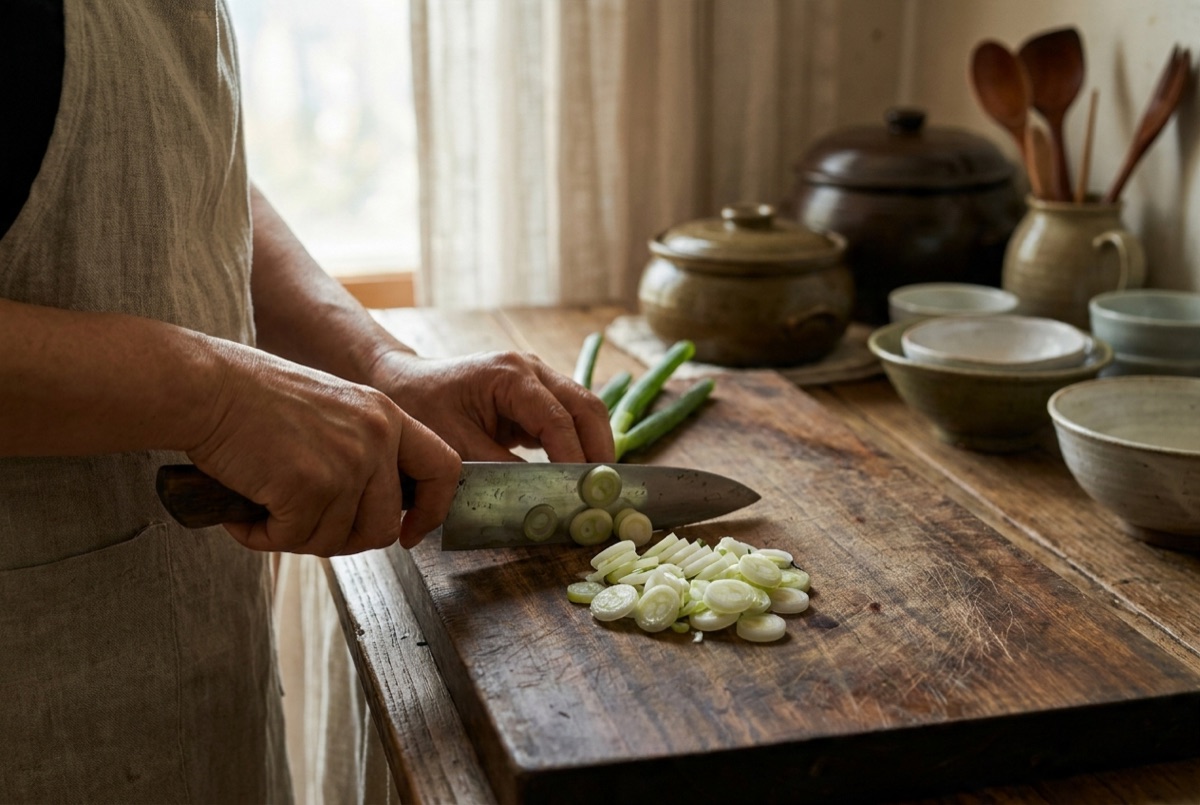
Fine rounds (송송 썰기)
The finisher. Thin perpendicular slices, almost confetti. Scatter them raw over sundubu, ramyeon, or a bowl of guk right before serving for a sharp, fresh hit that wakes the whole dish up.
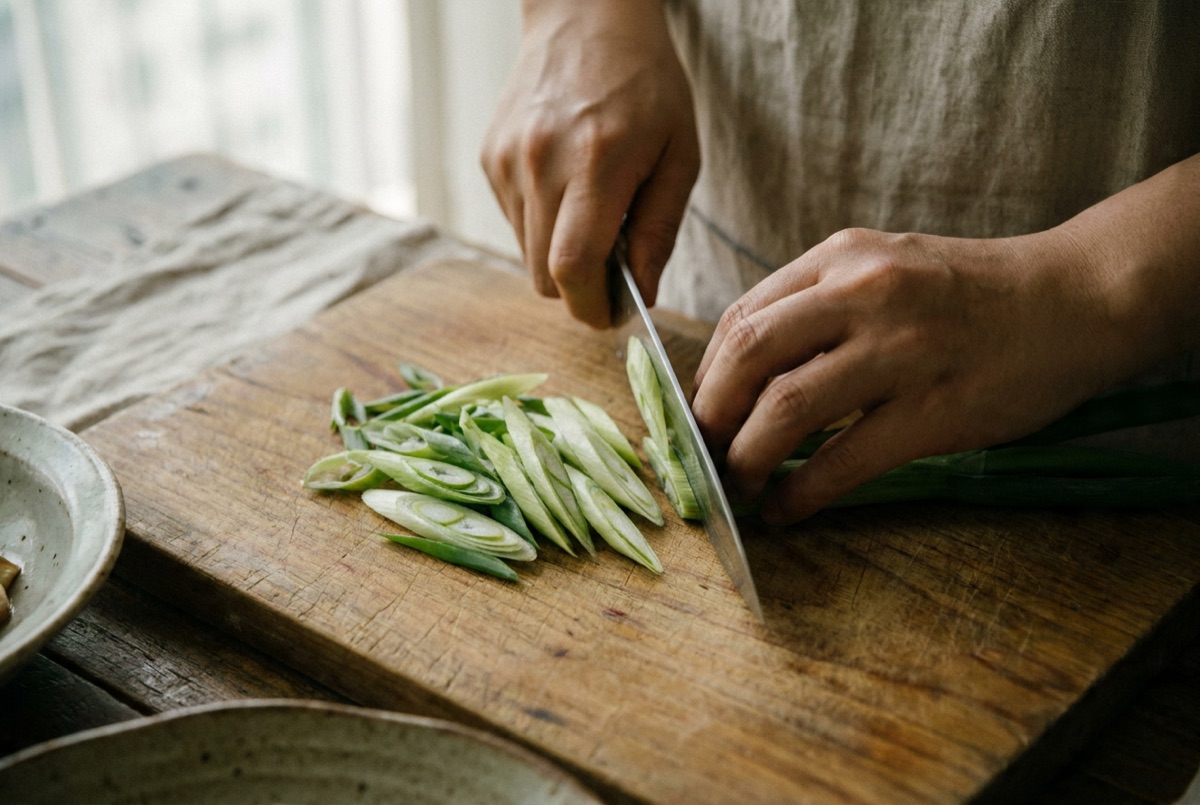
Diagonal slices (어슷썰기)
The workhorse. Long angled cuts about a finger-width across. More surface area means more flavour into the pot, and the pieces keep their shape through a long simmer. This is the cut for kimchi jjigae, budae jjigae, and most stir-fries.
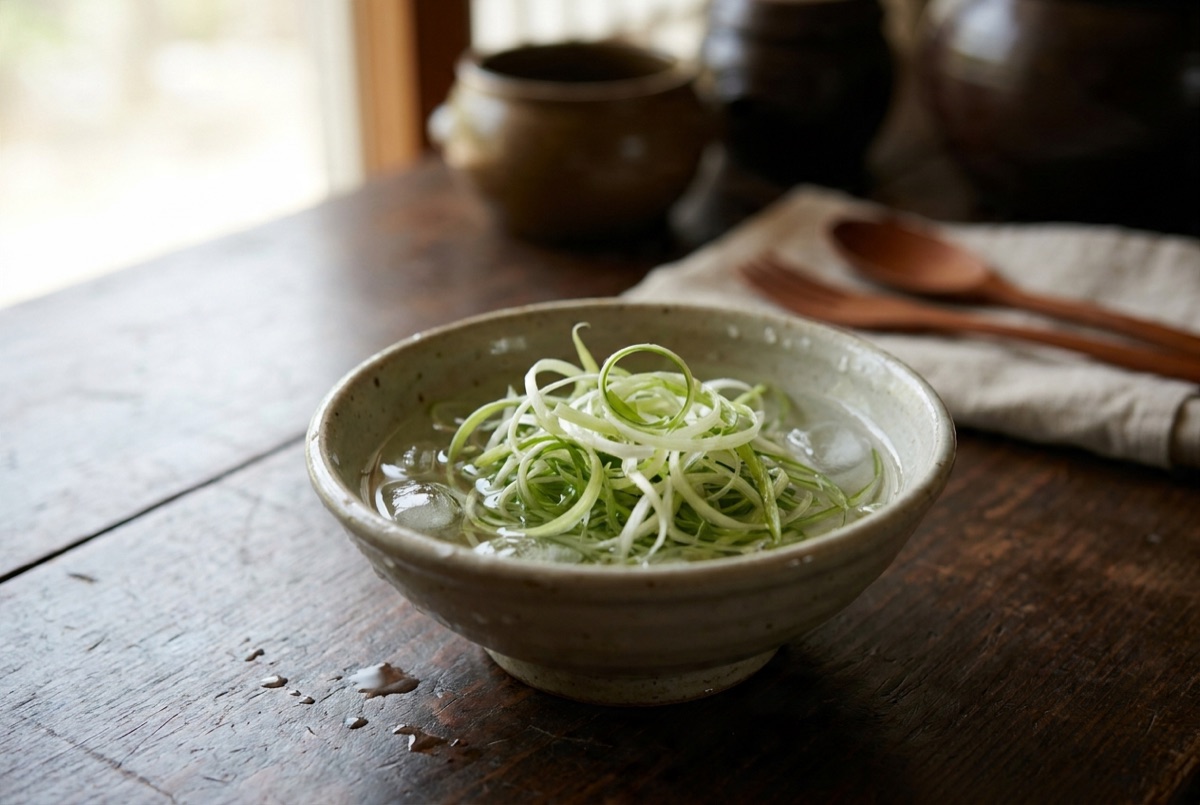
Shredded, or pa-chae (채썰기)
The banchan. Slivered lengthwise as thin as you can, then soaked in iced water so the strands curl and lose their raw bite. Dress with gochugaru, vinegar and sesame oil for the pa-muchim that cuts through grilled meat, or pile it raw over bossam and KBBQ.
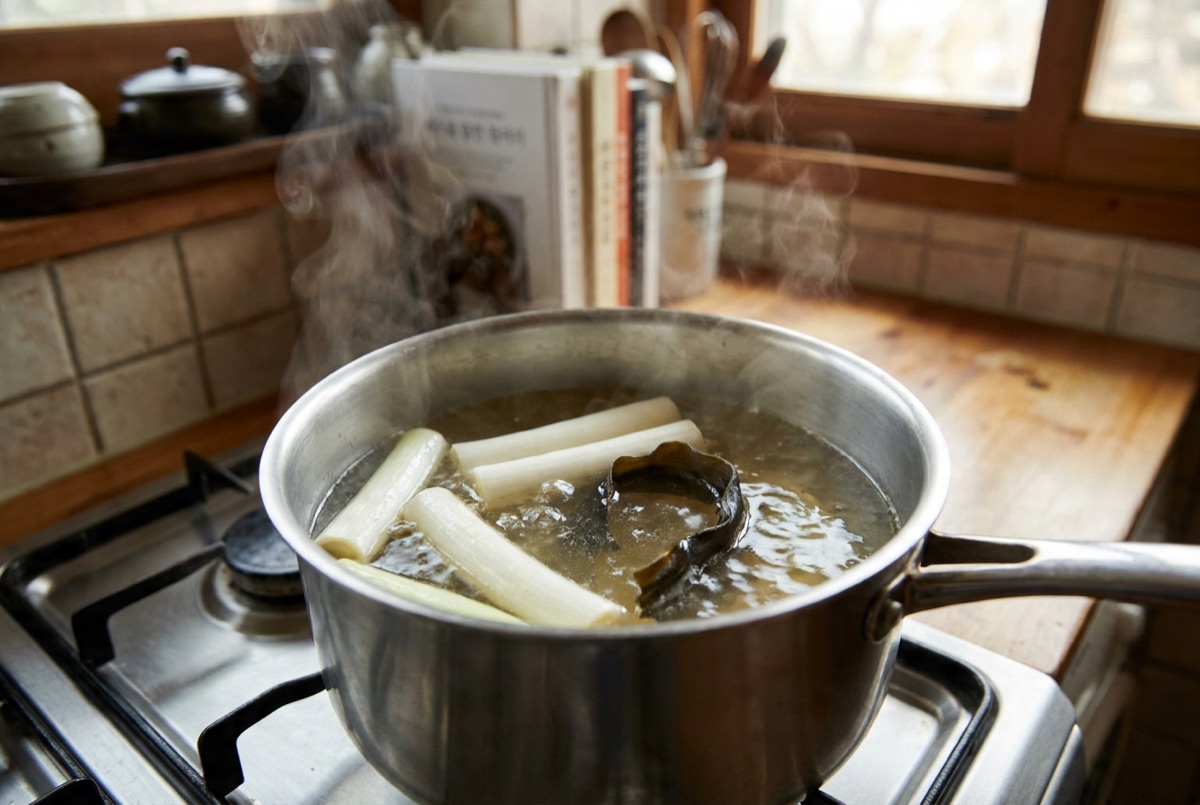
Whole whites and big segments
The base. The white part carries the most flavour, so bruise it and drop it whole into anchovy stock, gomtang, or the bottom of a jjigae, then fish it out before serving. This is where a clear soup gets its quiet, savoury backbone.
Eric’s tip
Buy a big bunch, cut a container of each style at once, and store them separately in the fridge. Weeknight cooking gets twice as fast when the garnish, the stew body, and the banchan are already done.