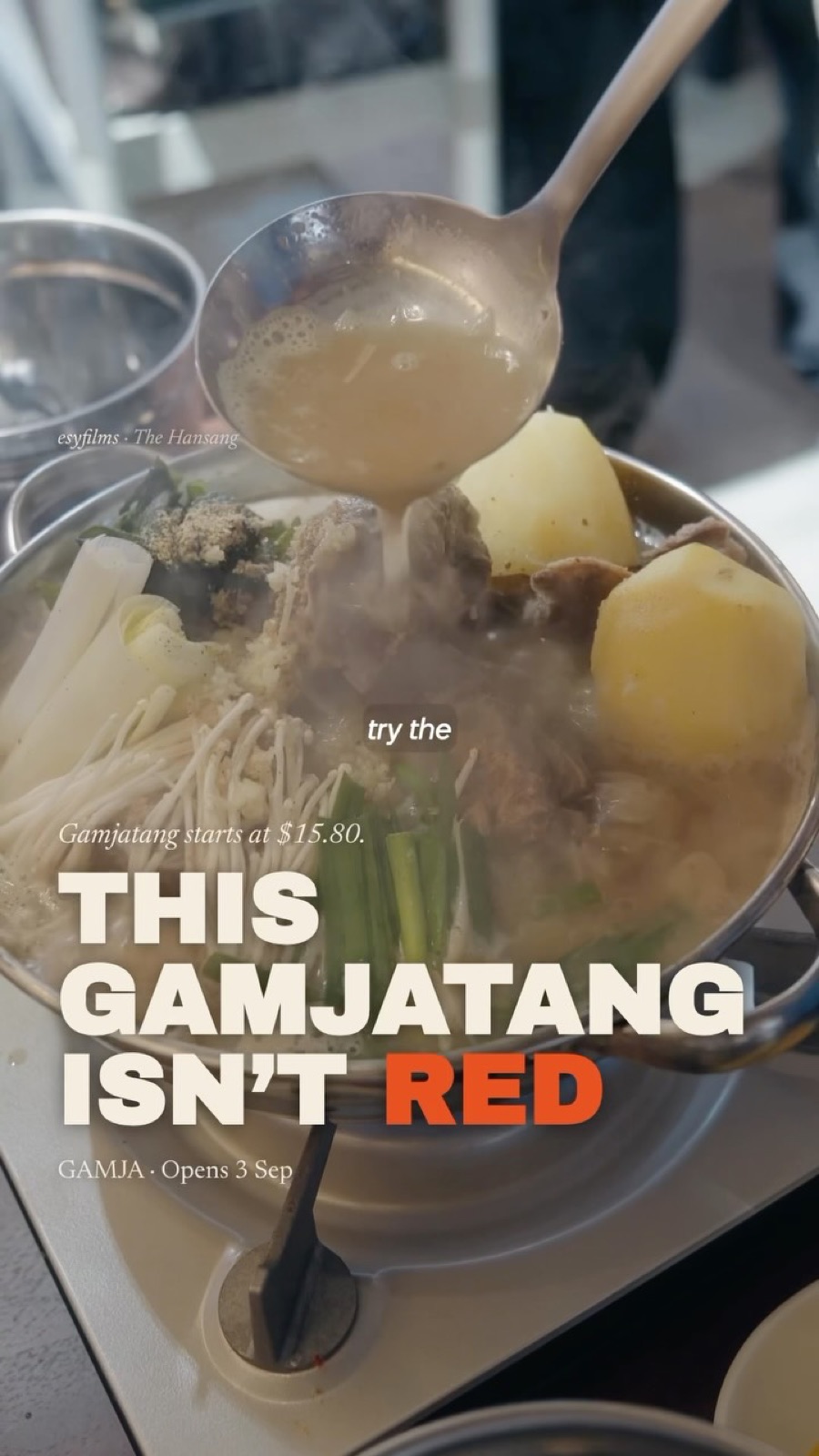
GAMJA brings gamjatang to Telok Ayer with two distinct approaches to the Korean pork-bone stew. The Perilla Gamjatang keeps the pork bones, potatoes and perilla seed powder, but trades the familiar red, spicy broth for a clear, non-spicy version. It still tasted unmistakably like gamjatang.
The restaurant opens on 3 September in Singapore. Lunch starts at $15.80 with rice, while larger sharing pots are listed from $53. The smaller bowl makes sense for a practical CBD lunch. The larger format is the more complete experience, especially if the table plans to add ramyeon sari and finish with fried rice.
What Makes GAMJA’s White Gamjatang Different?
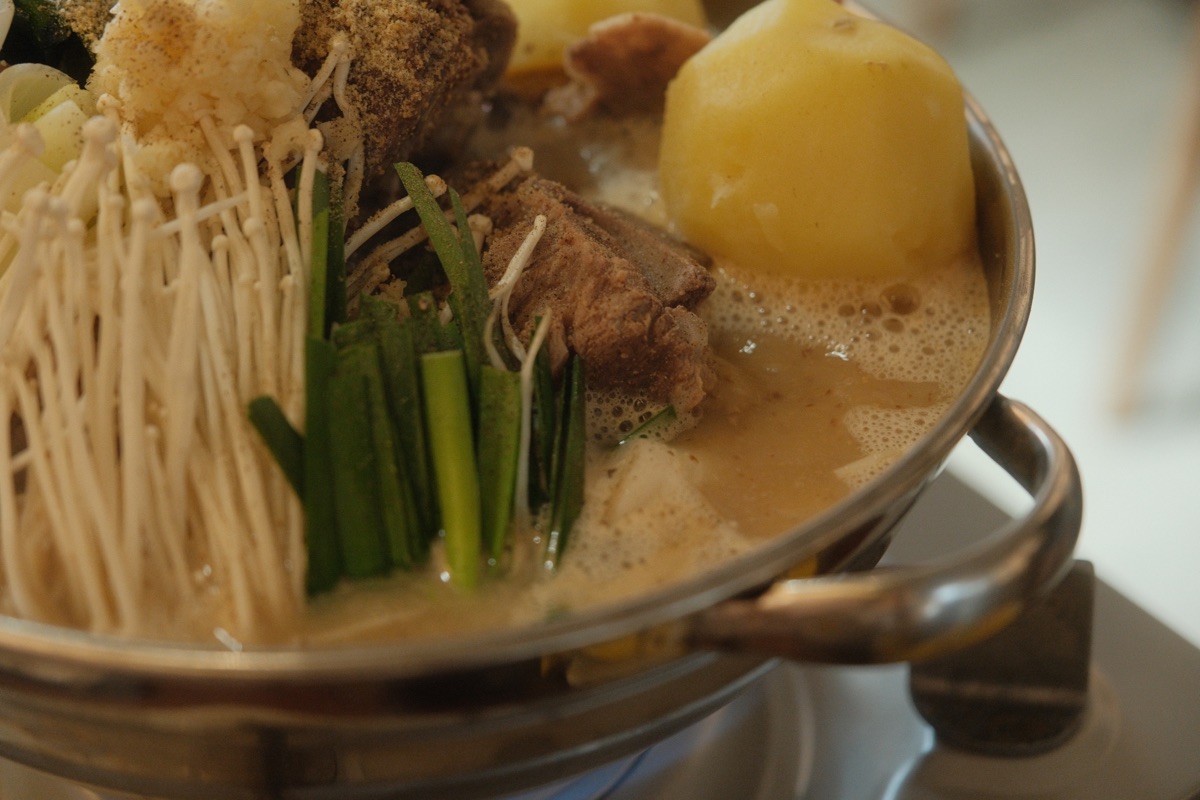
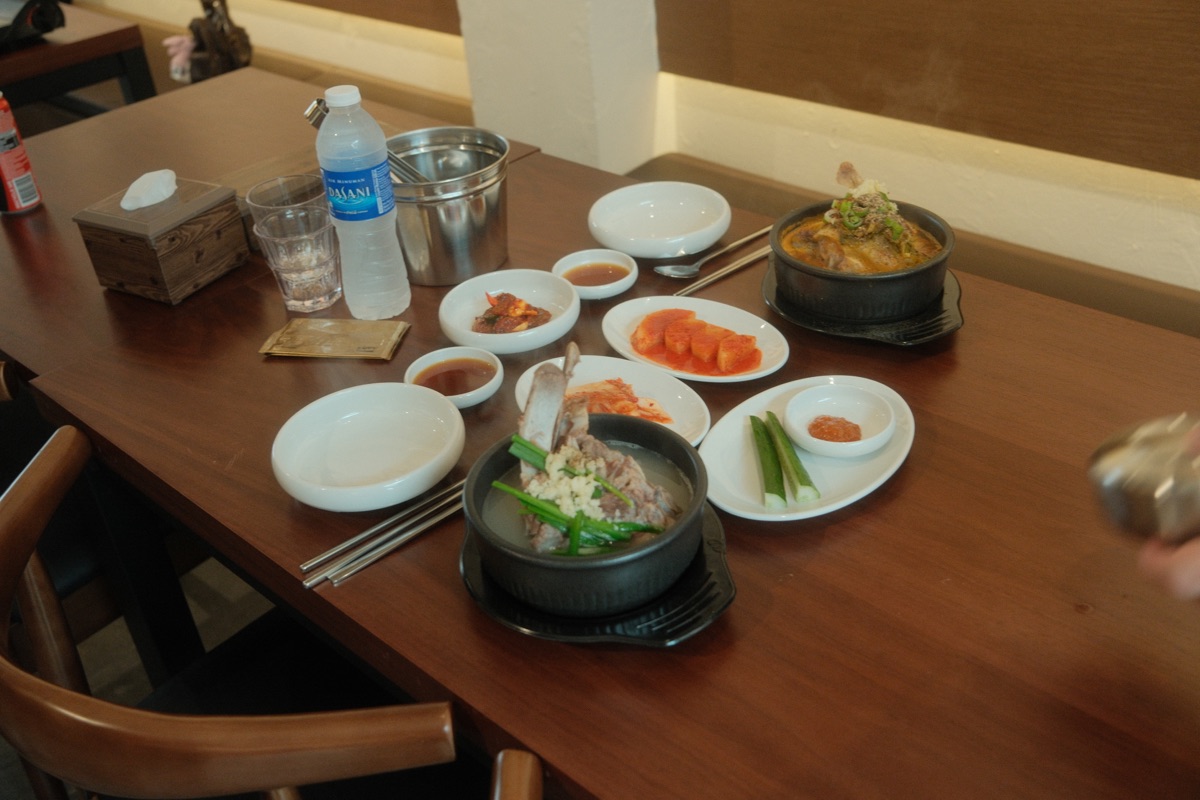
The Perilla Gamjatang changes the broth without removing the structure of the dish. Huge pork bones, potatoes and perilla seed powder keep the familiar gamjatang foundation in place. The difference is immediately visible: the liquid is clear rather than red, and the heat of the usual chilli-led broth is absent.
That change could easily have left the stew feeling thin or anonymous. It did not. The broth remained clean, savoury and comforting, with enough identity to read clearly as gamjatang. As it continued to simmer, its character moved closer to the soothing appeal of kalguksu.
Little kombu-like pieces of seaweed added another unexpected detail. They gave the clear version a twist without distracting from the pork and potatoes. Together with the perilla seed powder, they helped the bowl feel considered rather than like a standard spicy broth with the chilli simply removed.
The White Gamjatang works because it keeps the familiar components intact while changing the mood. It is gentler and non-spicy, but it does not lose the hearty comfort expected from pork-bone stew.
Is the Pork Tender?
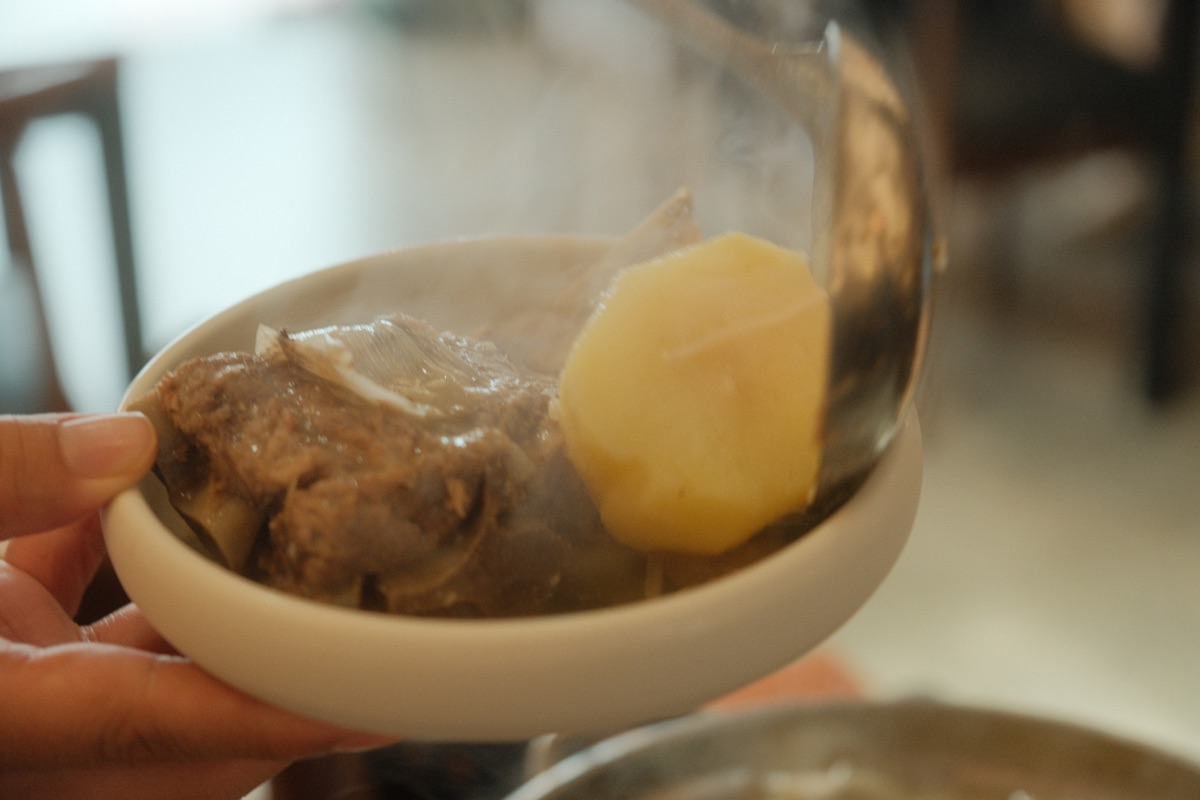
The pork passed the essential gamjatang test. The meat released easily from the huge bones, while the pieces still had enough structure to feel substantial. Some resembled bak kut teh ribs, an easy point of reference for diners in Singapore.
Gamjatang depends on this texture. Pork that clings stubbornly to the bone makes the meal tiring, while meat that has completely collapsed can lose its satisfying bite. At GAMJA, the pork came away without a struggle and remained the centre of the bowl.
The size of the bones also gives the dish its sense of occasion. Even in the clear broth, this is not a delicate soup built around small slices of meat. It is a pork-bone stew designed to be eaten slowly, with the broth becoming more developed as the pot stays hot.
For a first visit, focus on the pork before adding noodles or rice. Its tenderness is the clearest sign that the White Gamjatang is more than a novelty built around colour.
How Does the Clear Broth Taste?
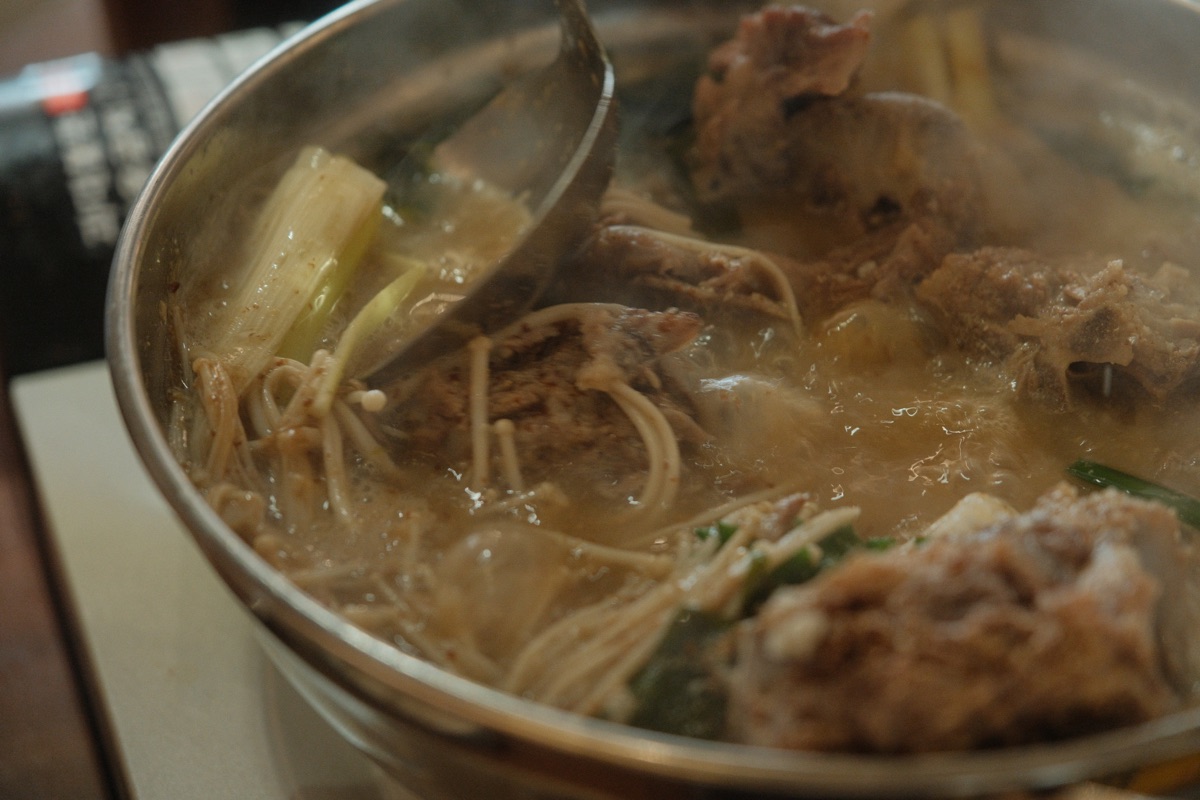
The clear broth was clean, savoury and comforting. It avoided the red colour and spicy profile associated with most gamjatang, yet the potatoes, pork bones and perilla seed powder kept the flavour anchored to the Korean stew.
The longer the pot simmered, the more the broth recalled kalguksu. That comparison captures its appeal better than calling it mild. It had the soothing quality of a clear noodle-soup broth, but the pork bones gave it more weight and the perilla seed powder kept the gamjatang connection present.
The seaweed pieces made the broth feel less predictable. They looked kombu-like and added to the impression that the kitchen had rebuilt the clear version as its own dish. Nothing about the bowl suggested a watered-down substitute for the original red stew.
This is the better choice for diners who want the comfort and pork-bone character of gamjatang without chilli heat. Those who consider the red broth essential should compare it with the original version before deciding which direction suits them.
How Does the Original Red Gamjatang Compare?
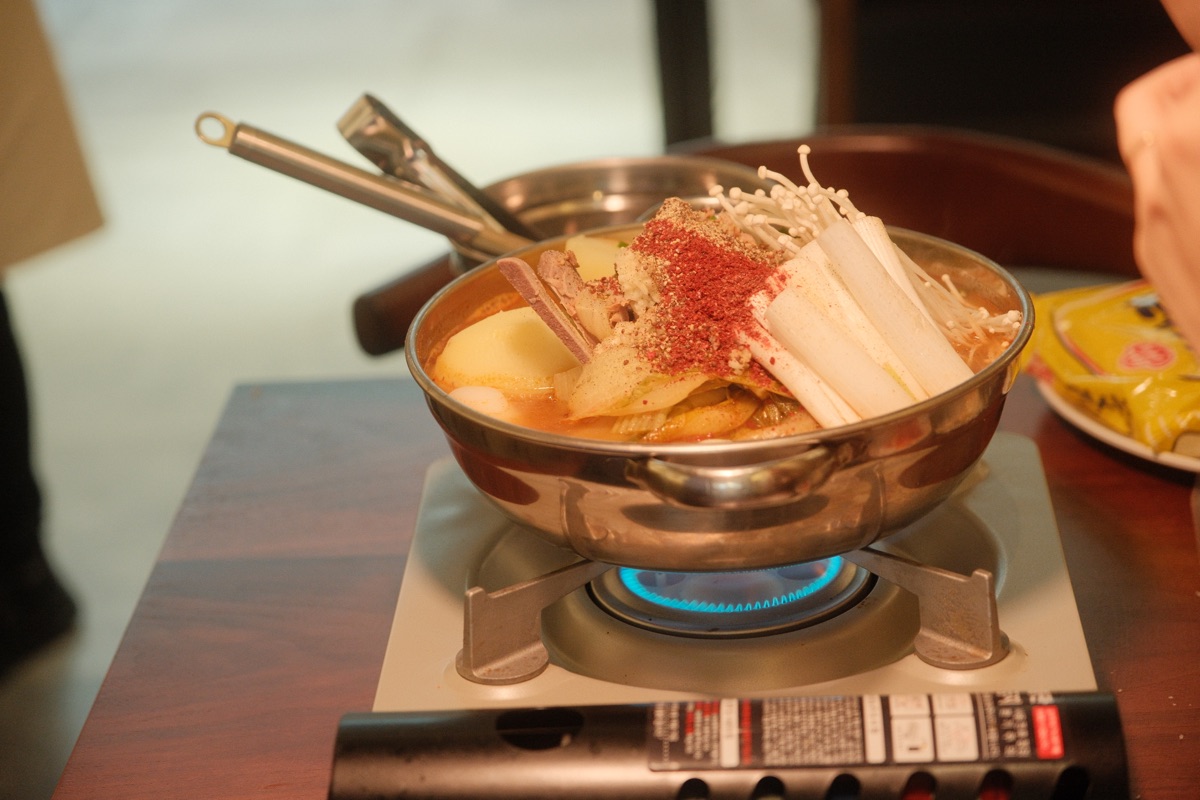
GAMJA also serves the familiar red version. It was equally 깔끔해, clean-tasting, and easy to keep eating without losing its 본연의 맛, or essential character.
The comparison is useful because it shows that the restaurant is not relying on the White Gamjatang alone. The original red broth offers the recognisable colour and spice, while the white version demonstrates how the same pork-bone framework can work without them.
Neither felt like a lesser option. The white version was the surprise because its clear broth still carried the identity of gamjatang. The red version was the reassurance, delivering a more conventional experience while remaining clean and easy to eat.
If the table is split between adventurous and traditional preferences, order one of each. The contrast is more informative than choosing only by spice tolerance, and both versions can move through the same noodle and fried-rice finish.
What Should You Add to the Sharing Pot?
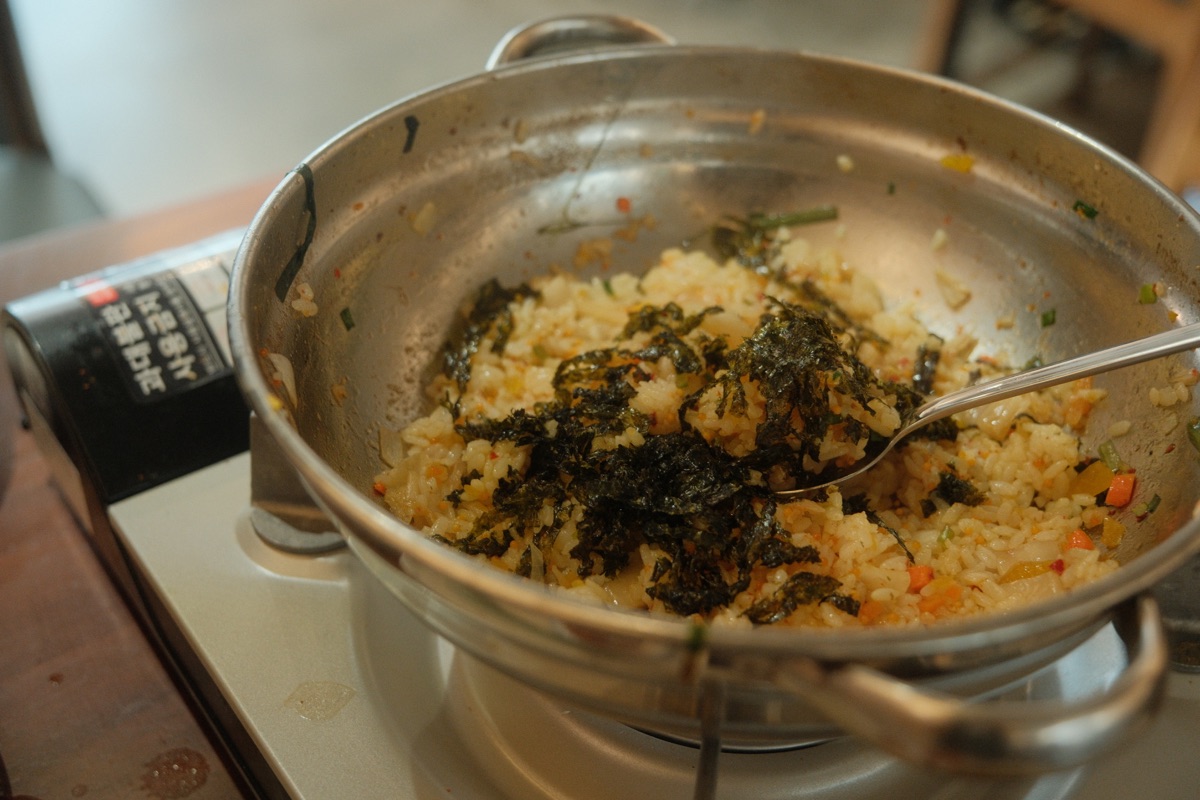
The full sharing experience continues beyond the first round of pork and broth. Add ramyeon sari, pour in more broth, then finish with fried rice. This progression turns the pot into a complete meal rather than a single stew course.
Ramyeon sari makes the most of the broth after it has simmered with the pork bones and potatoes. The noodles take on the flavour that has built in the pot, while the additional broth keeps the texture from becoming too thick. It is especially well suited to the White Gamjatang, whose clear, comforting character becomes increasingly noodle-soup-like over time.
Fried rice is the final stage. By then, the table has moved from pork bones to noodles, and the rice gives the remaining flavour one last form. Stay for it if choosing a larger pot with friends. Leaving after the first bowl would miss the sequence that distinguishes the sharing order from the $15.80 lunch set.
This is where the larger format earns its place. It is less about receiving a bigger portion of the same dish and more about letting the meal evolve at the table.
Which Side Dishes Complete the Table?
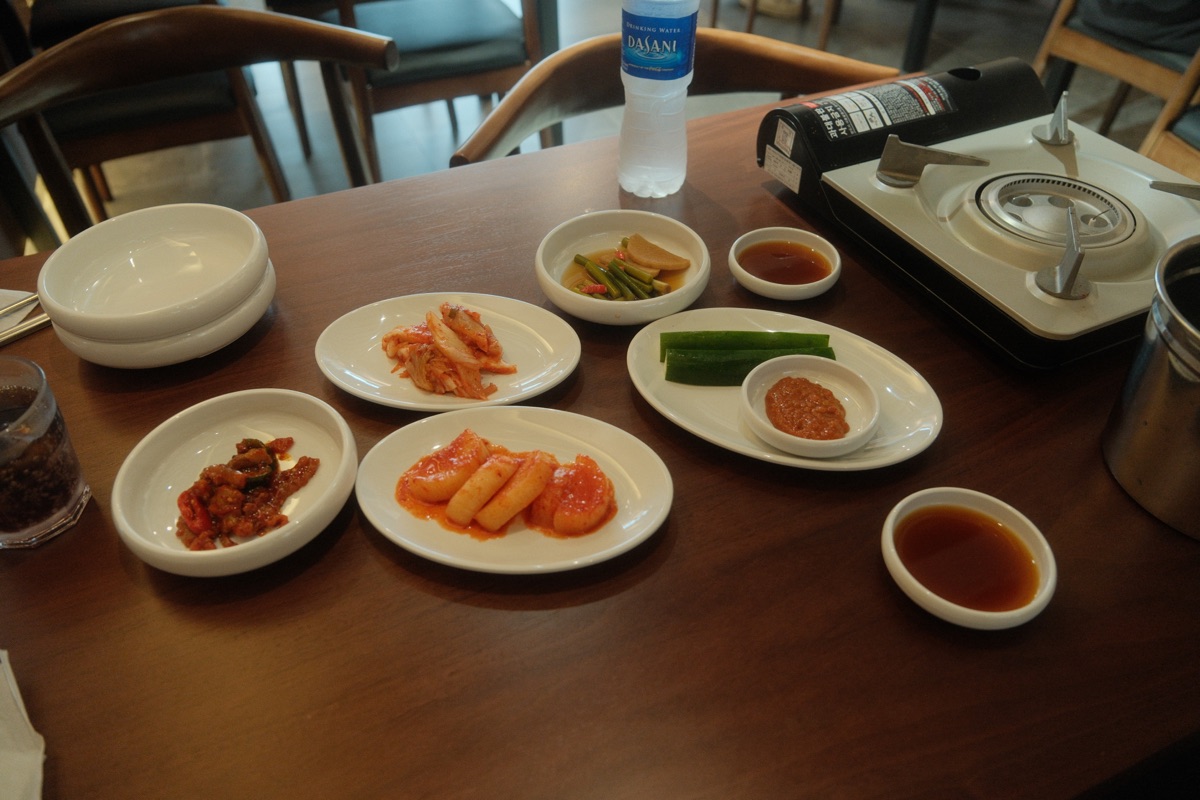
The grated-cheese potato, fluffy egg and banchan round out the sharing meal. Each gives the table a break from pork bones and broth without pulling attention away from the gamjatang.
The grated-cheese potato adds a richer, softer side. The fluffy egg offers a gentle contrast, particularly useful if the table chooses the original red broth. The banchan completes the familiar Korean restaurant rhythm of moving between the main pot and smaller bites.
These sides make more sense with the larger sharing order than with a quick solo lunch. They create variety across a long meal and help bridge the stages from pork to ramyeon and fried rice.
The main reason to visit remains the gamjatang. Treat the sides as supporting orders, then reserve enough appetite for the noodles and rice if the table wants the complete progression.
Is the $15.80 Lunch Worth It?
The $15.80 lunch gamjatang with rice is the practical choice for Telok Ayer. It puts the restaurant’s central dish into a format that works for one person and a CBD lunch break.
At that price, choose the broth style that sounds most appealing and focus on the pork, potatoes and rice. The White Gamjatang is the more distinctive introduction because it shows GAMJA’s clear, non-spicy interpretation. The original red version is the safer choice for anyone arriving with a fixed idea of what gamjatang should be.
The lunch bowl will not reproduce the entire sharing sequence. It is designed for convenience, while the larger pots allow time for ramyeon sari, extra broth and fried rice. That difference makes the choice straightforward rather than purely price-led.
For a weekday meal, the $15.80 bowl with rice is the order I would make. For a table of friends, start from the sharing pots listed from $53 and commit to the full progression.
For more Korean comfort food nearby, see Jomaru Singapore’s gamjatang in Tanjong Pagar and Jangsan Kisa Sikdang’s Korean baekban in Orchard.
Is GAMJA Worth Visiting?
GAMJA is worth visiting for the Perilla Gamjatang. The clear, non-spicy broth is different enough to create curiosity, yet the pork bones, potatoes and perilla seed powder keep the dish grounded in the character of gamjatang.
The pork released easily from the bone, the broth remained savoury and comforting, and the kombu-like seaweed pieces gave the white version an unexpected identity. The original red gamjatang also tasted clean and easy to keep eating, so traditionalists are not left with only the experimental option.
Lunch at $15.80 with rice is the sensible first visit for one person. The larger sharing pots, listed from $53, are the better choice for friends who want ramyeon sari, more broth, fried rice and the supporting sides.
GAMJA opens on 3 September in Telok Ayer. The strongest reason to go is not simply that the broth is clear. It is that the White Gamjatang changes a defining feature of the dish while preserving the pork-bone comfort that makes gamjatang satisfying.
FAQ
When does GAMJA open in Singapore?
GAMJA opens on 3 September in Telok Ayer, Singapore.
How much is lunch at GAMJA?
Lunch gamjatang starts at $15.80 and includes rice. Larger sharing pots are listed from $53.
Is the White Gamjatang spicy?
No. It uses a clear, non-spicy broth while keeping pork bones, potatoes and perilla seed powder.
What should a group order?
Choose a larger sharing pot, add ramyeon sari and more broth, then finish with fried rice. The grated-cheese potato, fluffy egg and banchan complete the table.