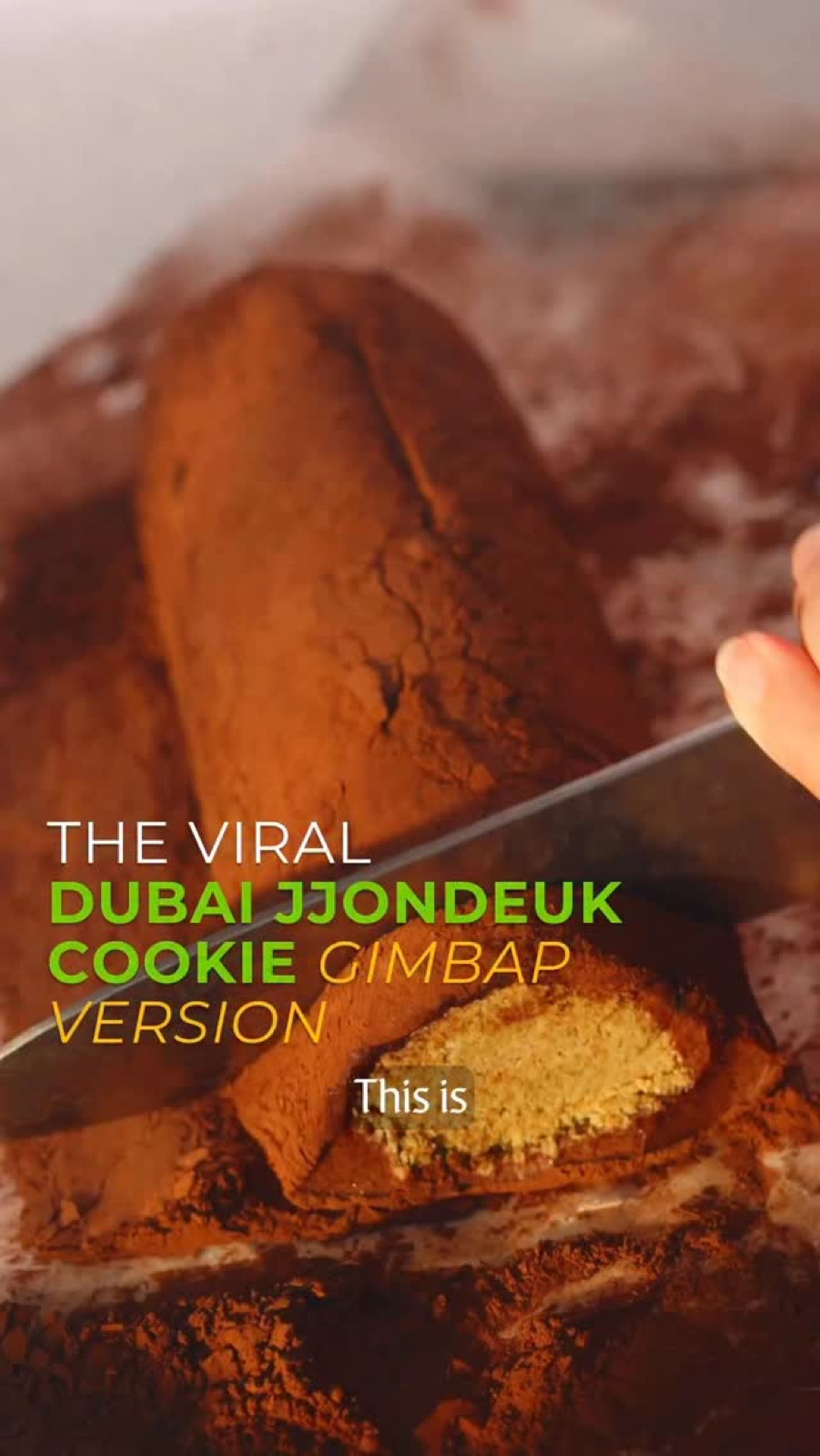
Dujjonku gimbap is a viral Korean dessert built around two demanding textures. A pistachio, white chocolate and kunafa filling is shaped into a frozen log, then wrapped in a chewy chocolate marshmallow layer and sliced like gimbap.
The result looks dramatic, but the recipe is direct about the work involved. The recipe was attempted four times and remained frustratingly sticky. It tasted good, but the final verdict was that buying it may be easier than making it. If you still want the challenge, the temperature, oiling and five-minute cooling window matter.
What Is Dujjonku Gimbap?
Dujjonku, written 두쫀쿠 in the written recipe, is presented here as a chocolate pistachio kunafa dessert shaped like a gimbap roll. The centre combines toasted kunafa dough with pistachio spread and melted white chocolate. The outer layer uses melted marshmallows, cocoa powder and skim milk powder to create a chewy chocolate skin.
This is a dessert roll rather than savoury gimbap. The name and sliced presentation provide the gimbap reference, while the filling and wrapper stay entirely sweet. Once the log is wrapped, it is rolled in cocoa powder and cut into individual gimbap-style pieces.
The recipe is possible at home, but it is not framed as easy. The marshmallow mixture becomes extremely sticky, the filling needs to stay firm and the wrapper needs to cool just enough to bend without becoming impossible to handle.
What Ingredients Do You Need?
For the pistachio kunafa filling:
- Butter
- Kunafa dough, with pre-toasted kunafa recommended to save time
- Pistachio spread
- White chocolate
For the chocolate marshmallow skin:
- Butter
- Marshmallows
- Cocoa powder
- Skim milk powder
For handling and finishing:
- Neutral oil
- Cocoa powder
The recipe does not provide ingredient weights or volumes. Keep the list unmeasured rather than inventing ratios. Cocoa powder appears in the chocolate mixture and again as the coating used before the finished log is sliced.
If you want another sweet project after this one, the four tangyuan recipes and cookie tangyuan offer more ideas from The Hansang’s Cook collection.
How Do You Make the Pistachio Kunafa Filling?
Start by melting butter in a pan over low heat. Add the kunafa dough and toast it until golden. The written recipe recommends using pre-toasted kunafa when you want to save time, which removes part of this first stage.
Transfer the toasted kunafa to a bowl. Add pistachio spread and melted white chocolate, then keep stirring. The mixture may look messy at first, but the instruction is to continue until it smooths out.
Shape the filling into a tight log. The shape matters because this frozen centre becomes the straight core that the chocolate marshmallow layer wraps around. Freeze the log before beginning the final assembly.
Do not skip the freezing step. The recipe places it before the marshmallow wrapper is made, and the firm centre gives you something stable to position on the sticky chocolate base.
How Do You Make the Chocolate Marshmallow Skin?
Use a clean pan and the lowest heat possible. Melt butter, add the marshmallows and stir gently until they puff up and melt. The low heat instruction is explicit and should guide this stage from the start.
Add cocoa powder and skim milk powder to the melted marshmallows. Keep stirring until the mixture is smooth and chocolate brown. The wrapper begins as a hot, sticky mass, so prepare the oiled work surface before trying to move or shape it.
The written recipe gives visual cues rather than a cooking time. Look for puffed and melted marshmallows first, then a smooth chocolate-brown mixture after the powders are incorporated. Once it reaches that point, move into the handling stage without adding unlisted ingredients.
How Do You Stop the Mixture From Sticking?
Oil everything that will touch the marshmallow mixture. That includes your hands, tools and parchment paper. The demonstrated method repeats this warning because the mixture sticks aggressively, and the written recipe describes thorough oiling as a required preparation step.
Spread the chocolate mixture onto the oiled parchment. Let it cool for exactly five minutes. At the end of that short wait, it should feel firm enough to handle while remaining flexible enough to roll around the frozen filling.
Five minutes is the only precise cooling time supplied. The desired texture is equally important: firm but still flexible. If the mixture sticks in places later, use a spatula to release those sections gently rather than pulling the roll apart.
How Do You Wrap and Shape the Roll?
Place the frozen pistachio kunafa log on the cooled chocolate marshmallow base. Roll the chocolate layer around the filling carefully, keeping the centre enclosed as you form one long dessert log.
Freeze the wrapped roll again briefly. This second freeze is for firming the outer layer after shaping. The recipe does not give an exact duration, so do not turn the word briefly into an invented number of minutes.
Once the wrapper has firmed, use a spatula on any sections that remain attached to the parchment or tools. The demonstrated method notes that the roll may still be a little sticky after freezing, so the spatula is part of the practical release method.
How Do You Finish and Slice Dujjonku?
Lay the log on cocoa powder and roll it so the surface picks up the powder. Add more cocoa powder on top, then cut the log into gimbap-style pieces.
The coating finishes the chocolate exterior and prepares the roll for slicing. Keep the pieces aligned after cutting if you want the pistachio kunafa centre and dark chocolate wrapper to read clearly as the dessert’s gimbap-style presentation.
The recipe does not provide a slice width, serving count or storage time. Slice according to the size of the log you made and serve without attaching an invented yield to the recipe.
Is Making Dessert Balls Easier?
Yes. The written recipe suggests using extra filling to make dessert balls, and the demonstrated method says making the balls was much easier. This gives you a practical alternative when the full wrapper becomes too frustrating or when filling remains after the log is assembled.
The balls are described only as a use for leftovers, so the recipe does not supply a separate coating or shaping method. Keep them as the simpler bonus option rather than expanding them into a different unsourced recipe.
The final tasting was positive, but the effort was not. The dessert tasted good, while the spoken verdict said it was not really worth the work and recommended buying it. That warning is part of the recipe’s honest appeal.
What Are the Most Important Recipe Cues?
- Toast the kunafa in butter over low heat until golden, or use pre-toasted kunafa.
- Stir the kunafa, pistachio spread and melted white chocolate until smooth.
- Freeze the filling as a tight log before wrapping it.
- Use the lowest possible heat for the butter and marshmallows.
- Stir in cocoa powder and skim milk powder until smooth and chocolate brown.
- Oil your hands, tools and parchment paper thoroughly.
- Cool the spread chocolate mixture for exactly five minutes.
- Wrap the frozen filling while the outer layer is firm but still flexible.
- Freeze the completed roll briefly, then use a spatula to release stuck areas.
- Finish with cocoa powder and slice into gimbap-style pieces.
These cues come directly from the written and demonstrated methods. They do not make the dessert effortless, but they preserve the sequence that produced the finished roll.
FAQ
What is inside dujjonku gimbap?
The centre combines toasted kunafa dough, pistachio spread and melted white chocolate. It is wrapped in a chocolate marshmallow mixture made with cocoa powder and skim milk powder.
How long should the chocolate mixture cool?
Cool it for exactly five minutes on oiled parchment. It should be firm but still flexible when you add the frozen filling and begin rolling.
Why does everything need to be oiled?
The melted marshmallow mixture is extremely sticky. Oil your hands, tools and parchment paper thoroughly before spreading and rolling it.
Is the full gimbap-style roll worth making?
The recipe says it tastes good but is frustrating to make and may not be worth the effort. Using extra filling for dessert balls is the easier alternative.