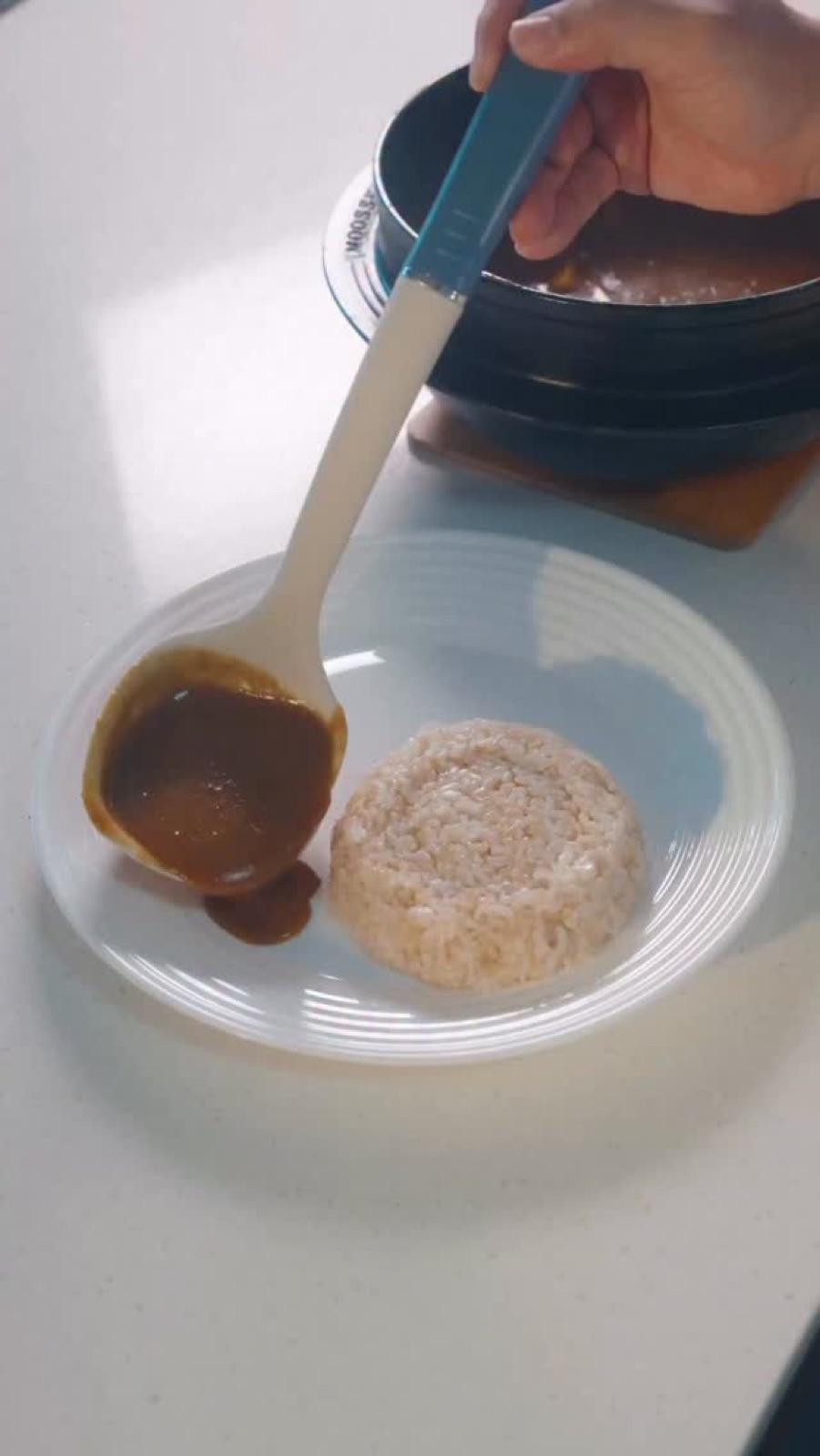
Leftover vegetables from making suyuk do not have to end with the broth. In this recipe, the softened onions and other suyuk vegetables are chilled, skimmed and blended into a smooth base for Japanese-style curry. Potatoes, curry cubes, butter and boiled eggs turn that base into a second meal, with leftover suyuk pork added when available.
The idea is rooted in resourceful Korean home cooking. The curry tastes deeper because the vegetables have already cooked alongside the suyuk, and caramelising them before blending concentrates what would otherwise be discarded.
Why Use Leftover Suyuk Vegetables?
The vegetables left after making suyuk have already contributed flavour to the pork and broth. Instead of throwing them away after straining, this method keeps them for a curry base.
For steamed suyuk, the onions should already be caramelised. If the suyuk was made by boiling, pour off some of the water and let the vegetables caramelise before storing them. Refrigerate the leftovers, then skim off the fat before making the curry.
The demonstrated method describes the rested vegetables as already tasting complete once water was added and everything was blended. The curry cubes then shape that savoury base into Japanese-style curry rather than supplying all of its flavour from the beginning.
What You Need
- Leftover suyuk vegetables after straining the broth
- 600–700 ml water
- 1–2 medium potatoes, chopped
- Japanese curry cubes, adjusted to taste
- A slab of butter, with no exact amount specified in the recipe
- Leftover suyuk pork slices, optional
- 1–2 boiled eggs
The amount of leftover vegetables is not specified because it depends on the suyuk batch. Use the saved vegetables from that batch and keep the stated water range as the starting point for the curry.
Prepare the Leftovers
If you used the steam method for the suyuk, keep the onions that have already caramelised. For the boiling method, pour away some of the water and allow the vegetables to caramelise before they are refrigerated.
Chill the leftover vegetables and skim away the set fat. This resting step makes it easier to separate the fat before the vegetables are blended.
Keep any leftover suyuk pork separately. It is optional in the curry and goes back into the pot only after the potatoes and curry base are ready.
Blend the Curry Base
Bring 600–700 ml water to a light boil in a pot. Blend the chilled suyuk vegetables until they are completely smooth, then add the blended mixture to the water.
The smooth texture matters here because the vegetables are becoming the body of the curry rather than remaining as separate pieces. Blend until the mixture looks even, with no large vegetable pieces left.
This is the main zero-waste move in the recipe. The cooked suyuk vegetables become the base that carries the curry cubes, potatoes and eggs.
Add the Potatoes and Curry Cubes
Add 1–2 chopped medium potatoes to the pot and simmer them until tender. The recipe does not give a fixed cooking time, so use the texture of the potatoes as the guide.
Stir in Japanese curry cubes and adjust the amount to taste. Let the cubes melt fully into the blended vegetable base before adding the butter. The written recipe calls for a slab of butter but does not specify its weight, so do not assign an invented measurement.
Continue stirring until the curry looks smooth and the cubes are completely incorporated.
Finish with Pork and Eggs
If you have leftover suyuk pork slices, add them after the curry cubes have melted. The pork is optional, and the curry can still be made from the saved vegetables without it.
Add 1–2 boiled eggs to the pot and let them cook gently in the curry. This gives the eggs time to warm through and sit in the sauce before serving.
The recipe does not specify a final simmering time. Stop when the potatoes are tender, the curry cubes have fully melted and the eggs and optional pork are heated through.
Why This Leftover Curry Works
This curry begins with ingredients that have already done one job in a suyuk pot. Caramelising, chilling and blending the vegetables gives them a second role as the curry base.
The potatoes add substance, while the curry cubes and butter build the Japanese-style curry around the vegetables. Boiled eggs and optional pork make the finished pot more complete without requiring a new main ingredient.
It is a practical way to respect the ingredients used for suyuk while making a comforting second meal from them.
FAQ
What are suyuk vegetables?
They are the vegetables left after making suyuk, a Korean pork dish. This recipe saves them after the broth is strained and turns them into a blended curry base.
Do I need leftover suyuk pork?
No. Leftover pork slices are optional. Add them if you have them, or make the curry with the blended vegetables, potatoes, curry cubes, butter and eggs.
How much water should I use?
Use 600–700 ml water, as stated in the recipe.
How many curry cubes should I add?
Adjust the Japanese curry cubes to taste. The recipe does not provide a fixed number.