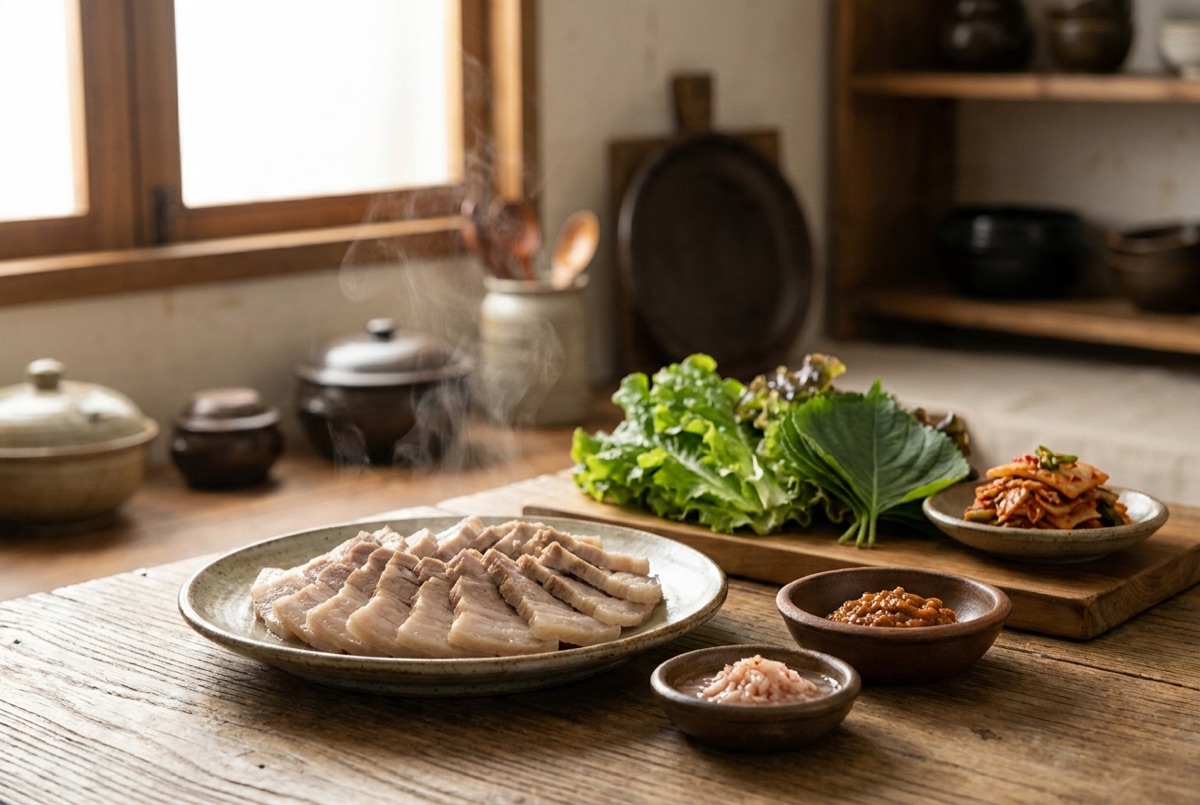
Suyuk (수육) is just pork, usually belly or shoulder, cooked gently until it slices clean and almost melts. How you cook it changes everything: how tender, how clean-tasting, and how much work. Here are three ways, and when to reach for each.
The classic pot boil
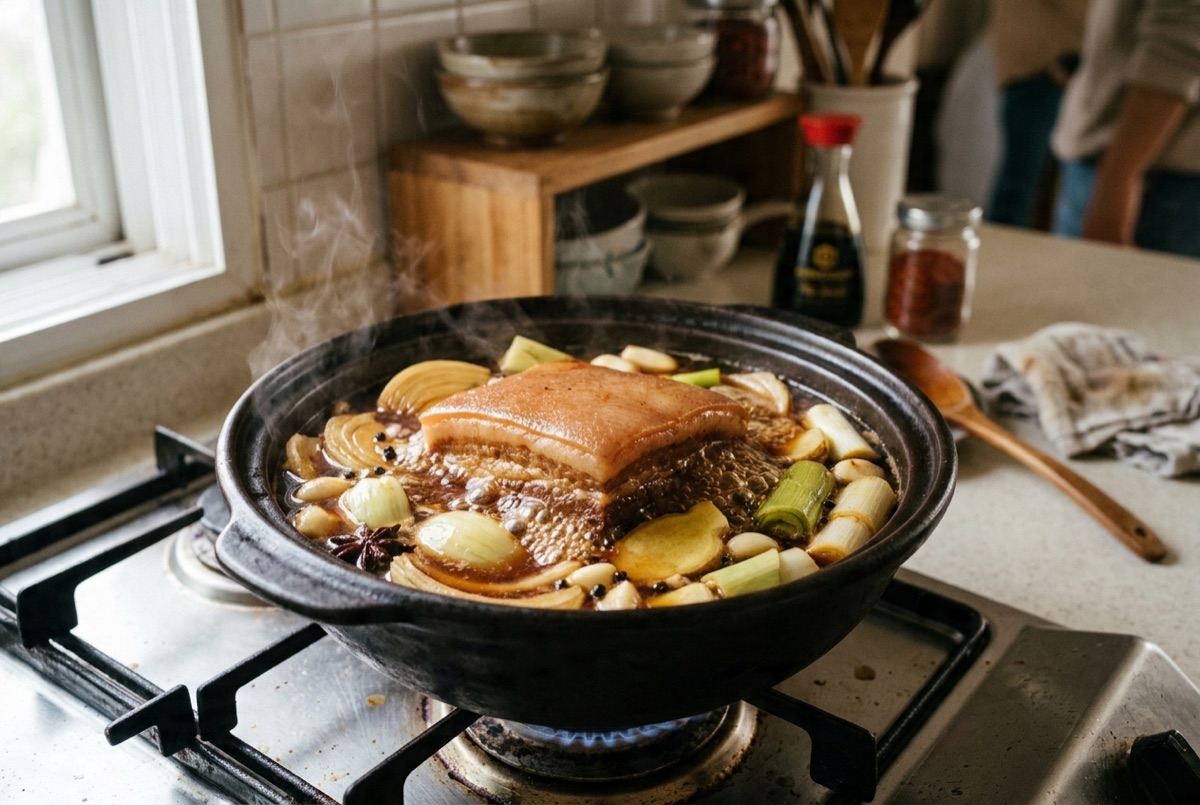
Submerge the pork in water with doenjang, ginger, garlic, a halved onion, a stalk of leek and a few peppercorns. A splash of soju or a spoonful of instant coffee rounds out any porky smell. Bring it up, then hold a gentle simmer for an hour to an hour and a half. The result is clean, moist and traditional. Let it rest in the broth before slicing.
Pressure cooker
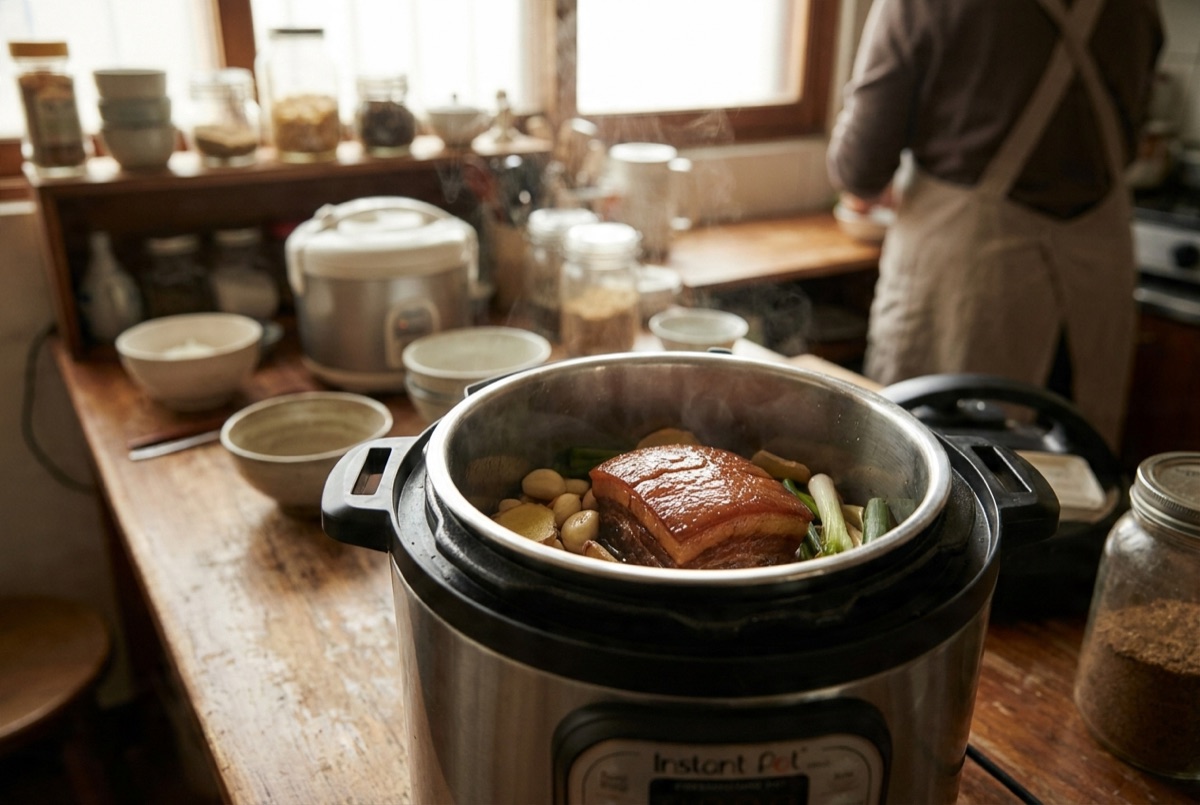
Same aromatics, far less water, thirty to forty minutes under pressure. The collagen breaks down fast, so the pork comes out meltingly soft. This is the move on a weeknight, or when you started thinking about dinner too late.
Steamed dry over vegetables
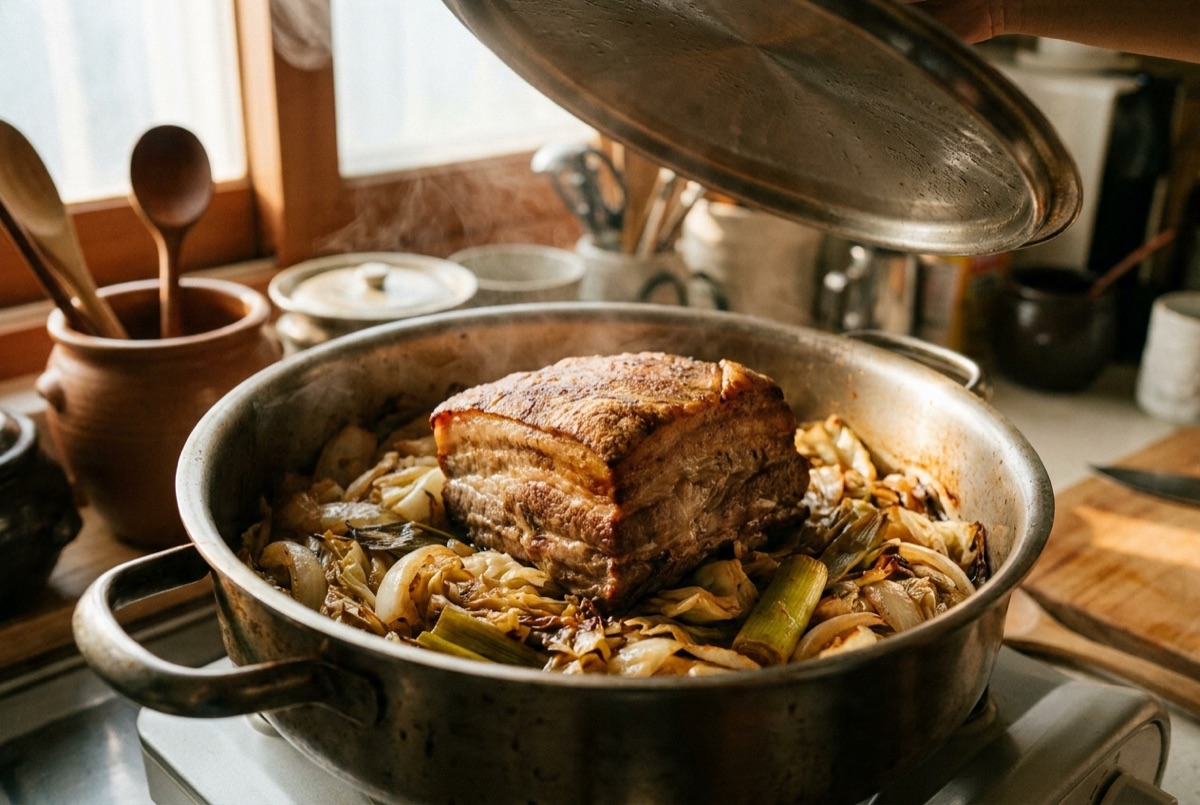
Build a bed of cabbage, onion and leek, set the pork on top, cover, and add no water at all. The meat steams in its own fat and the moisture from the vegetables, so the flavour concentrates instead of leaching into a pot of broth. The pork never turns waterlogged, and the softened vegetables underneath become their own side.
Serving
However you cooked it, slice against the grain while still warm and serve with ssamjang, a little salted shrimp (saeu-jeot), fresh lettuce and kimchi. That is bossam, and it is one of the great Korean tables.