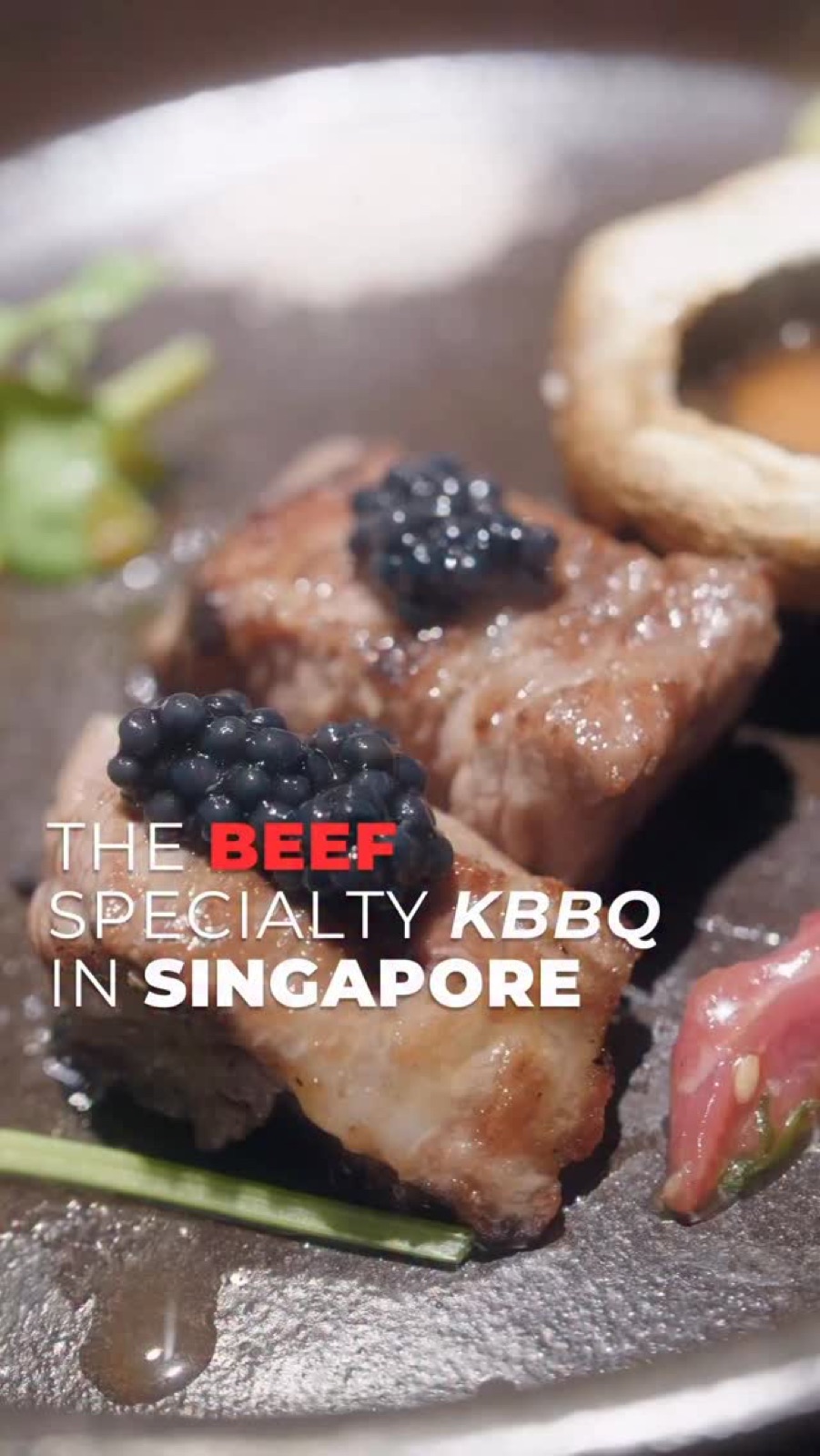
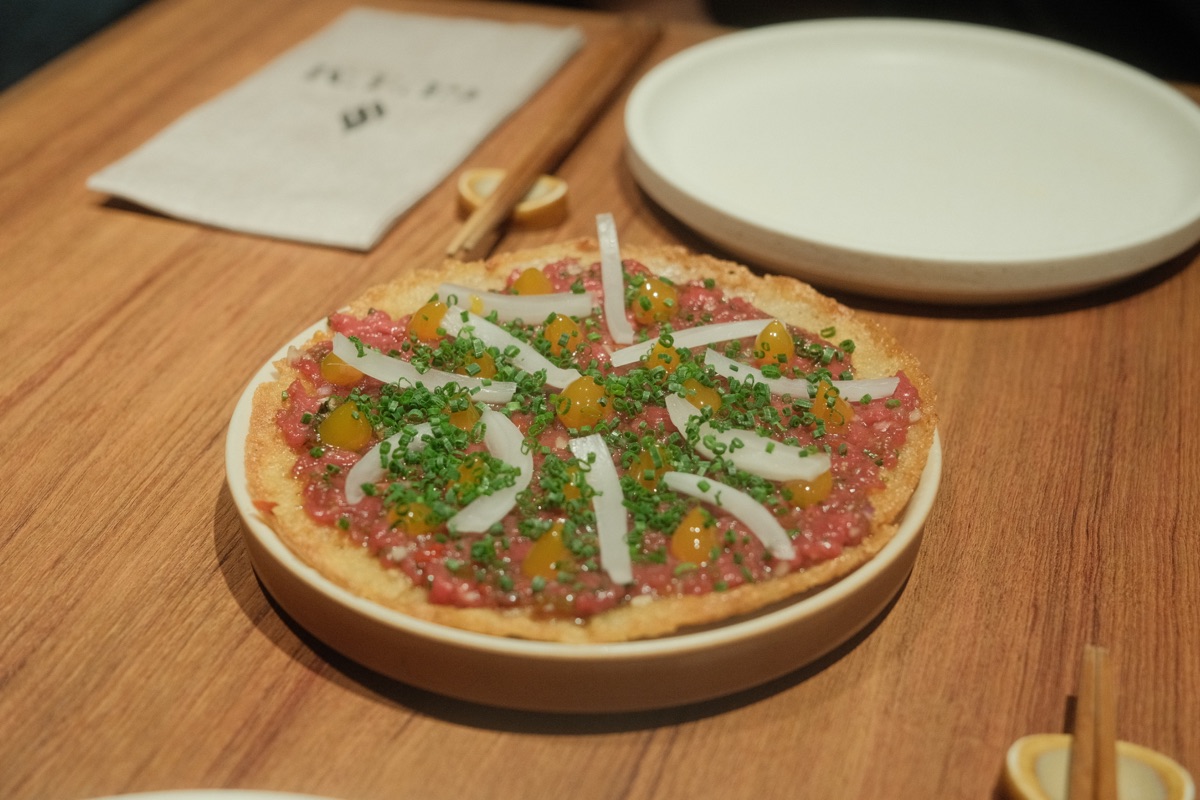
GU:UM Singapore built its second-anniversary sharing menu around rare 1++ Hanwoo, but the plate we ordered twice was not beef. It was the Yukhwae Jeon, a crunchy potato jeon topped with savoury yukhoe, soy-braised yolk and pickled onion.
That is the useful way to read the $168++ per person GU:UM SANG. The Hanwoo is the headline, and the charcoal gives it the intensity you want from a modern Korean grill. Yet the menu works because the smaller plates, skewers and closing dishes keep changing the pace. The Yukhwae Jeon was the bite we could not stop thinking about.
What Is the GU:UM SANG Menu?
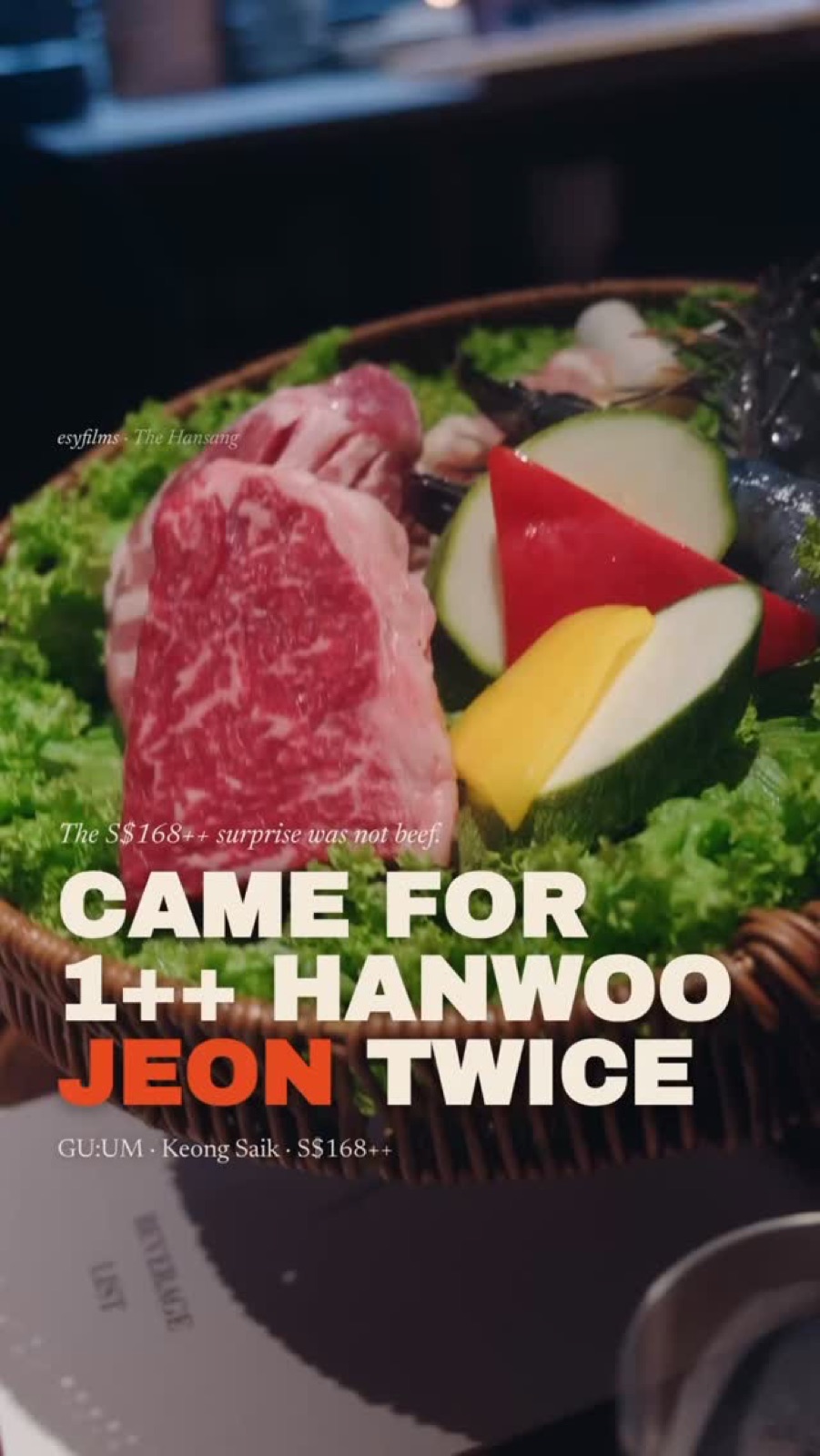
GU:UM SANG is GU:UM’s second-anniversary Hanwoo and namul sharing menu at its Keong Saik restaurant. It costs $168++ per person, and everyone at the table must participate. The charcoal course includes approximately 250g per person, led by 1++ Hanwoo lower loin.
The sequence does not stay on beef from beginning to end. Leek and doenjang, a Karae Chicken Tart and the Yukhwae Jeon open the meal before the charcoal grill arrives. The grill adds Jeju Handon pork collar, dalkkochi, tiger prawns and vegetables alongside the Hanwoo. Namul bap, galbi tang and hwachae close the sharing menu.
It is a broad Korean grill experience rather than a single premium cut followed by sides. The opening plates establish savoury and tangy notes, the charcoal course brings smoke and glaze, and the final rice, soup and fruit punch move the meal towards comfort and refreshment.
What Should You Order First?
The opening run starts with Leek and Doenjang. Its flavour arrives with the depth of a savoury Korean soup, giving the menu a distinctly Korean first impression before the sharper course that follows.
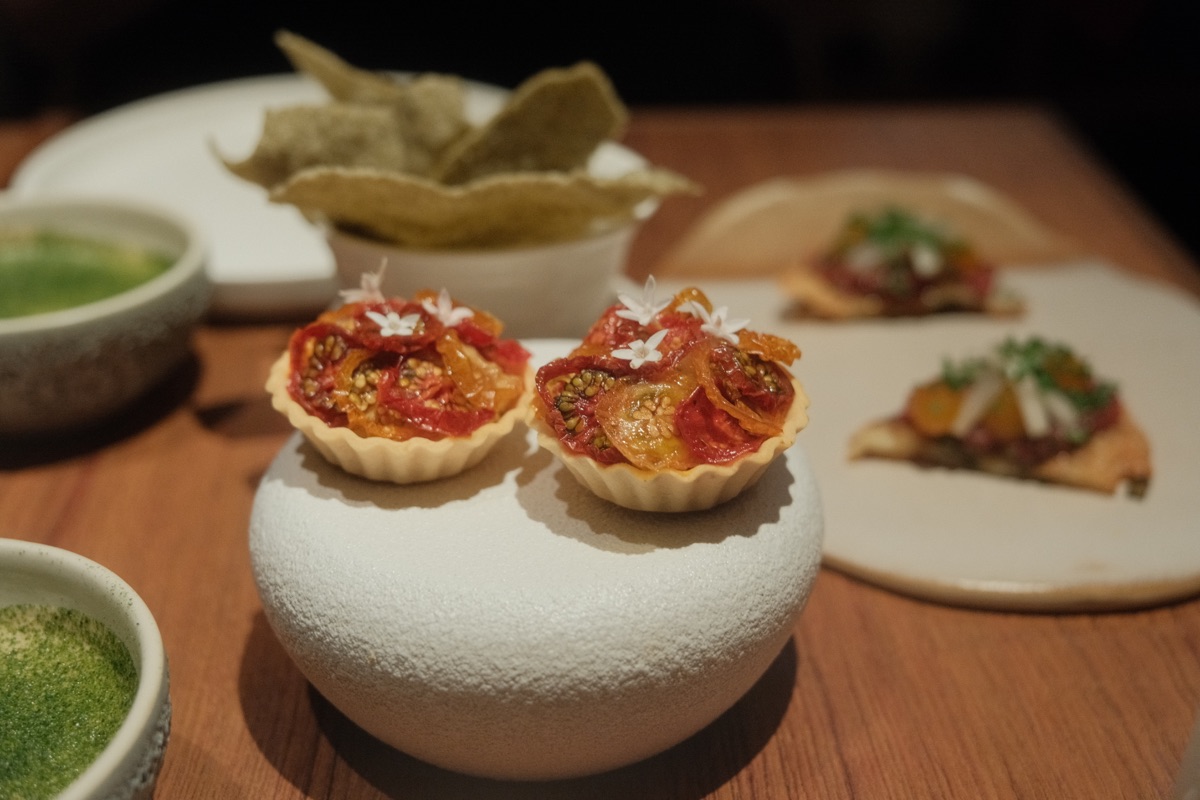
The Karae Chicken Tart turns in a brighter direction with tomato tang. That shift matters because the menu is heading towards a substantial charcoal course. The tart does not try to imitate the richness of the beef. It introduces acidity and gives the sequence contrast before the potato jeon and raw beef combination arrives.
These first dishes frame the meal as more than a steakhouse set. Doenjang, a tangy chicken tart and yukhoe all appear before the grill, so the menu establishes several textures and temperatures before the main charcoal section begins.
Why Was the Yukhwae Jeon the Best Dish?
The Yukhwae Jeon was the only dish we ordered twice. Its base is a crunchy potato jeon, layered with savoury yukhoe, soy-braised yolk and pickled onion. Each part has a clear job: the jeon supplies crunch, the yukhoe brings the beef, the yolk adds richness, and the onion cuts through it.
The contrast is what made the dish memorable. A potato pancake can be comforting and substantial, while yukhoe is soft and cool. Putting those textures together, then adding the yolk and pickle, gives the plate more movement than a straightforward beef course.
We ordered an extra piece immediately. That says more than a long list of adjectives could. On a menu advertised around Korea’s highest beef quality tier, the non-grilled beef dish was still the one that demanded a repeat.
What Comes Off the Charcoal Grill?
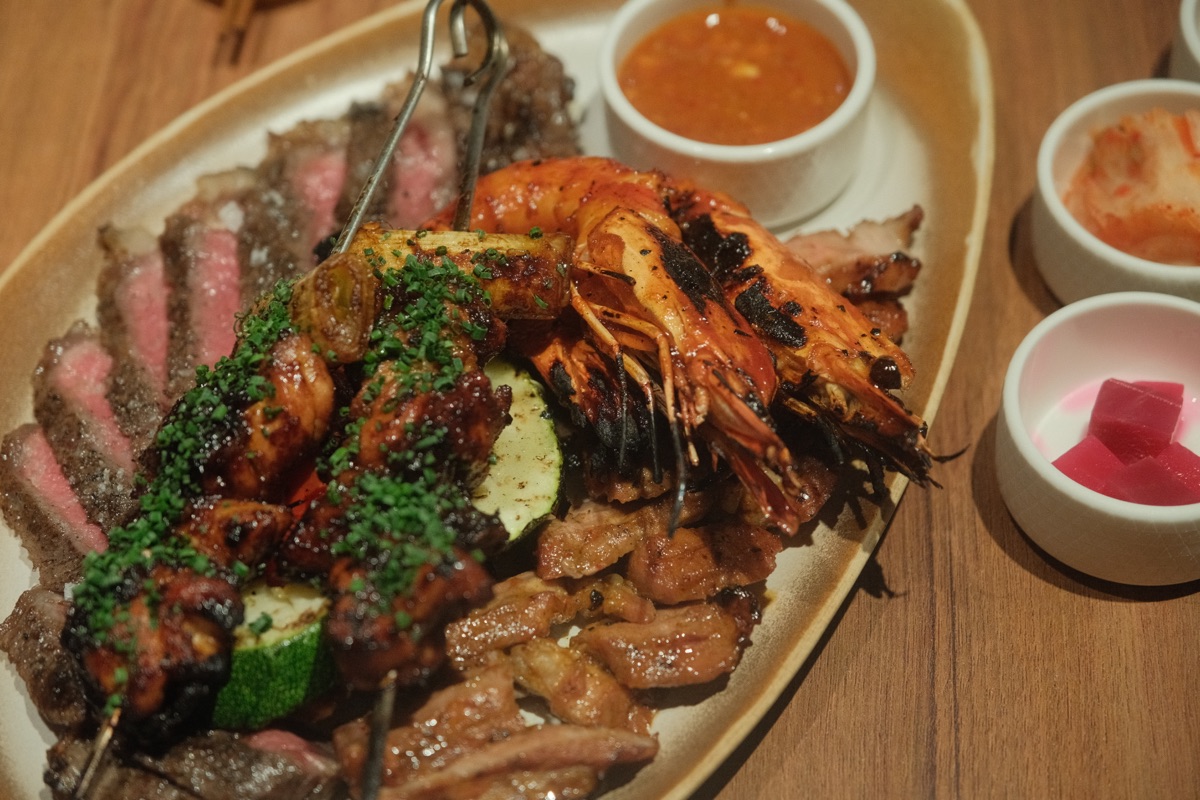
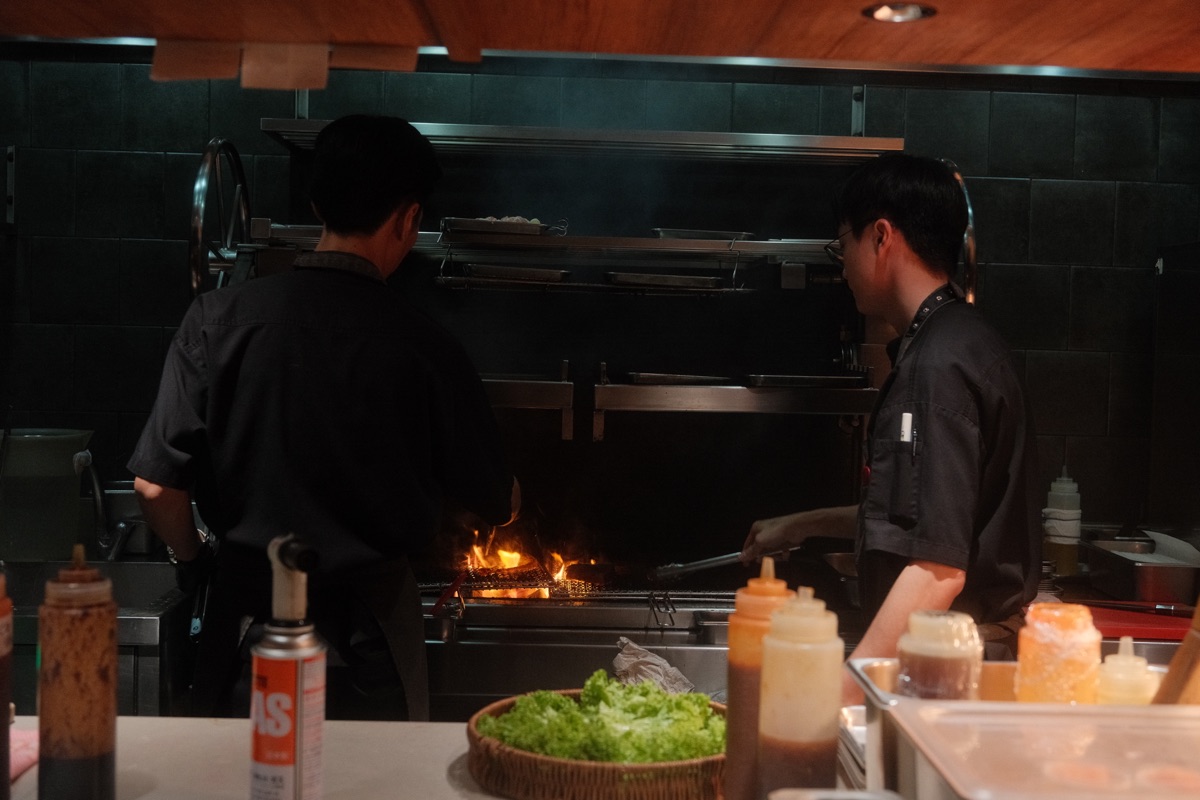
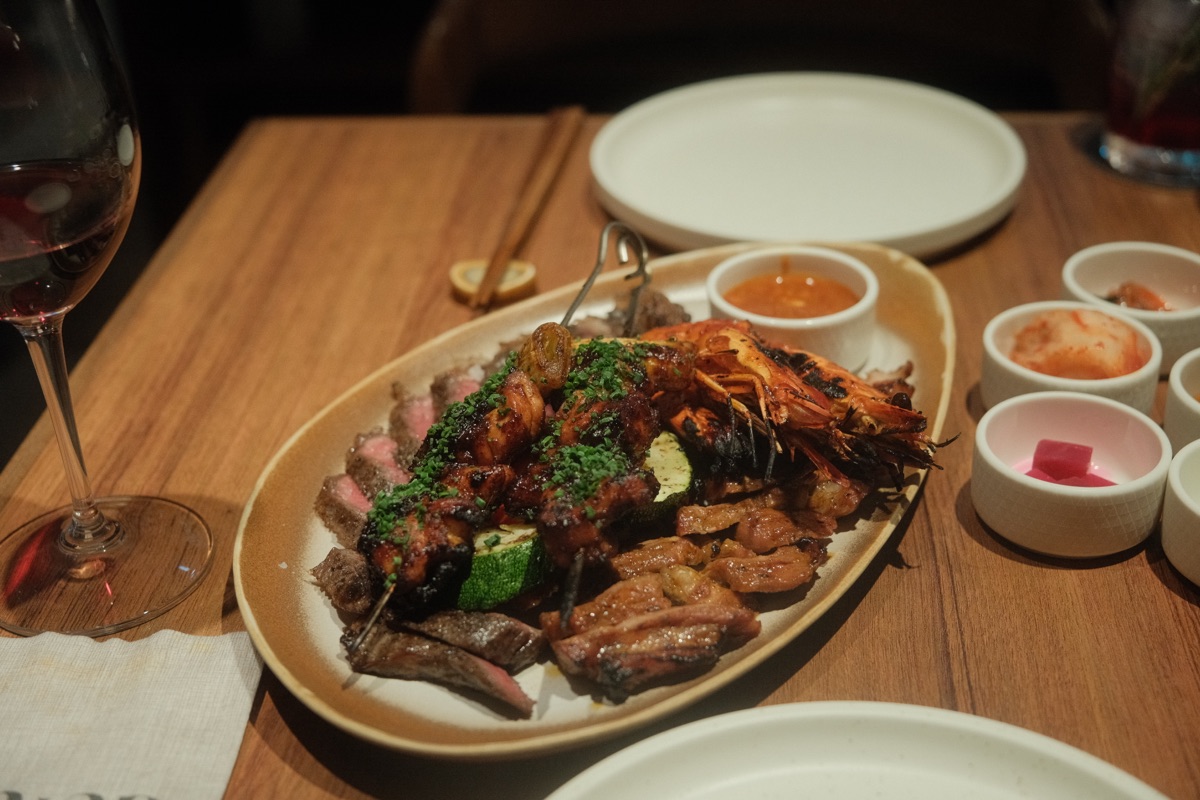
The charcoal course includes approximately 250g per person across the grilled items. The centrepiece is 1++ Hanwoo lower loin, described in the menu as Korea’s highest beef quality tier. It shares the grill course with Jeju Handon pork collar, dalkkochi, tiger prawns and grilled vegetables.
The Hanwoo carries intense charcoal smokiness. That is the defining note from the beef: not just richness, but the direct impact of the grill. It gives the rare premium cut the dark, smoky edge expected from a charcoal-led restaurant.
The Jeju pork collar broadens the meat course beyond beef, while the tiger prawns and vegetables stop the grill selection from becoming one-note. The format is designed for sharing, so the table moves between different proteins rather than receiving one isolated steak.
If Hanwoo is the reason for booking GU:UM Singapore, this is the part of the menu that fulfils that promise. The lower loin is given the central position, but the supporting grill items make the course feel like a full Korean barbecue sequence rather than a tasting of one cut.
How Does the Dalkkochi Compare With the Hanwoo?
The dalkkochi was sticky, sweet and properly glazed. Where the Hanwoo’s strongest impression was charcoal smoke, the chicken skewer brought a glossy, sweeter counterpoint.
That difference made the skewer stand out within a course dominated by premium beef. It did not need to compete with the Hanwoo on rarity. Its appeal came from the glaze and the way sweetness met the grill.
The charcoal course therefore has two distinct anchors. The Hanwoo is smoky and prestigious; the dalkkochi is sticky, sweet and immediately satisfying. The tiger prawns, pork collar and vegetables fill out the space between them.
For another look at how premium Korean beef is served in Singapore, compare GU:UM with Na Oh’s seasonal Hanwoo menu or the Hanwoo Korean BBQ at Kott-Don 360. GU:UM’s own approach is defined by the sharing sequence and the mix of composed starters, charcoal meats and Korean closing dishes.
How Does the Meal Finish?
The closing dishes move away from the direct force of the grill. Namul bap brings rice and seasoned vegetables, while the galbi tang is comforting after the smoke, meat and glaze of the charcoal course.
The galbi tang was the most explicitly comforting moment in the finish. It changes the temperature and mood of the meal without abandoning the beef thread running through the menu.
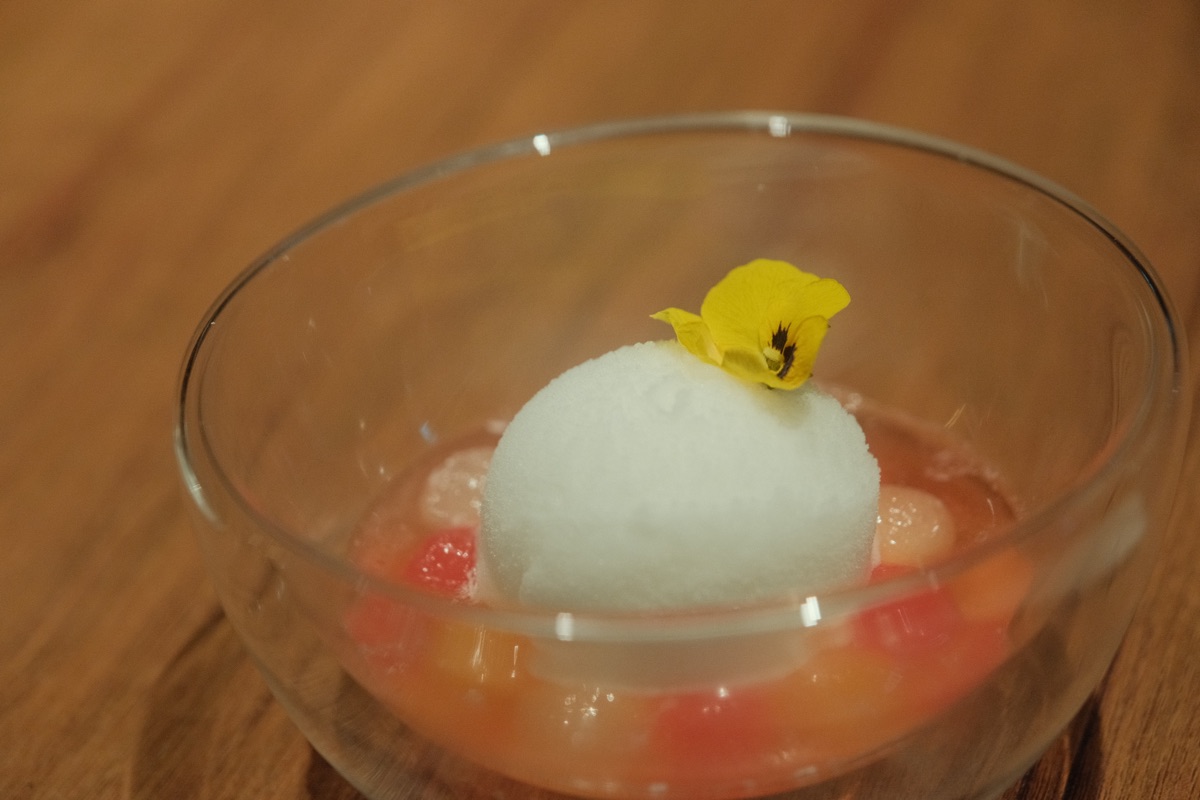
Finally, hwachae provides a refreshing close. After 1++ Hanwoo, pork collar, glazed chicken, prawns and rice, the fruit punch gives the meal a lighter final note.
The three-part finish is deliberate in its progression: rice for substance, soup for comfort, then hwachae for refreshment. It gives the sharing menu a complete ending rather than letting the experience stop abruptly after the grill.
Is GU:UM SANG Worth $168++ Per Person?
GU:UM SANG makes the most sense if the table wants a modern Korean steakhouse experience centred on rare 1++ Hanwoo. The $168++ per person price covers the full sharing sequence, and everyone at the table must take part.
Come for the Hanwoo lower loin and its intense charcoal smokiness, but do not treat every other dish as a supporting extra. The Yukhwae Jeon was strong enough to order twice, and the dalkkochi brought one of the grill course’s clearest flavours.
The decision is therefore not simply whether one cut of beef justifies the price. The menu’s value is in the full sequence: savoury leek and doenjang, a tangy chicken tart, the layered potato-and-yukhoe jeon, approximately 250g per person from the charcoal course, then namul bap, galbi tang and hwachae.
If that progression sounds like the way your table wants to eat, GU:UM SANG offers a focused Korean sharing meal in Keong Saik. If you only want a single beef plate, the compulsory whole-table format is the key condition to consider.
What Should You Know Before Going?
GU:UM is at 29 Keong Saik Road, Singapore 089136. The GU:UM SANG is a sharing menu priced at $168++ per person, and every diner at the table must participate.
Confirm opening hours, reservation requirements, halal status and the current booking channel directly with the restaurant. This menu was presented as GU:UM’s second-anniversary offering.
FAQ
What is the standout dish at GU:UM?
The Yukhwae Jeon was the standout. It combines crunchy potato jeon, savoury yukhoe, soy-braised yolk and pickled onion, and it was the one dish we ordered twice.
How much is the GU:UM SANG menu?
The sharing menu costs $168++ per person. Everyone at the table must participate.
Does the menu include only Hanwoo?
No. The charcoal course includes 1++ Hanwoo lower loin, Jeju Handon pork collar, dalkkochi, tiger prawns and grilled vegetables. The wider menu also includes composed starters, namul bap, galbi tang and hwachae.
Where is GU:UM in Singapore?
GU:UM is at 29 Keong Saik Road, Singapore 089136.