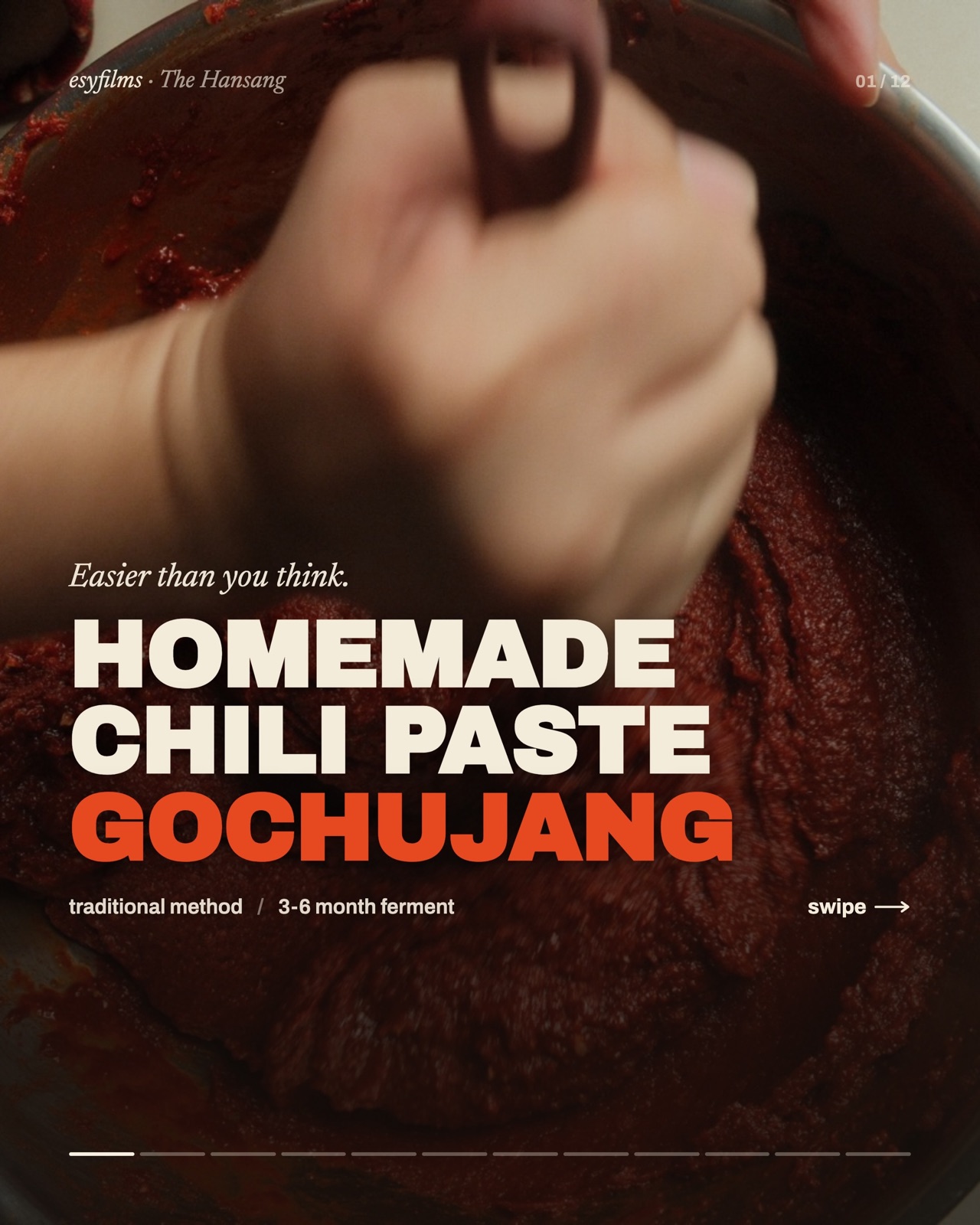
Homemade gochujang takes patience, not specialist skill. This traditional Korean fermented chilli paste develops its deep, rich flavour from gochugaru, glutinous rice, meju powder, rice syrup, plum extract and baekseju.
This batch was made in collaboration with @thepantryboy, The Ajooboys. Once mixed, the paste spends a short first fermentation in a cool, shaded place before moving to the fridge for several months.
Why This Method Works
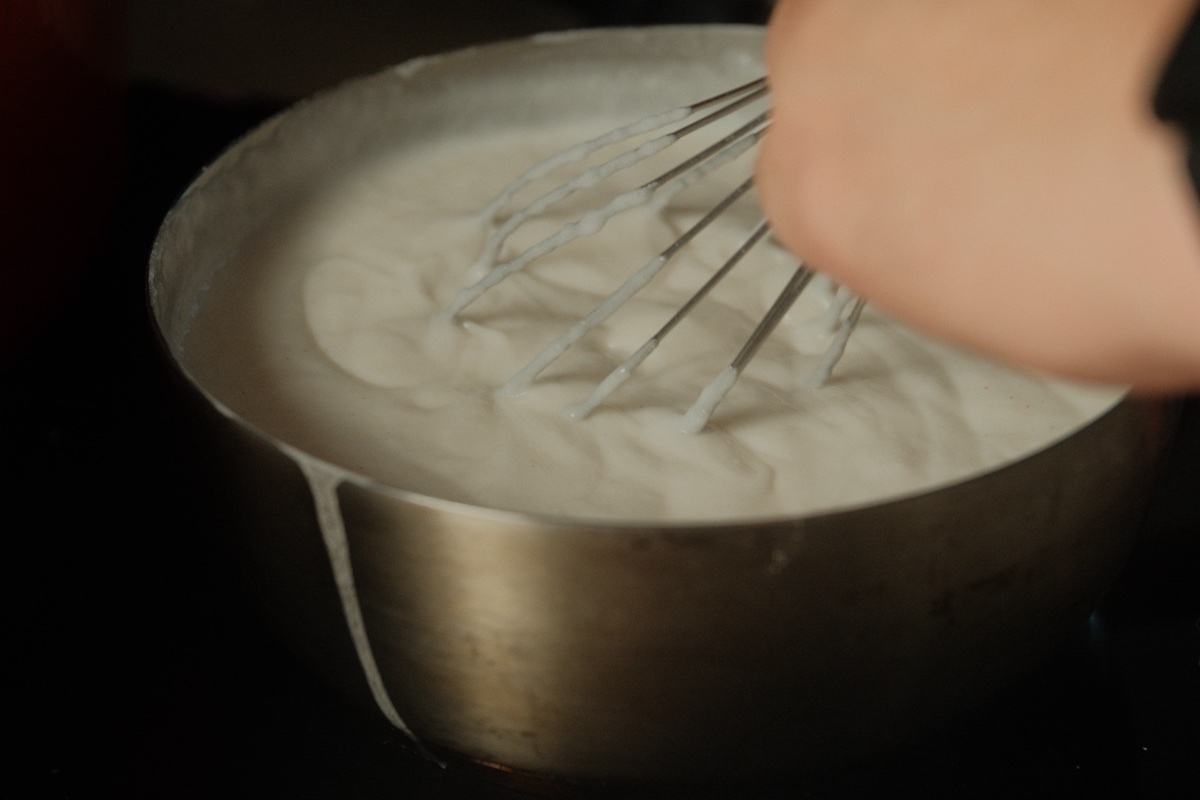
The glutinous rice is ground with water and cooked with powdered coin anchovy dashi until it becomes a thick paste. It must cool completely before the meju powder is added because heat can affect the good microbes needed for fermentation.
Baekseju, or soju, is added as a preservative. The surface is finished with salt and a sheet of kelp brushed with soju before the container is left to ferment.
What You’ll Need
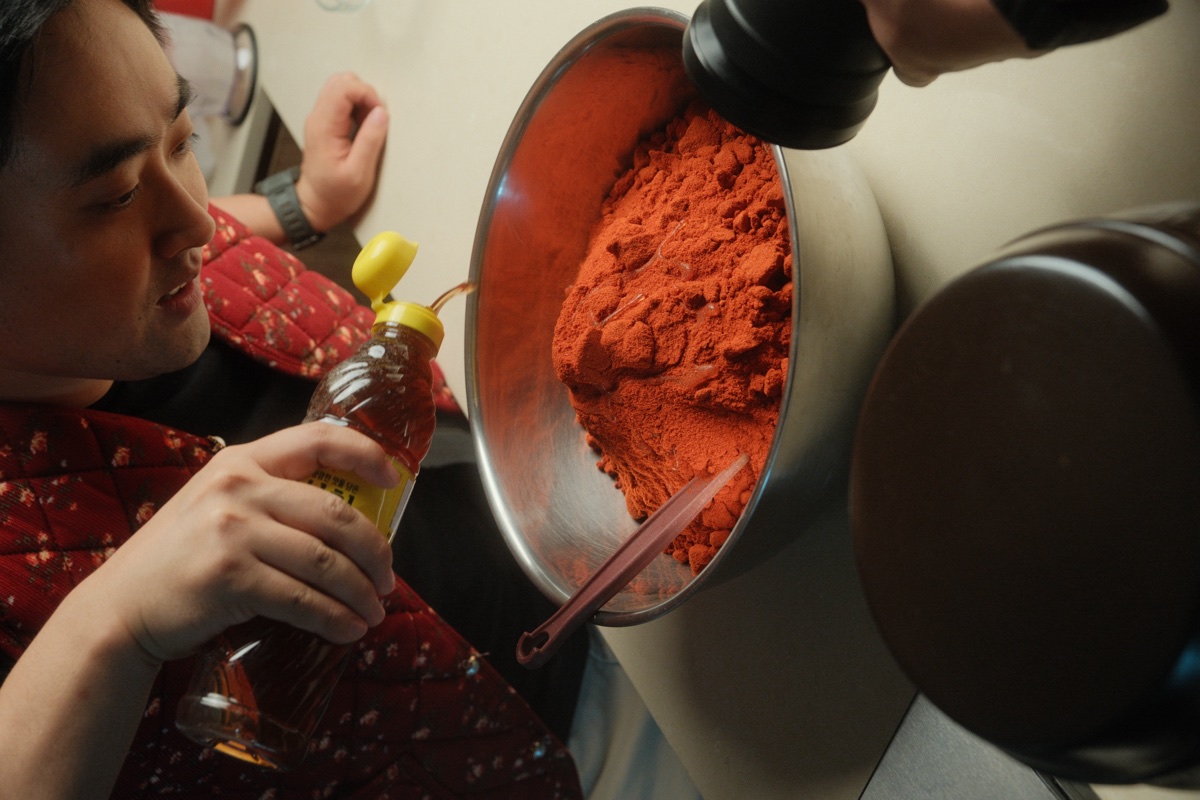
- Gochugaru, 500g
- Dry glutinous rice, 170g, about 250g after soaking
- Water, 625ml
- Coin anchovy dashi, ground
- Meju powder, 200g
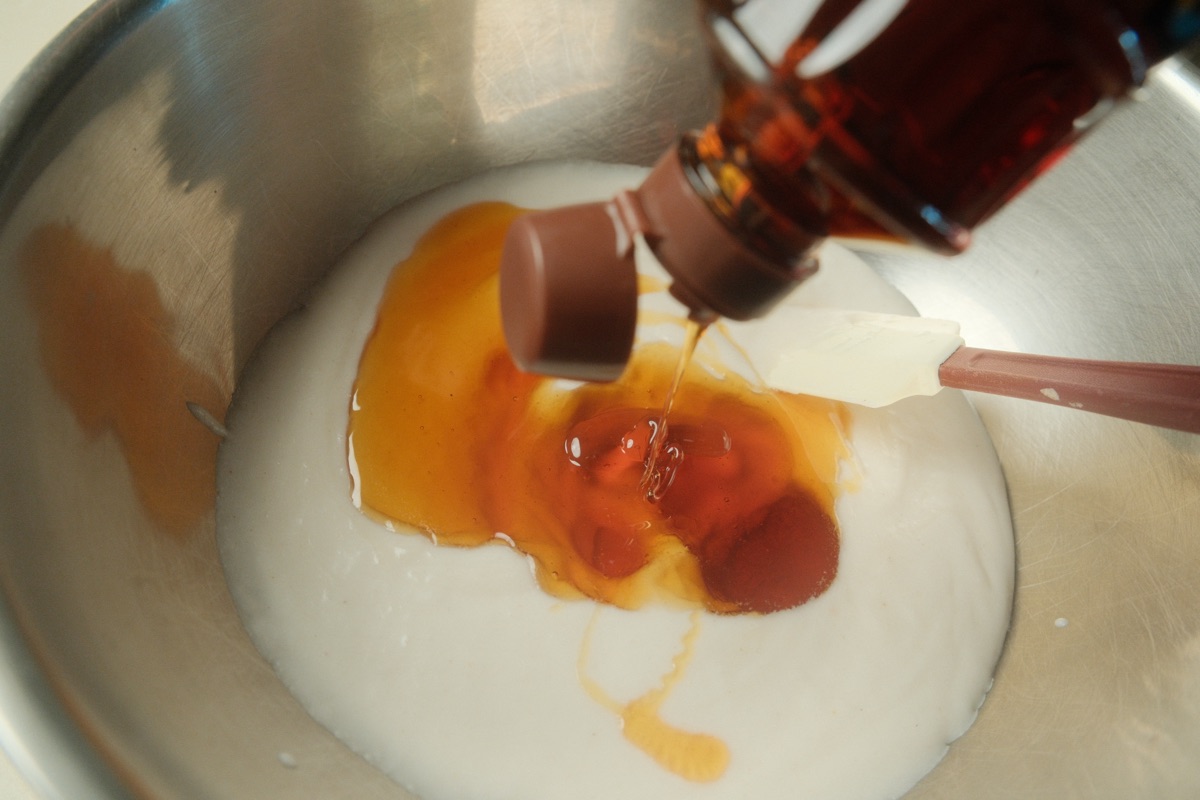
- Baekseju, 150ml, or soju
- Rice syrup or jocheong, 625g
- Coarse sea salt, about 2 cups
- Plum extract, 200g
- Dried kelp, 1 sheet, about 15g
- A little soju for brushing the kelp
How To Make It
- Soak the glutinous rice, then finely grind it until the mixture is milky and smooth.
- Separately grind the coin anchovy dashi into a dry powder. Pour the rice mixture into a pot, add the dashi powder and heat while stirring until it thickens into a paste.
- Let the paste cool completely. Heat can affect the good microbes in the meju powder.
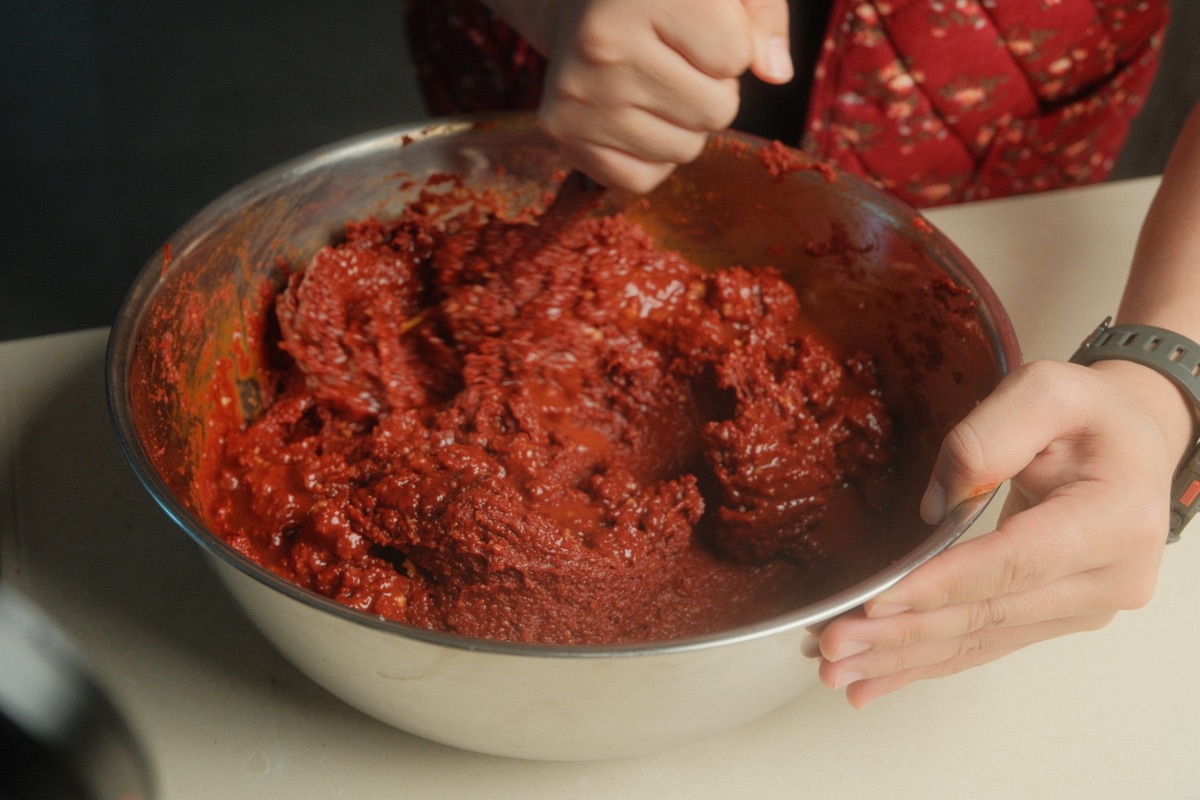
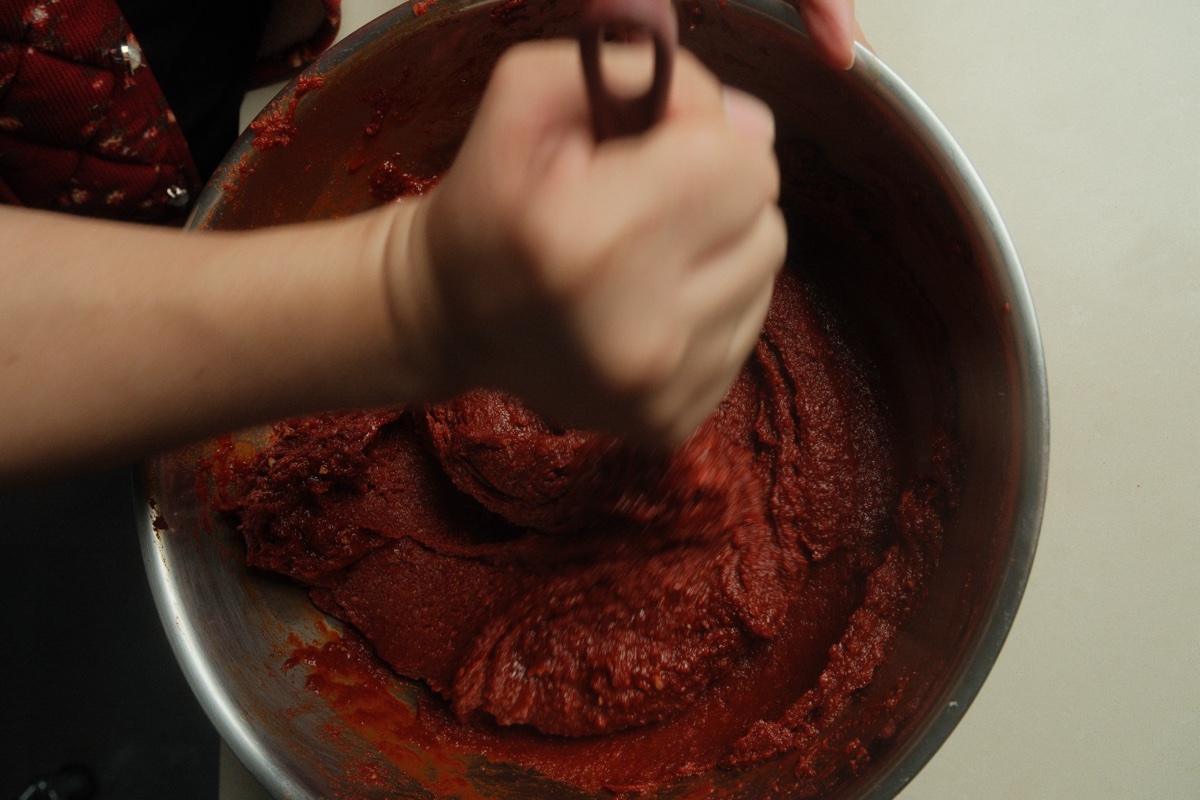
- Add the rice syrup, plum extract, sea salt, meju powder and gochugaru, followed by the baekseju. Mix very well until smooth.
- Transfer the mixture to a clean container. Sprinkle salt on top, cover it with the soju-brushed kelp and add a little more salt.
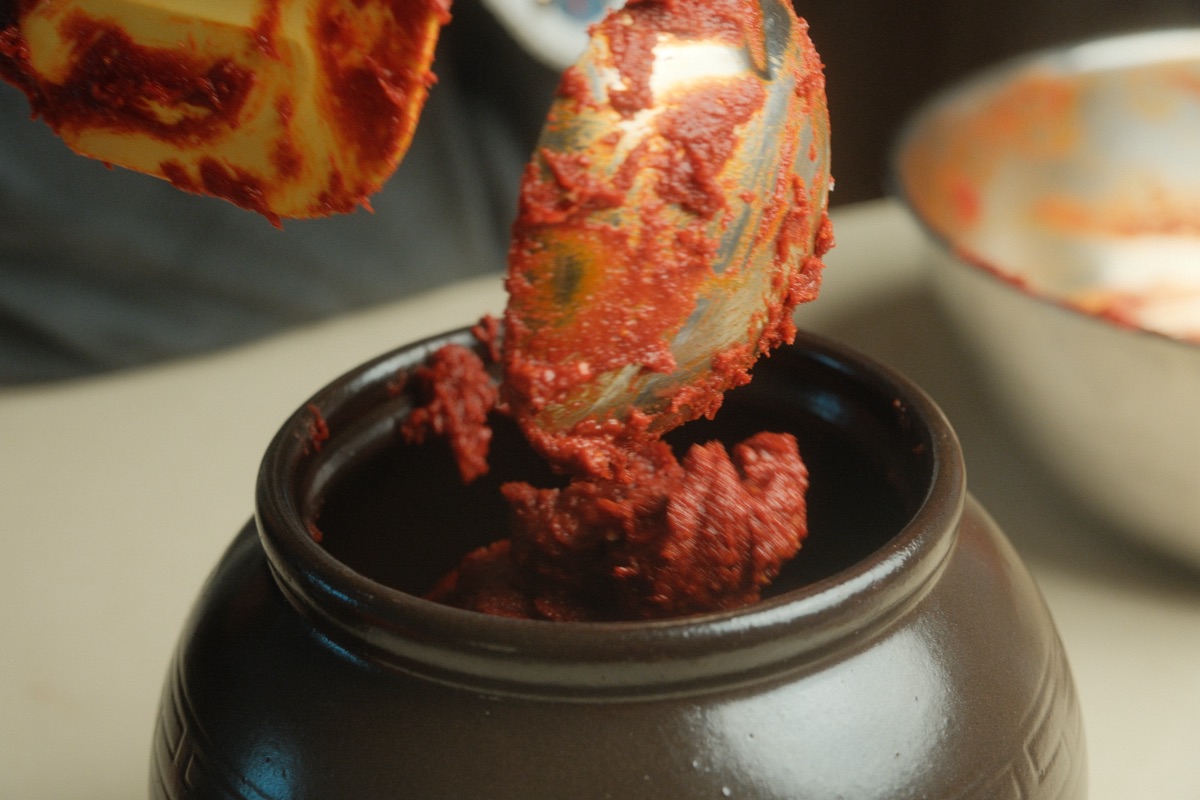
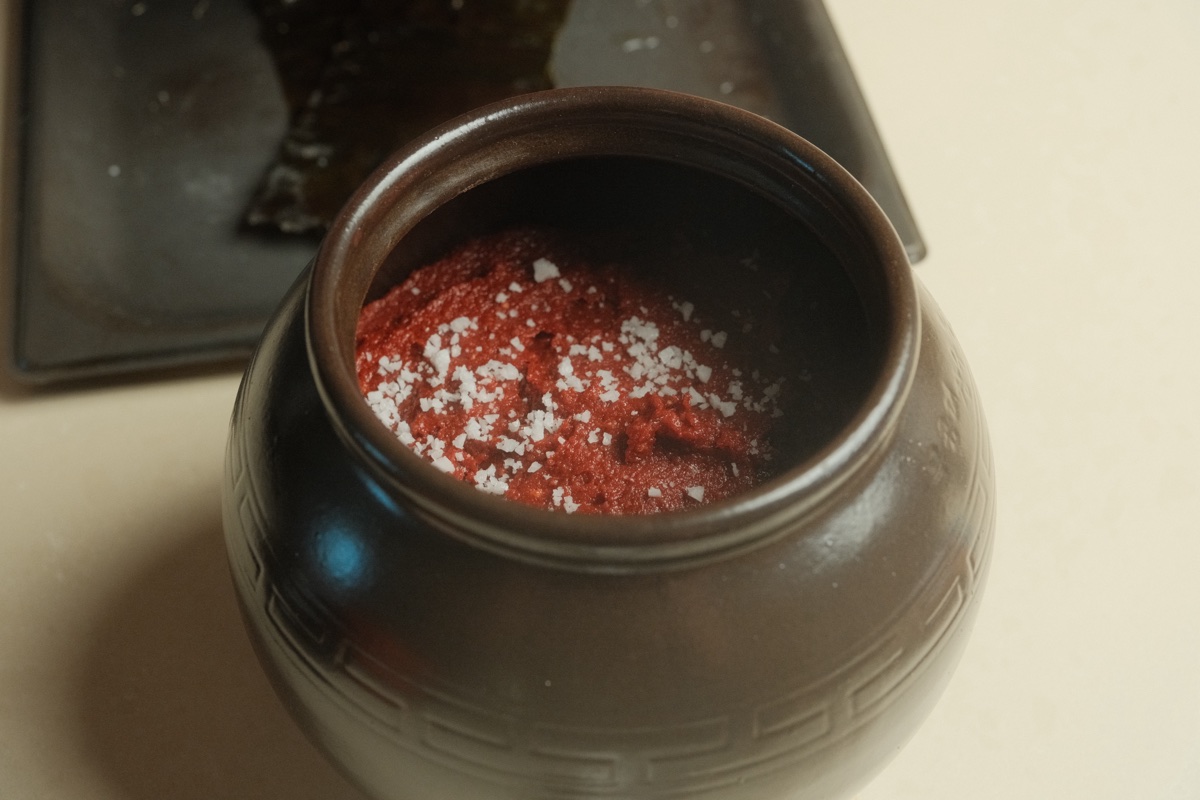
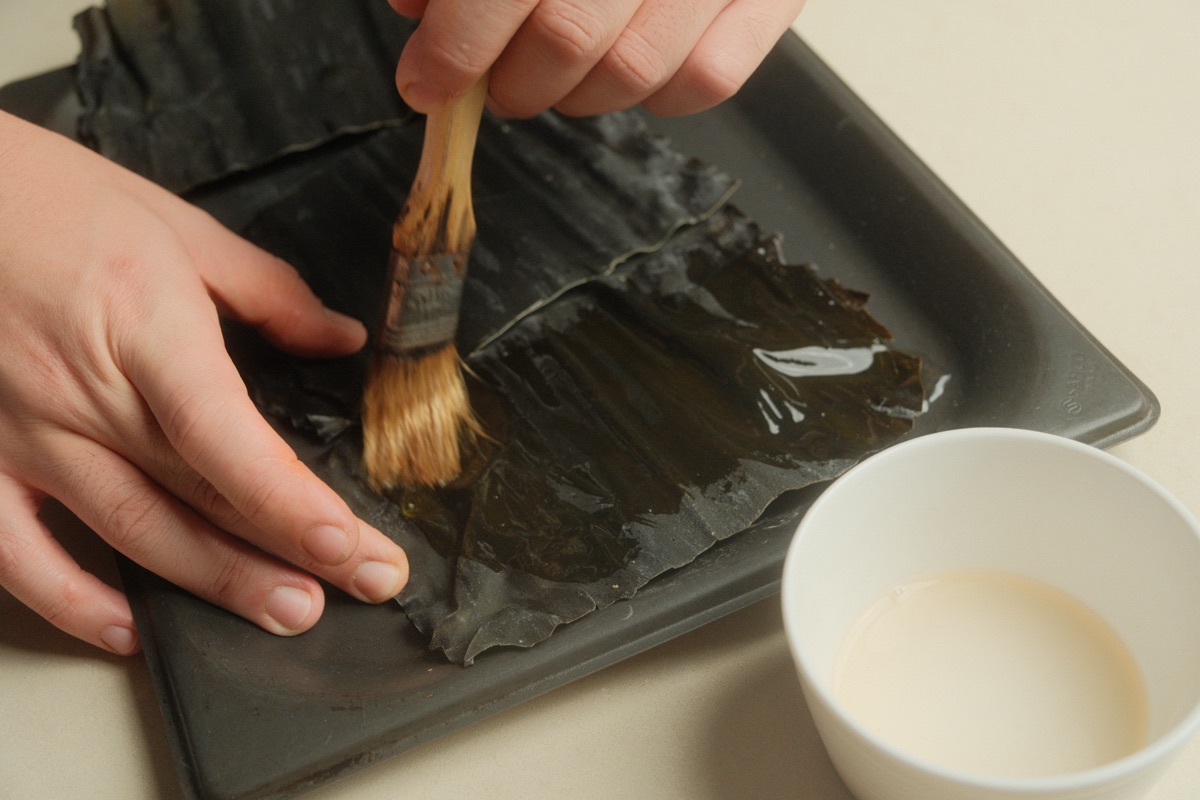
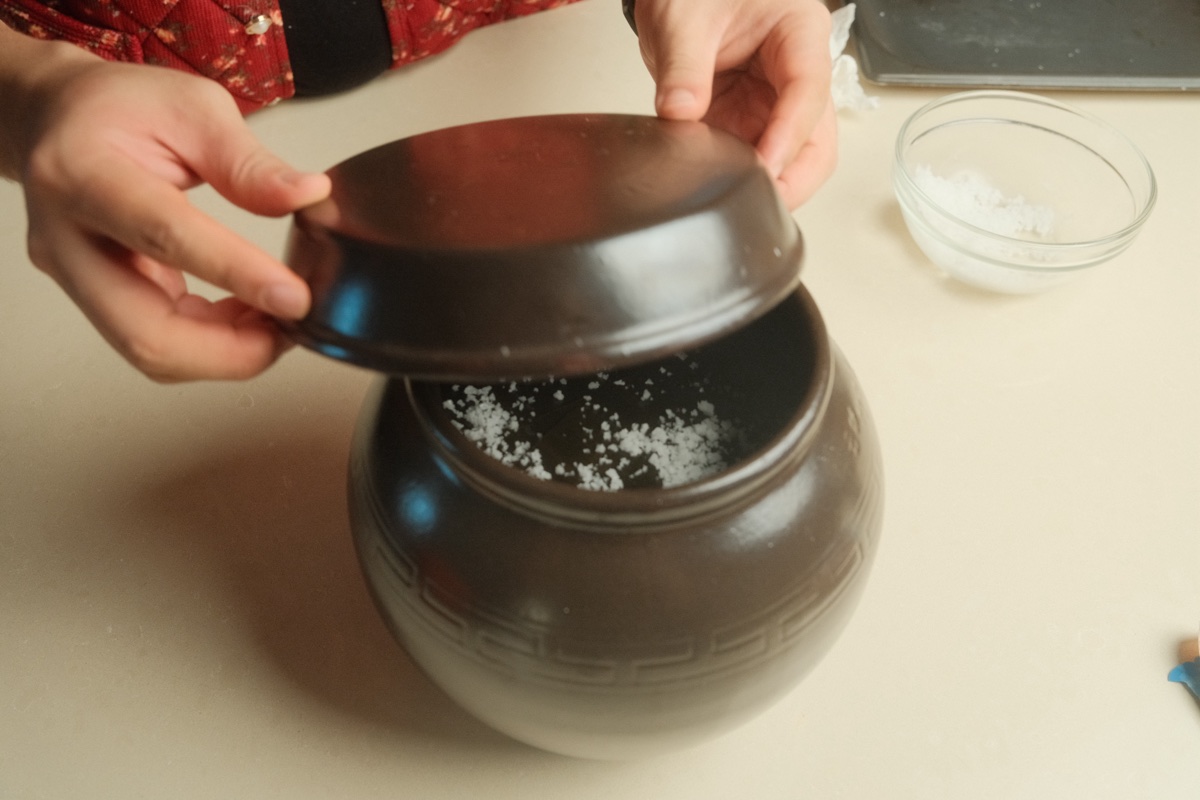
- Ferment in a cool, shaded area for a few days to one week. This batch fermented for a little over one week.
- Move the container to the fridge and let it continue fermenting for 3 to 6 months, or up to one year.
Singapore Swaps
Use soju in place of baekseju if needed. Both options are part of the original recipe.
One Tip
Check the gochujang for mould and always use clean utensils. Keeping the container and utensils clean matters throughout the long fermentation.
FAQ
How long does homemade gochujang take to ferment?
Start with a few days to one week in a cool, shaded area. Then move it to the fridge for 3 to 6 months. It can continue fermenting for up to one year.
What can I make with it?
Use the finished gochujang in stews, marinades, bibimbap and tteokbokki.
Do I need to add soju?
No. Added alcohol is not required for gochujang to ferment. The meju provides the microorganisms and enzymes that drive fermentation. In this batch, baekseju was mixed into the paste and a little soju was brushed onto the kelp as an extra precaution against surface mould. Plain soju can replace the baekseju, but the added alcohol is optional.