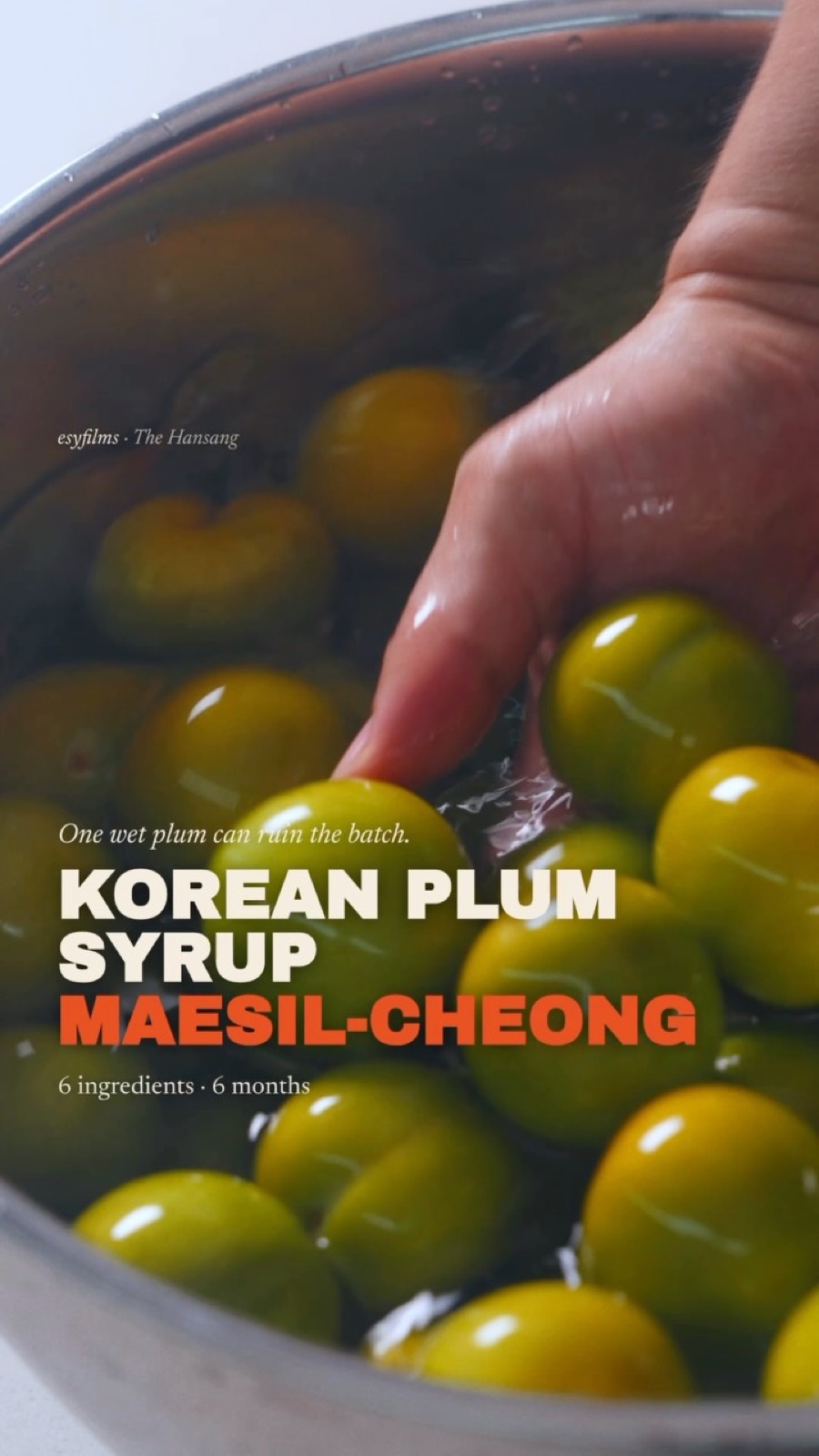
Maesil-cheong is Korean green plum syrup used in marinades, sauces, tea and summer drinks. This version starts with locally available green plums and uses equal weights of prepared fruit and total sweetener. The sweetener is divided into 40% white sugar, 40% brown sugar and 20% oligo syrup.
The recipe is simple, but the preparation is strict. Every stem must come off, damaged fruit must be discarded, and both the plums and sanitised glass jar must be completely dry. The long wait only begins after those details are handled carefully.
Why Must Every Plum Be Completely Dry?
External water is the main warning in this batch. After washing and rinsing the fruit, dry every plum completely before it goes near the jar. A hair dryer can help remove moisture from the stem ends and any spots a towel misses.
The glass jar needs the same treatment. Sanitise it, then make sure no water remains before layering the fruit and sweeteners. Do not rush from washing to filling the jar just because the surface of the plums looks dry.
Start by checking the fruit closely. Remove every stem and discard any plum that is bruised, split or otherwise damaged. Wash the sound plums in water with a few drops of vinegar, rinse them, and only continue when the fruit and jar are fully dry.
What Ingredients Do You Need for Maesil-Cheong?
- Green plums, 2kg after trimming
- White sugar, 800g
- Brown sugar, 800g
- Oligo syrup, 400g
- Vinegar, a few drops for washing
- Coarse sea salt, a small pinch
The 2kg fruit weight is measured after trimming. Together, the three sweeteners also total 2kg: 800g white sugar, 800g brown sugar and 400g oligo syrup. That keeps the prepared fruit and total sweetener at the stated 1:1 weight ratio.
The split matters because this recipe does not replace all of the sugar with oligo syrup. White sugar makes up 40% of the sweetener, brown sugar another 40%, and oligo syrup the remaining 20%.
How Do You Prepare the Green Plums?
Remove every stem first. Check each plum and discard any fruit that is bruised, split or damaged. Wash the remaining plums thoroughly in water with a few drops of vinegar, then rinse them.
Dry every plum completely. Inspect the stem end and every surface rather than drying only the obvious outside. A hair dryer can help remove any remaining external water.
Cut the dry plums in half and remove the pits. Korean MFDS guidance reports that pitting the plums cuts cyanogenic compounds by roughly 95% compared with whole-fruit maesil-cheong. That figure is a study comparison, not a measurement from this batch.
How Do You Match the Fruit and Sweetener?
Weigh the prepared, pitted fruit after trimming. Match that amount with the same total weight of sweetener. For the documented 2kg batch, that means 2kg prepared green plums and 2kg total sweetener.
Use 800g white sugar, 800g brown sugar and 400g oligo syrup. Mix a small pinch of coarse sea salt into the white and brown sugars before filling the jar.
Korean MFDS guidance also reports a separate 14% reduction with full oligo-syrup replacement. That figure does not stack with the 95% pitting comparison and does not describe this 20% oligo-syrup blend. Keep those comparisons separate rather than presenting them as one combined result.
How Do You Layer the Jar?
Use a sanitised glass jar that is completely dry. Alternate layers of prepared plum and the white-and-brown sugar mixture. Continue until the fruit and sugars are in the jar.
Finish with a thick sugar cap, then pour the 400g oligo syrup over the top. Close the jar and place it somewhere cool and shaded while the plums release their juice.
The visual change takes time. After one month, the firm green fruit should begin collapsing as it releases juice and the mixture deepens in colour.
What Should You Watch During the Wait?
Keep the jar somewhere cool and shaded. Check the batch rather than ignoring it for months. If you see mould or notice an abnormal odour, discard it.
The recipe does not provide a shortcut for the waiting period. It is designed around a three-to-four-month fruit stage followed by longer ageing after the fruit is removed.
Use visual progress rather than following a daily stirring schedule. Begin with sound fruit, remove the pits, keep the fruit and jar dry, maintain the 1:1 fruit-to-sweetener ratio, and watch for mould or an abnormal smell.
When Do You Strain and Age Maesil-Cheong?
Strain the fruit out after 3 to 4 months. Once the fruit is removed, keep ageing the syrup somewhere cool until it has reached at least 6 months.
These are two separate stages. The plums remain in the jar for the first 3 to 4 months, but the syrup continues ageing after they are strained out. Do not read the six-month guidance as permission to leave the fruit in for the entire period.
This batch is being checked month by month, with a progress check after two months and straining planned at the three-to-four-month point.
How Can You Use Korean Plum Syrup?
Use maesil-cheong in marinades, sauces, tea and summer drinks. It works as a Korean pantry sweetener when a recipe specifically calls for plum syrup.
For a cold example, the Naengguk Udon recipe uses plum syrup in its sweet-and-sour cucumber and seaweed broth. The Traditional Homemade Gochujang recipe uses plum extract as part of a different long-fermented Korean pantry project.
Wait until the fruit has been strained and the syrup has completed the stated ageing period before treating this batch as finished. The point of the recipe is not speed. It is careful preparation followed by enough time for the green plums and sweeteners to transform.
FAQ
What is maesil-cheong?
Maesil-cheong is Korean green plum syrup. It is used in marinades, sauces, tea and summer drinks.
What is the fruit-to-sweetener ratio?
Use equal weights of prepared fruit and total sweetener. This batch uses 2kg trimmed, pitted green plums and 2kg total sweetener.
Why are the plums pitted?
Korean MFDS guidance reports that pitting reduces cyanogenic compounds by roughly 95% compared with whole-fruit maesil-cheong. The figure comes from studies, not a measurement of this individual batch.
How long does maesil-cheong take?
Strain out the fruit after 3 to 4 months, then continue ageing the syrup somewhere cool until it has reached at least 6 months.
What should make you discard the batch?
Discard it if you see mould or notice an abnormal odour.