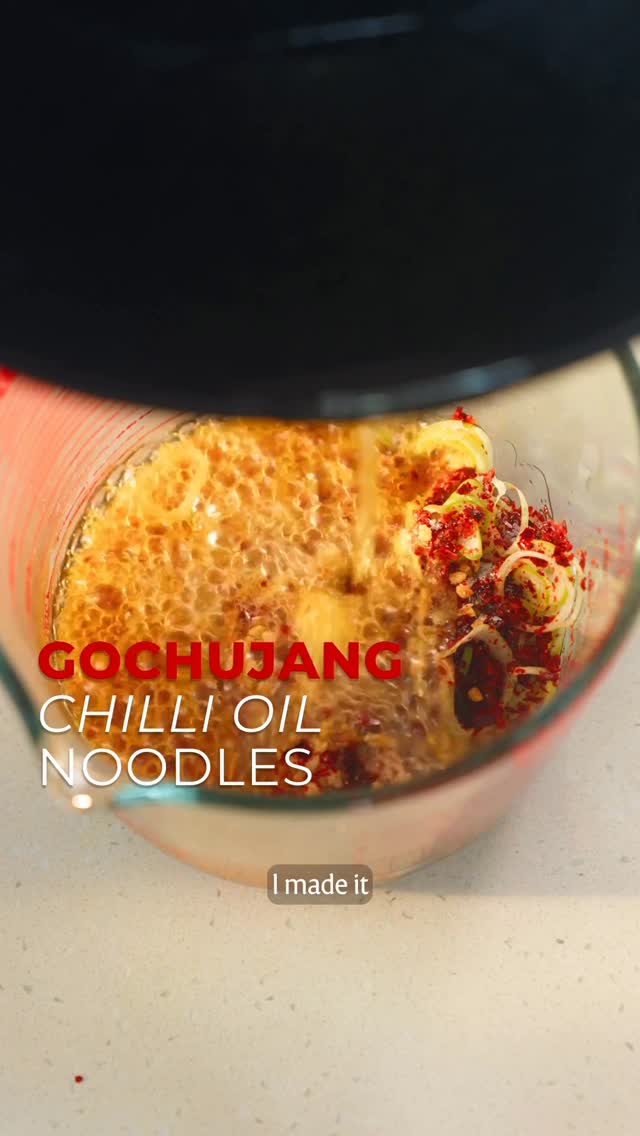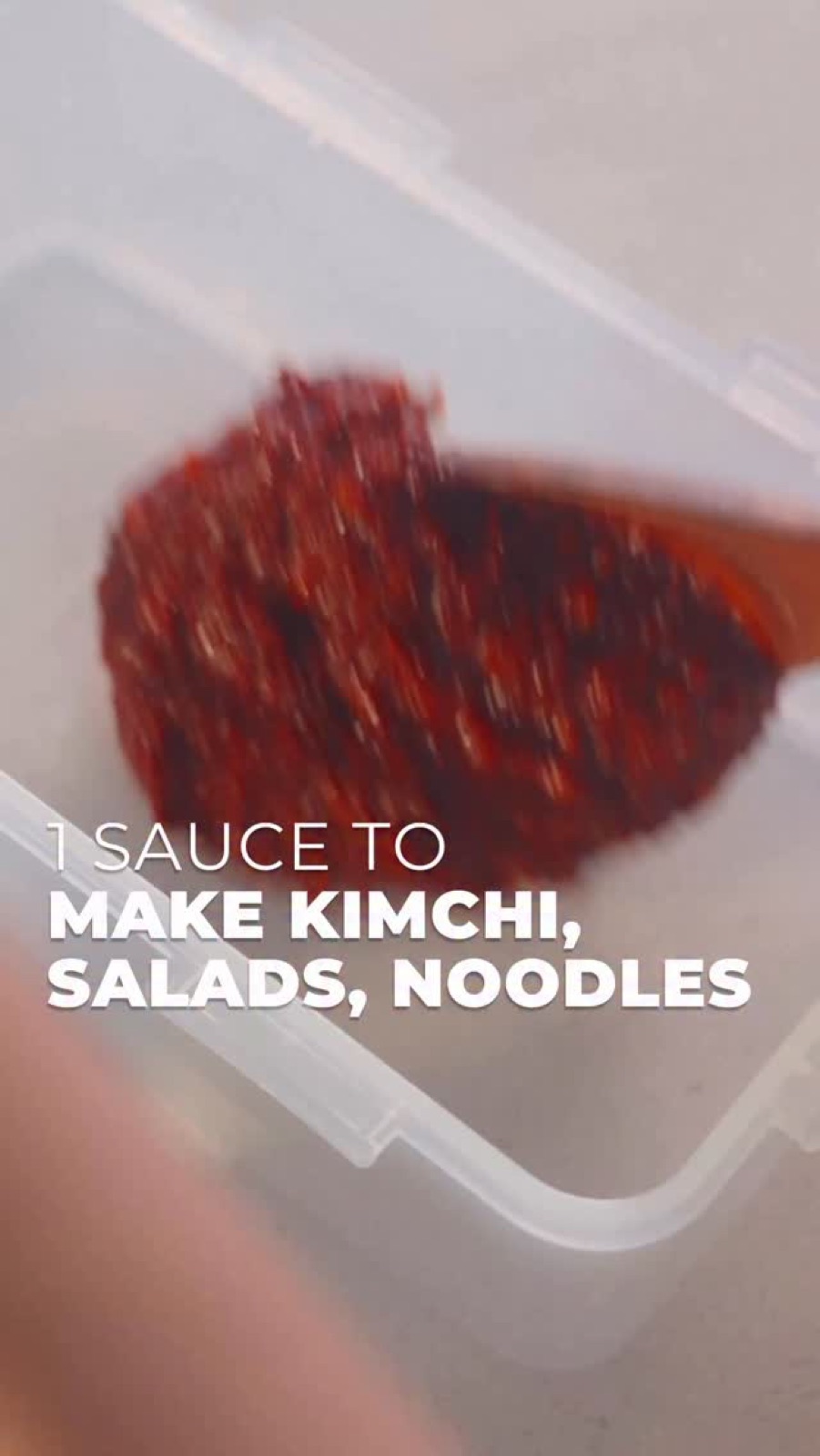
An all-purpose Korean chilli sauce earns its place in the fridge by doing more than one job. This spicy-sweet mixture can dress vegetables, season salads, make fresh kimchi and form the base of bibim noodles. Mix one batch, keep it ready, and use it when a simple ingredient needs a stronger Korean flavour.
The formula is direct: fine gochugaru, vinegar, sugar, anchovy fish sauce, minced garlic and MSG. Start with the measured ratio below and adjust the vinegar only within the stated range. The result should be smooth and pourable, with enough savoury depth, sweetness, heat and acidity to work across several dishes.
Why Is This Korean Chilli Sauce So Versatile?
This Korean chilli sauce is designed as a reusable base rather than a condiment tied to one finished recipe. Use it for fresh kimchi, vegetable side dishes, salads and bibim noodles. Those applications all begin with the same mixture, so you do not need to prepare a separate sauce every time.
Its usefulness comes from the balance in the measured ingredients. Fine gochugaru supplies the chilli base. Vinegar adds acidity, sugar brings sweetness, and anchovy fish sauce provides the savoury and salty part of the mixture. Minced garlic and MSG complete the six-ingredient formula.
The final texture matters because the sauce needs to coat different ingredients. Mix or blend it until smooth, then loosen it only if it remains too thick to pour. That gives you one base that can move from crisp vegetables to noodles without changing the original recipe.
What Ingredients Do You Need?
Use these measured ingredients for the sauce:
- 100g fine gochugaru
- 80 to 100g vinegar, adjusted according to the strength of the vinegar
- 100g sugar
- 100g anchovy fish sauce
- 1 1/2 tablespoons minced garlic
- 1 teaspoon MSG
Keep a small amount of water, vinegar or fish sauce nearby, but do not add it automatically. Add only a small splash if the mixed sauce is too thick. Which liquid you choose depends on whether the sauce needs simple loosening, more acidity or more saltiness.
For vegetable dishes, finish with sesame oil and optional sesame seeds. They are finishing ingredients rather than part of the stored base sauce.
If you regularly cook with Korean chilli ingredients, the traditional homemade gochujang recipe explains a fermented paste with a very different method. The gochujang jjigae recipe is another way to use Korean chilli flavour in a complete dish.
How Do You Mix the Sauce?
Add the fine gochugaru, vinegar, sugar, anchovy fish sauce, minced garlic and MSG to a bowl or blender. Start with the stated measurements and keep the vinegar within the 80 to 100g range, adjusting it according to the strength of the vinegar.
Mix or blend the ingredients until the sauce is smooth and fully combined, without dry pockets of gochugaru or separate streaks of liquid.
Do not add sesame oil to the base mixture. Add sesame oil and sesame seeds only after the chilli sauce has been mixed with vegetables or salad. Keeping that finishing step separate preserves the all-purpose base for its other use as a bibim noodle sauce.
How Should You Adjust the Consistency?
The finished sauce should be pourable. If it is too thick after mixing, add one small splash of water, vinegar or anchovy fish sauce, then mix or blend it again. Make the adjustment gradually rather than pouring in another fixed quantity.
Choose the adjustment liquid according to what the sauce needs. Water loosens the texture without adding more of the measured seasonings. Vinegar loosens it while increasing acidity. Anchovy fish sauce loosens it while increasing saltiness and savoury flavour.
Taste after each adjustment and check the acidity and saltiness before adding anything else. Stop once the sauce is smooth, balanced and easy to pour over the ingredient you plan to dress.
How Do You Use It With Vegetables and Salads?
Add the sauce to a vegetable dish or salad, then finish it with sesame oil. Sesame seeds are optional. This is a quick way to give simple vegetables a recognisably Korean chilli dressing.
The sauce is not limited to one vegetable. Use it whenever fresh vegetables need a spicy-sweet, savoury boost. Start by coating the vegetables with the sauce, then add the sesame oil and optional seeds as the final layer.
Because the base already contains sugar, fish sauce, garlic, vinegar and chilli, taste it on the vegetables before adding more seasoning. Use the prepared sauce first, then adjust only the acidity or saltiness if needed.
Can You Use It for Fresh Kimchi?
Yes. Fresh kimchi is one of the main uses for this sauce. It brings gochugaru, garlic, anchovy fish sauce, sugar and vinegar together before it reaches the vegetables, making it a practical prepared base for a fresh kimchi-style dish.
This is a sauce recipe, not a complete fresh kimchi formula with a specific vegetable, quantity or resting method. Prepare the sauce exactly as written, then use it with the fresh kimchi ingredients and method you already intend to follow.
Keeping the scope clear is useful here. The recipe teaches the sauce and its measured ratio. It does not specify a full kimchi batch, so the amount of sauce needed will depend on the vegetables being dressed.
How Does It Become a Bibim Noodle Sauce?
Use the mixed sauce as a base for bibim noodles. Noodles are one of its core applications, making this more than a vegetable-only dressing.
No single noodle type, noodle quantity or sauce-to-noodle ratio is required here. Add enough prepared sauce to coat the noodles you are serving, then assess the same qualities used during mixing: pourable texture, balanced acidity and appropriate saltiness.
The sauce already combines spicy, sweet and savoury elements, so it provides the central flavour base without requiring an invented second formula. Keep any further additions outside this recipe unless they come from the particular bibim noodle dish you are following.
How Should You Store the Sauce?
Transfer the completed sauce to an airtight container and keep it in the refrigerator, or use it immediately. Label the container for easy identification and follow current food-safety guidance rather than relying on an untested shelf life.
Storing one batch is central to the idea of this Korean chilli sauce recipe in Singapore. It lets you reach for the same measured mixture when making a vegetable side, salad, fresh kimchi or bibim noodles instead of rebuilding the base each time.
Before storing it, confirm the sauce is smooth and pourable. If it thickens while you are preparing it, add only a small splash of water, vinegar or anchovy fish sauce and mix again. Keep sesame oil and sesame seeds separate until you are finishing a vegetable dish.
FAQ
Can I leave out the anchovy fish sauce?
This recipe uses 100g anchovy fish sauce. Omitting it would change the measured savoury and salty balance, and no substitute has been tested for this formula.
How much vinegar should I use?
Use 80 to 100g. Adjust within that range based on the strength of the vinegar, then taste and check the acidity.
What should I add if the sauce is too thick?
Add a small splash of water, vinegar or anchovy fish sauce, then mix or blend again until the sauce is pourable. Choose based on whether it needs neutral loosening, more acidity or more saltiness.
Is sesame oil mixed into the stored sauce?
No. Use sesame oil as a finish after the chilli sauce is added to a vegetable dish or salad. Sesame seeds are optional at the same finishing stage.