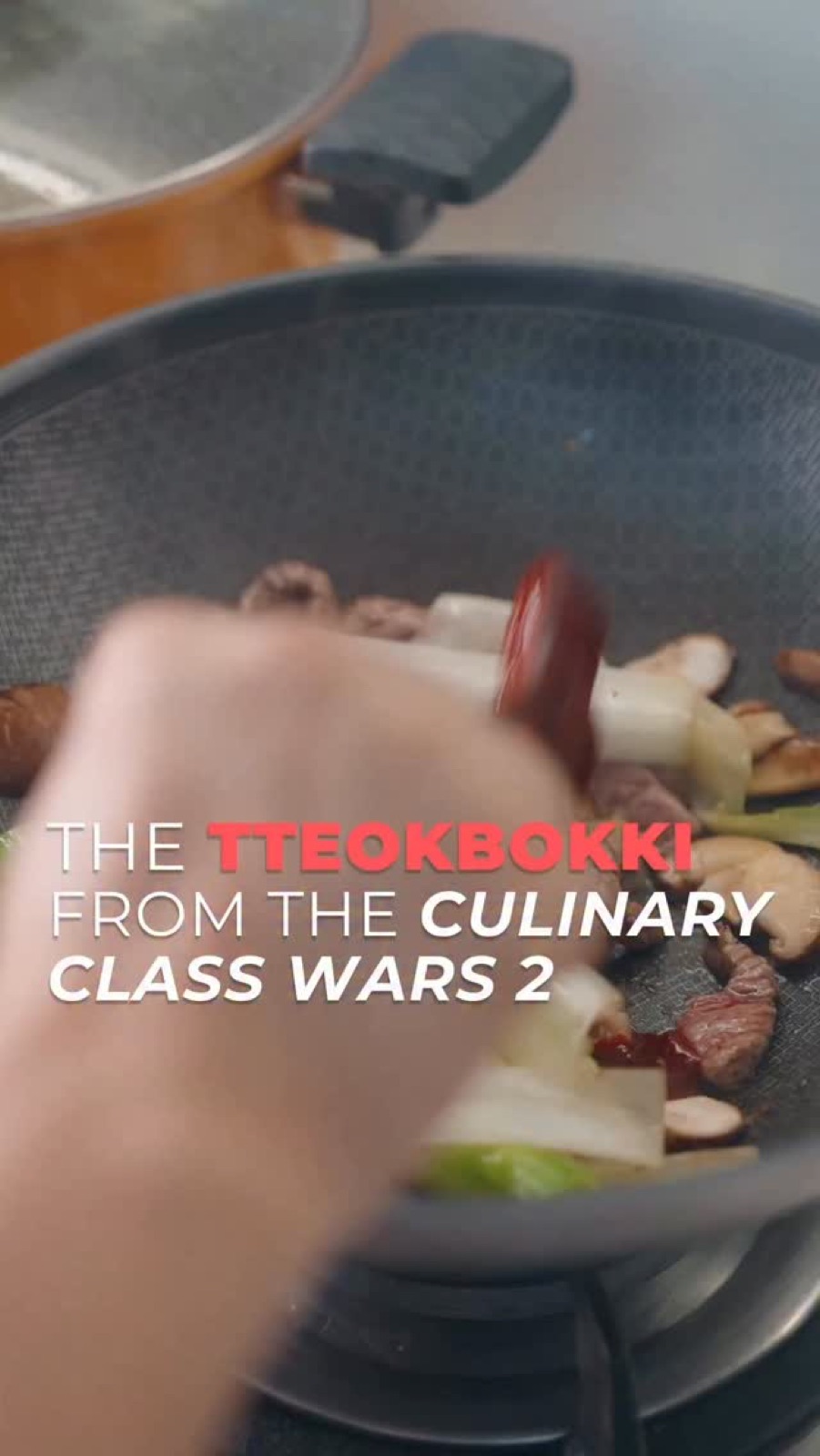
Beef tteokbokki takes Korean rice cakes beyond the familiar quick street-food version. Inspired by Brewmaster Yun’s winning dish on Culinary Class Wars Season 2, this recipe pairs sliced beef striploin and shiitake mushrooms with a gochujang sauce and an anchovy-kelp stock.
The stock is not an afterthought. It simmers while the beef and mushrooms brown in a wok, then enters the sauce a scoop at a time. The rice cakes cook slowly in that savoury base until tender, while the sauce reduces until thick and glossy.
What Makes This Beef Tteokbokki Different?
This beef tteokbokki is designed as a hearty meal rather than a fast snack. The written recipe contrasts it with the usual fiery, sweet red broth and describes a version with more savoury depth from beef, shiitake mushrooms and anchovy-kelp stock.
The demonstrated method traces the idea to Brewmaster Yun’s Culinary Class Wars dish. Her version included homemade rice cakes. This adaptation uses premade Korean tteok, keeping the focus on the sauce, stock and wok cooking rather than making the rice cakes from scratch.
The finished flavour should be spicy, gently sweet and deeply savoury. The beef and mushrooms are browned before the liquid goes in, and the sauce is allowed to bloom in the hot wok. Those two stages separate this method from simply simmering every ingredient together from the start.
What Ingredients Do You Need?
For the main tteokbokki, prepare:
- 150g sliced beef striploin
- 3 shiitake mushrooms, sliced
- 1 stalk green onion, sliced, with half reserved for the stock
- Korean tteok
- Neutral oil for stir-frying
- Sesame seeds for garnish
For the sauce, prepare:
- 1 to 2 tablespoons gochujang
- 1 tablespoon fine gochugaru
- 1 tablespoon coarse gochugaru
- 3 tablespoons rice syrup
For the stock, prepare anchovy and kelp, or two Korean soup stock packs. The written recipe also lists optional coin dashi, 3 to 4 dried chillies and half the sliced green onion. The recipe does not specify the quantity of rice cakes, oil, anchovy, kelp or water, so those quantities stay open rather than being guessed.
For another way to use Korean rice cakes, save the tteokbokki pizza recipe. The spicy Korean beef rye sandwich is another beef-focused recipe on The Hansang.
How Do You Mix the Gochujang Sauce?
Combine 1 to 2 tablespoons gochujang with 1 tablespoon fine gochugaru, 1 tablespoon coarse gochugaru and 3 tablespoons rice syrup. Mix until the sauce is thick, dark and fully combined.
Using two textures of gochugaru is part of the recipe. Keep both the fine and coarse chilli flakes in the mixture rather than replacing one with an invented ingredient. The rice syrup supplies the gentle sweetness described in the written and demonstrated methods.
Mix the sauce before the wok cooking begins. Once the beef and mushrooms are browned, the sauce goes directly into the hot pan so its flavours can bloom. Having it ready avoids leaving the cooked ingredients waiting while you measure.
How Do You Build the Anchovy-Kelp Stock?
Put anchovy and kelp into a pot, or use two Korean soup stock packs as the written recipe allows. Add 3 to 4 dried chillies and half the sliced green onion. Coin dashi is optional and can be included for extra savoury flavour.
Bring the pot to a simmer and let the stock develop while you prepare the sauce and stir-fry ingredients. The demonstrated method says to let it boil, while the written recipe directs a simmer. Following the written recipe as the authoritative recipe, keep the stock simmering while the rest of the recipe moves forward.
The stock is added to the wok after the sauce blooms. Keep it hot and ready beside the pan because the rice cakes may need additional scoops if they are still firm during cooking.
How Should You Stir-Fry the Beef and Mushrooms?
Heat neutral oil in a wok or deep pan over medium-high heat. Add the 150g sliced beef striploin, three sliced shiitake mushrooms and the remaining half of the green onion.
Stir-fry the mixture until the beef and mushrooms are well browned and aromatic. The demonstrated method describes this as stir-frying it hard, which points to a strong browning stage before any stock enters the wok. Do not start by covering the ingredients with liquid.
The shiitake mushrooms cook alongside the beef and green onion. Once those ingredients have browned, the wok is ready for the prepared gochujang sauce. This order builds the beefy and earthy base highlighted in the written recipe.
Why Do You Bloom the Sauce in the Wok?
Add the mixed gochujang sauce directly to the browned beef, shiitake mushrooms and green onion. Stir it through the hot wok before adding the stock. The written recipe says this blooming stage unlocks the sauce’s deep flavour.
Keep the mixture moving so the thick sauce coats the beef and mushrooms. At this point it contains no added stock from the wok stage, so it should look concentrated rather than soupy.
Once the sauce has bloomed, add a good scoop of the simmered anchovy stock. Stir well and bring everything to a low simmer. The savoury stock loosens the concentrated sauce and creates the cooking liquid for the rice cakes.
How Do You Cook the Rice Cakes Until Tender?
Add the Korean tteok to the simmering beef sauce. Let the rice cakes cook slowly so they absorb the sauce and soften. The recipe does not provide a fixed cooking time, so texture is the reliable cue.
Check the rice cakes as they simmer. If they are still firm, add more hot stock and continue cooking. The demonstrated method specifically says not to rush this stage. Add enough stock to keep the rice cakes cooking, then allow the liquid to reduce again.
Continue until the tteok is soft and tender. Because the amount and starting condition of the rice cakes are not specified, an invented time would be misleading. Use their texture and the consistency of the sauce to decide when the dish is ready.
What Should the Finished Sauce Look Like?
The finished sauce should be thick and glossy, coating the beef, mushrooms and tender rice cakes. Let it reduce after the final stock addition rather than serving it with a thin layer of broth.
Taste and adjust only as needed, following the written recipe’s final instruction. The recipe describes the result as spicy, gently sweet, deeply savoury and rich with beef flavour. Garnish with sesame seeds once the sauce reaches that glossy consistency.
Serve the beef tteokbokki hot. Its combination of rice cakes, striploin, shiitake mushrooms and anchovy stock makes it substantial enough to stand as a complete comfort-food dish.
FAQ
Can I use premade Korean rice cakes?
Yes. The demonstrated method notes that Brewmaster Yun made her own tteok, while this version deliberately uses premade Korean rice cakes.
What can replace anchovy and kelp in the stock?
The written recipe allows two Korean soup stock packs in place of anchovy and kelp. Coin dashi is optional for extra savoury flavour.
How do I know when the rice cakes are ready?
Simmer them until soft and tender. If they remain firm, add more hot stock and continue simmering rather than forcing a fixed cooking time.
How thick should the sauce be?
Reduce it until thick and glossy enough to coat the beef, mushrooms and rice cakes.