Olive kimchi muchim turns a jar of briny olives into a spicy Korean banchan with gochugaru, sesame oil, garlic and tuna sauce. It is salty, tangy and easy to mix, with diced onion, sliced red chilli and crushed sesame seeds adding texture to every bite.
I first tried making olive kimchi before it started trending. The idea sounds unusual because olives replace the cabbage you might expect from kimchi, but the finished muchim makes sense beside meat, rice, pasta or pizza.
What Is Olive Kimchi Muchim?
This olive kimchi is a muchim, a mixed side dish. The recipe starts with a jar of pitted green or black olives, then coats them with garlic, onion, red chilli, gochugaru, sesame oil, sugar, sesame seeds and tuna sauce.
The olives bring their own salty, briny character. Rinsing them first reduces that saltiness, while lightly smashing them helps the seasoning move around the surface. The result is spicy, salty and tangy, with a little sweetness from the sugar.
It can be served immediately or left for 10 to 15 minutes. There is no long fermentation step in the recipe.
What You’ll Need
- 1 jar green or black olives, pitted
- 1 to 2 cloves garlic, minced
- 1 tablespoon sesame oil
- 1 tablespoon sugar
- 1 tablespoon gochugaru
- 1 tablespoon crushed sesame seeds
- 1 small onion, diced
- 1 red chilli, sliced
- 1 tablespoon tuna sauce or fish sauce
The recipe works with either green or black olives. Tuna sauce is the first option in the recipe, with fish sauce given as the alternative.
Rinse and Lightly Smash the Olives
Drain the jar of olives, then rinse them with water. This is the step used to reduce their saltiness before any seasoning is added.
Move the rinsed olives to a chopping board. Use the side of a knife to lightly smash each one. They do not need to be crushed into pieces. A gentle press is enough to open them slightly while keeping the olives recognisable in the finished banchan.
Prepare the vegetables before mixing. Dice one small onion, slice one red chilli and mince one or two cloves of garlic.
Mix the Olive Muchim
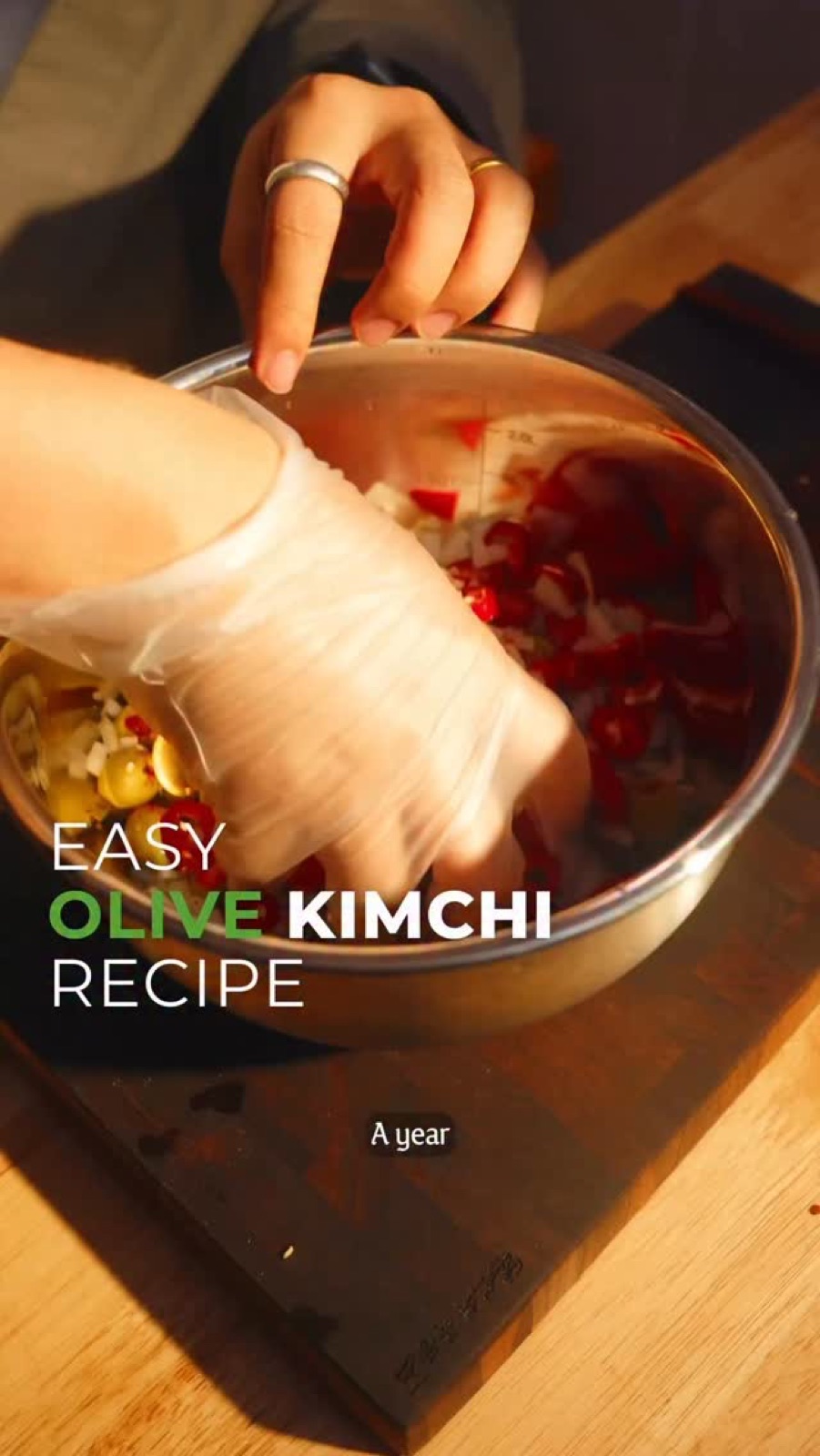
Place the rinsed and smashed olives in a bowl. Add the diced onion, sliced red chilli and minced garlic.
Sprinkle in 1 tablespoon gochugaru and 1 tablespoon crushed sesame seeds. Add 1 tablespoon sesame oil, 1 tablespoon sugar and 1 tablespoon tuna sauce or fish sauce.
Mix until the seasoning is evenly distributed and the olives are fully coated. The bowl should contain olives, onion and chilli in every section rather than leaving the seasoning gathered at the bottom.
Rest It or Serve It Right Away
The olive muchim can go straight to the table after mixing. If you have time, let it sit for 10 to 15 minutes before serving.
That short rest is optional in the recipe, so do not wait if the rest of the meal is ready. Mix it thoroughly once more before serving so the sesame seeds, onion and chilli stay distributed around the olives.
What to Serve With Olive Kimchi
Serve olive kimchi muchim as a banchan beside meat or rice. Its spicy, salty seasoning is also suggested with pasta and pizza.
The recipe is deliberately flexible about the olive variety. Use pitted green or black olives, keep the measured seasoning amounts, then choose the pairing that fits the rest of your meal.
Tips
- Rinse the olives before seasoning to reduce their saltiness.
- Lightly smash the olives instead of cutting them into small pieces.
- Prepare the onion, chilli and garlic before everything goes into the bowl.
- Mix until the olives are evenly coated.
- Serve immediately or rest the muchim for 10 to 15 minutes.
FAQ
Is olive kimchi fermented?
This recipe does not include a long fermentation. It is an olive muchim that can be served immediately or rested for 10 to 15 minutes.
Can I use black olives?
Yes. The recipe calls for one jar of pitted green or black olives.
What can replace tuna sauce?
Use 1 tablespoon fish sauce as the stated alternative.
What should I serve it with?
Serve it with meat or rice, or use it alongside pasta or pizza.