Kongbiji jjigae is a thick Korean stew made with biji, the soft soybean pulp left after making tofu. This version combines that pulp with pork, ripe kimchi, onion and classic Korean seasonings for a bowl that tastes nutty, savoury and gently sour.
The recipe began with the leftover pulp from a first attempt at making tofu. Instead of throwing it away, the pulp became the foundation of a one-pot stew. The finished kongbiji jjigae is comforting without feeling heavy, with the kind of quiet flavour the recipe describes as tasting like home and memory.
What Is Kongbiji Jjigae?
Kongbiji jjigae is a Korean soybean pulp stew. Biji is the soft, protein-rich pulp that remains after soybeans are processed to make tofu. It is also known as okara. The ingredient gives the stew its thick body and gentle nuttiness without needing a long list of additions.
This recipe uses 1.5 to 2 cups of soybean pulp with 300g of pork belly or pork shoulder, 1.5 cups of ripe kimchi and 500ml of water. The pork and kimchi bring savoury richness and acidity, while the soybean pulp turns the liquid into a substantial stew.
The recipe presents the dish as an example of resourceful Korean cooking. Something that could have been discarded becomes the defining ingredient. If you already have biji from making tofu, this recipe uses every last bit in a practical, satisfying way.
What Ingredients Do You Need for Kongbiji Jjigae?
For the stew base, prepare:
- 1 tablespoon vegetable oil
- 300g pork belly or pork shoulder, thinly sliced
- 1.5 cups ripe kimchi, chopped
- 500ml water
- 1.5 to 2 cups biji, soybean pulp or okara
- 1/2 yellow onion, thinly sliced
- 1/2 stalk green onion, chopped
For the seasoning, prepare:
- 1 tablespoon gochugaru
- 1 tablespoon minced garlic
- 1/2 tablespoon saeujeot, Korean salted fermented shrimp
- 1 tablespoon anchovy fish sauce
- A pinch of MSG, optional
Serve the stew hot with steamed rice. The written recipe allows either pork belly or pork shoulder, and the demonstration specifically uses pork shoulder. Keep the listed quantities as written because the soybean pulp, water and seasonings work together to produce the demonstrated thick consistency.
For another Korean stew built around a concentrated seasoning base, see the gochujang jjigae recipe. You can also read how to make traditional homemade gochujang for a longer fermented Korean pantry project.
How Should You Prepare the Soybean Pulp and Vegetables?
Measure 1.5 to 2 cups of soybean pulp before the pot goes on the heat. The pulp enters after the pork and kimchi have been stir-fried and the water is hot, so having it ready keeps the cooking sequence moving.
Thinly slice half a yellow onion and chop half a stalk of green onion. Chop 1.5 cups of ripe kimchi as well. The recipe calls for ripe kimchi rather than fresh kimchi, and its gently sour character is part of the finished flavour described in the written and demonstrated methods.
If your soybean pulp came directly from making tofu, use the soft leftovers for this stew. The recipe also identifies the ingredient as okara, which is another name for soybean pulp. No substitute is supplied in the recipe, so keep the biji as the central ingredient rather than replacing it with whole tofu.
How Do You Build the Pork and Kimchi Base?
Heat 1 tablespoon vegetable oil in a pot over medium heat. Add 300g of thinly sliced pork belly or pork shoulder and stir-fry it until it is lightly browned and no longer red.
Add the chopped ripe kimchi directly to the pork. Continue stir-frying until the mixture becomes fragrant. The demonstration calls attention to the aroma at this stage, before water or soybean pulp enters the pot.
This order gives the pork and kimchi their own cooking stage. Do not add every ingredient at once. First cook the pork, then fry the kimchi with it, and only then pour in the water. That sequence is the clearest technique in the recipe and creates the base for the rest of the one-pot stew.
When Do You Add the Soybean Pulp?
Pour 500ml water into the pork and kimchi mixture and let it heat until it reaches a gentle boil. Add 1.5 to 2 cups of soybean pulp, then stir so the pulp disperses through the liquid.
The biji changes the texture immediately. It is the ingredient that makes kongbiji jjigae thick and hearty, but the finished stew should still feel comforting rather than heavy. Stir thoroughly enough to combine the pulp with the pork, kimchi and water before adding the vegetables and seasonings.
Add the sliced yellow onion and chopped green onion after the soybean pulp. The written recipe places both vegetables at this stage, before the seasoning and final simmer. Keep everything in the same pot from the first spoonful of oil through serving.
How Do You Season Kongbiji Jjigae?
Season the combined stew with 1 tablespoon gochugaru, 1 tablespoon minced garlic, 1/2 tablespoon saeujeot and 1 tablespoon anchovy fish sauce. Add a pinch of MSG if you want to follow the optional recommendation in the written recipe.
Saeujeot is Korean salted fermented shrimp. Together with anchovy fish sauce, it supplies the savoury seasoning named in the recipe. Gochugaru adds Korean chilli flavour, while the minced garlic rounds out the mixture.
Stir everything well so the seasonings move evenly through the thick soybean pulp. The recipe gives complete measurements for these additions, so use them rather than guessing extra salt or another seasoning that was not part of the demonstrated recipe.
How Long Should Kongbiji Jjigae Simmer?
Once the stew begins bubbling, reduce the heat to medium and simmer it for 10 minutes. This is the only timed cooking stage supplied by the recipe. The written and demonstrated methods give the same instruction, making it the reliable endpoint for the final simmer.
Stir the stew well before the timer begins. At the end of 10 minutes, it should be thick, nutty, savoury and slightly tangy from the ripe kimchi. The demonstrated method describes the texture as thick but not heavy, and the flavour as comforting rather than flashy.
The recipe does not give a separate total cooking time, serving yield or storage guidance. Those details stay omitted. Follow the stated visual cue for the pork, the fragrant kimchi stage, the bubbling stew and the measured 10-minute simmer.
How Should You Serve This Korean Soybean Pulp Stew?
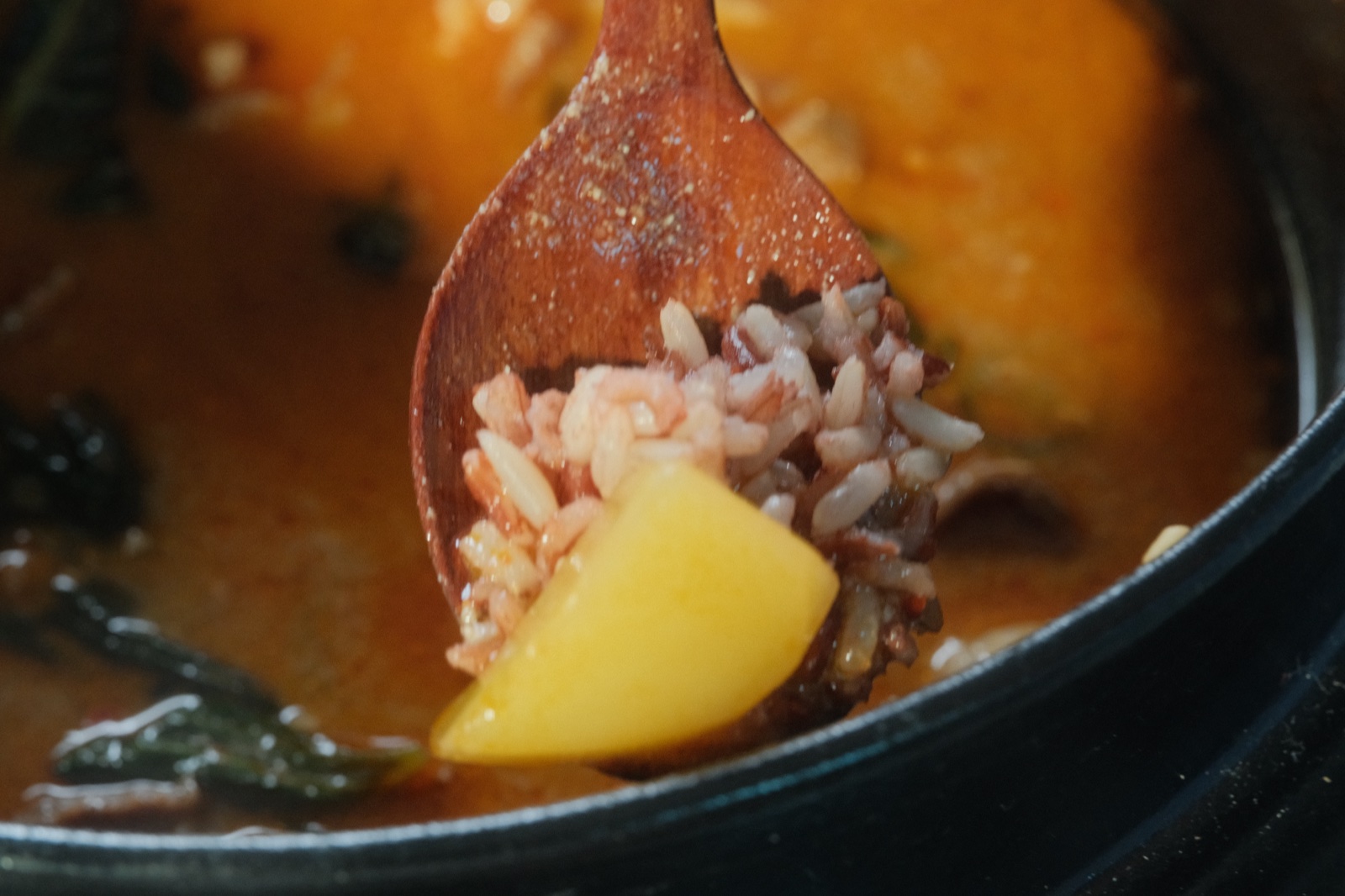
Serve kongbiji jjigae hot with steamed rice. The thick stew brings together tender pork, ripe kimchi, soybean pulp, onion and green onion in one bowl, with enough depth from the fermented shrimp and fish sauce to support the mild biji.
This is a useful recipe when tofu-making leaves you with soybean pulp, but its appeal goes beyond avoiding waste. The pulp gives the stew a distinctive body and nutty flavour, while the pork and kimchi make it feel complete. The result is a straightforward Korean comfort dish built from humble ingredients.
FAQ
What is biji?
Biji is the soft soybean pulp left after making tofu. It is also known as okara and gives kongbiji jjigae its thick texture and nutty flavour.
Can I use pork belly instead of pork shoulder?
Yes. The written recipe specifies 300g of thinly sliced pork belly or pork shoulder. The demonstration uses pork shoulder.
Why should the kimchi be ripe?
Ripe kimchi is the version named in the recipe. Its sourness contributes to the gently tangy finished flavour.
How long does the stew simmer?
Once the stew begins bubbling, reduce the heat to medium and simmer it for 10 minutes. Serve it hot with steamed rice.