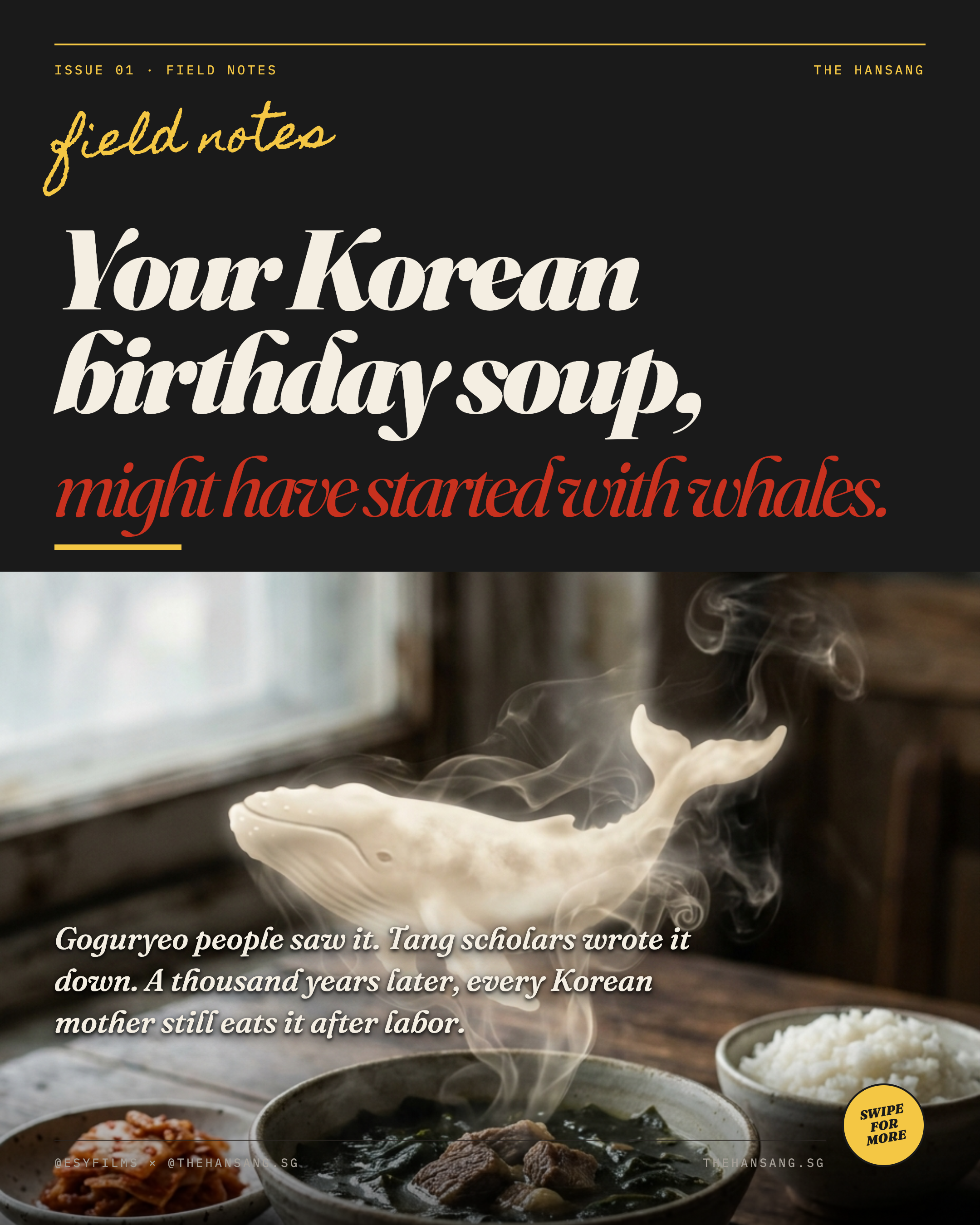
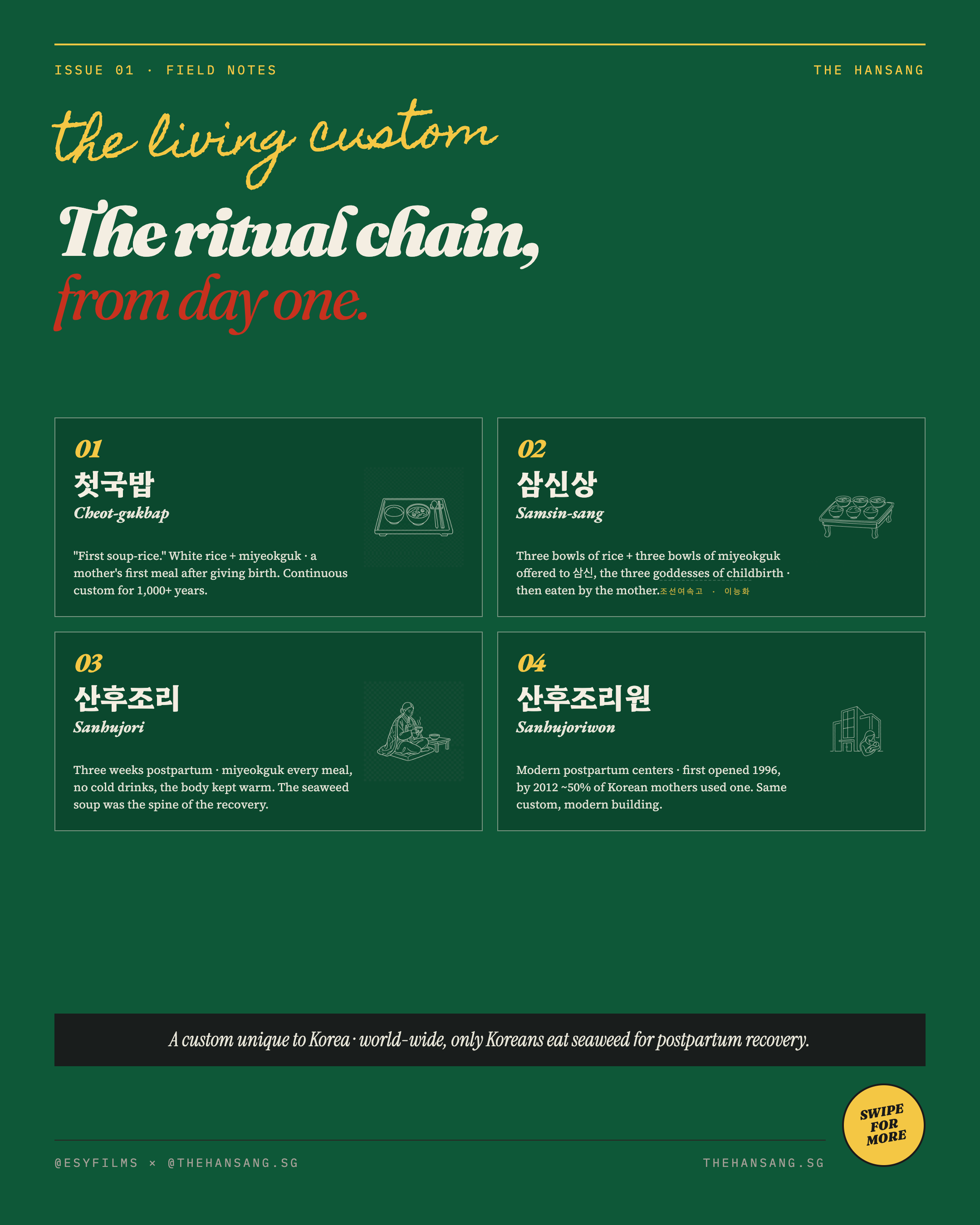
Every Korean knows miyeokguk. You eat it on your birthday, and you eat it after giving birth. It is the most quietly universal bowl in the cuisine. What almost no one mentions is where the custom may have come from: watching whales.
Mothers ate what the whales ate
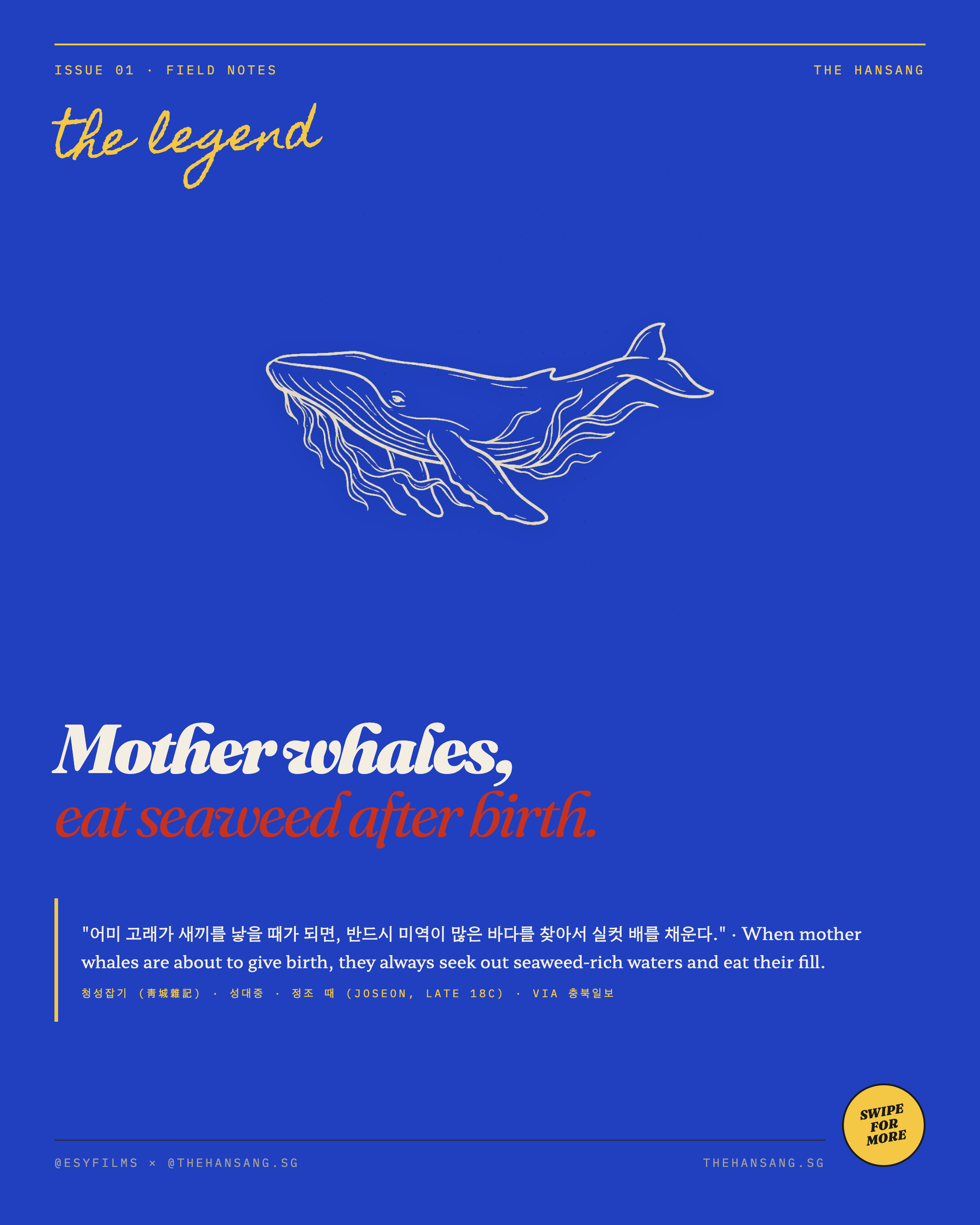
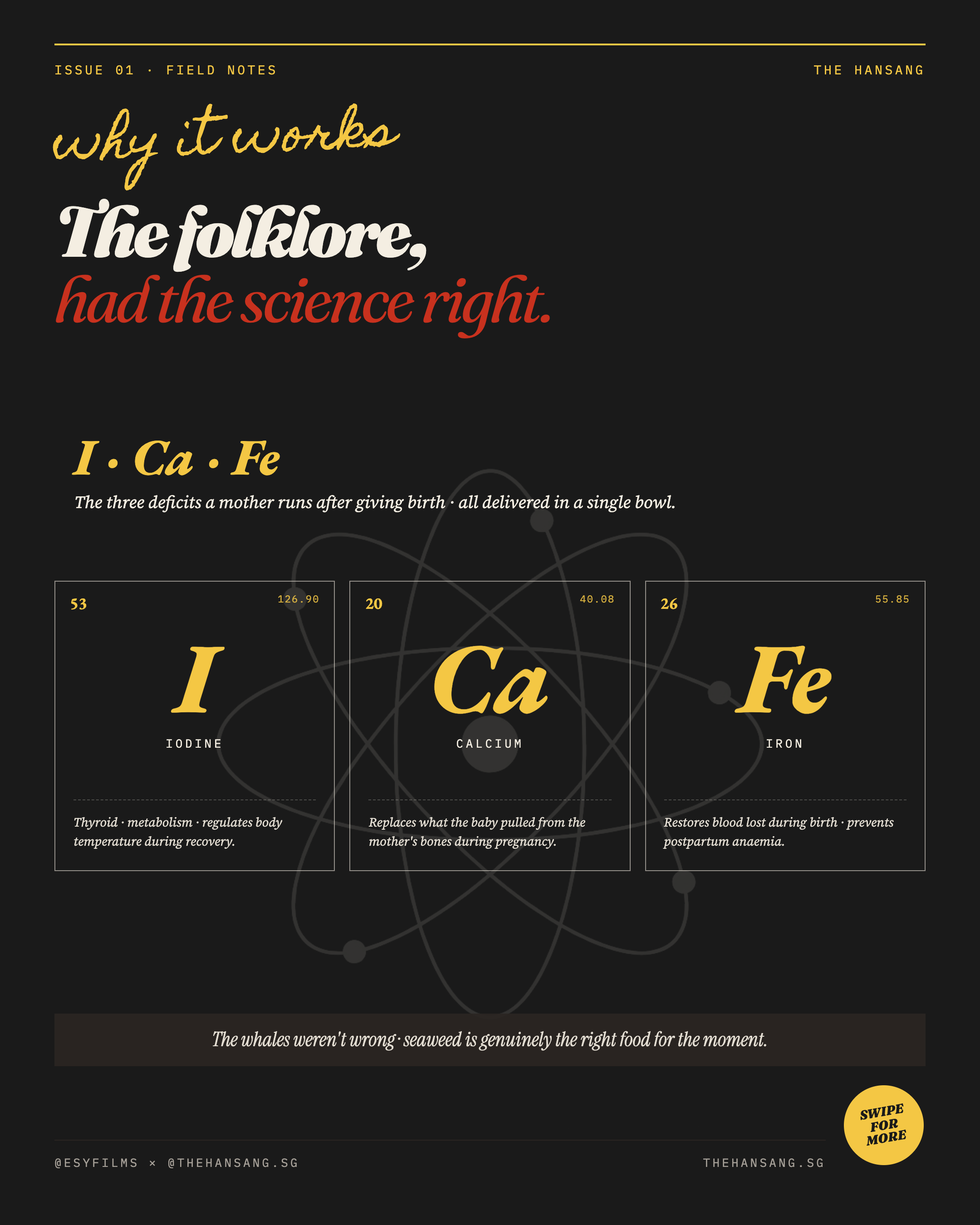
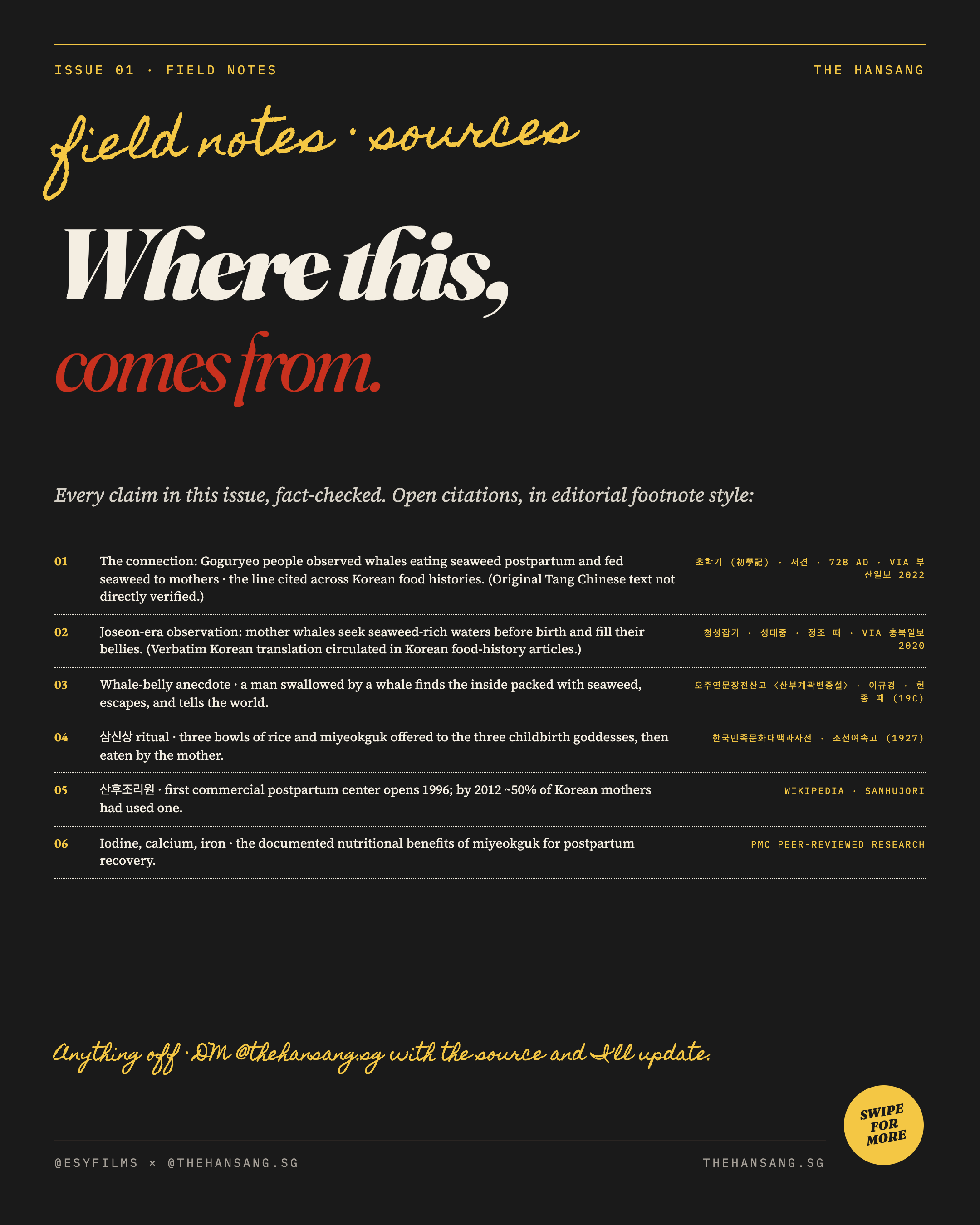
Long before nutrition science, Koreans noticed something specific about whales. A mother whale seeks out seaweed-rich waters around the time she gives birth, then eats the seaweed afterward to recover. The lesson stuck. Mothers ate what the whales ate.
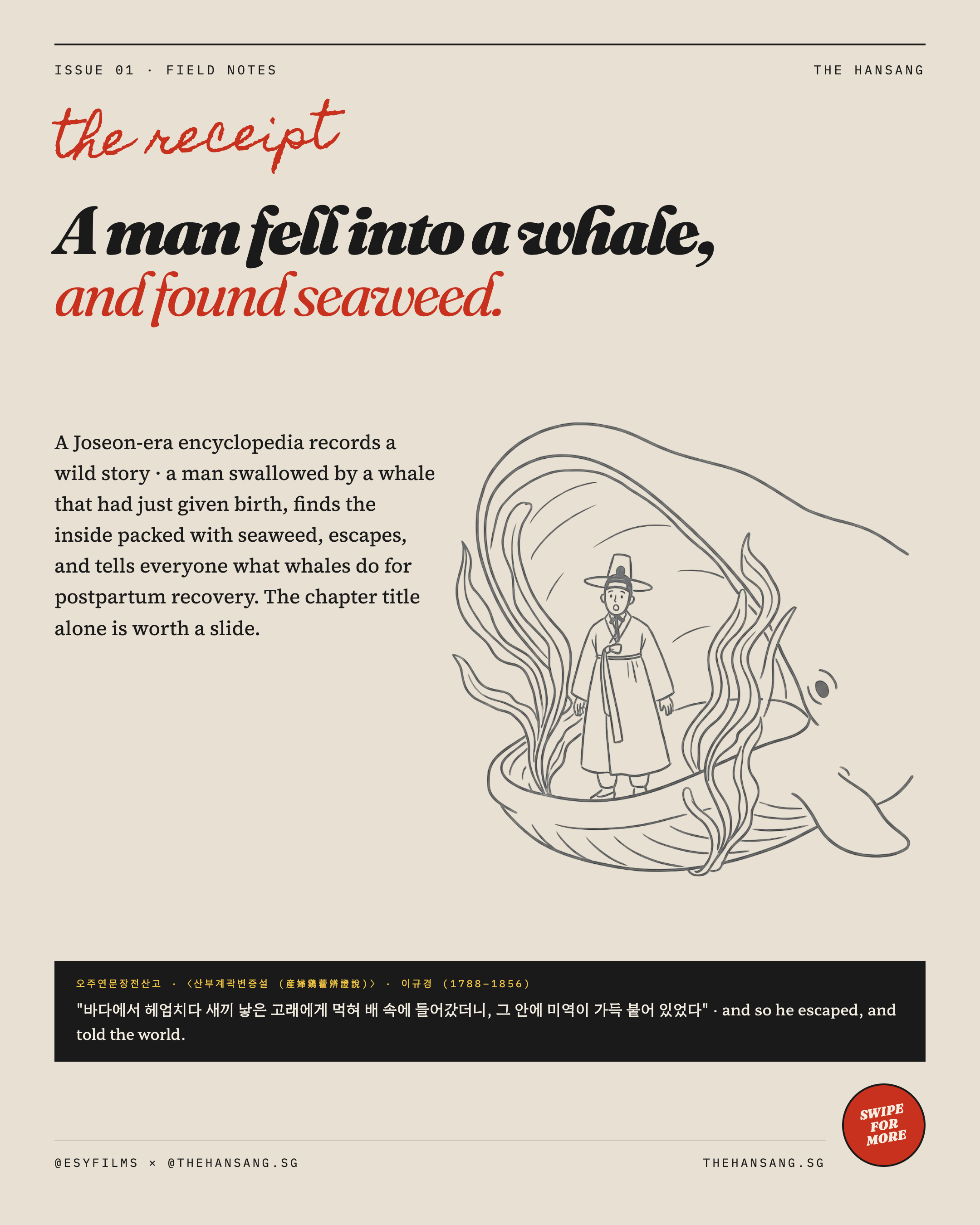
A Joseon-era text puts it plainly: “어미 고래가 새끼를 낳을 때가 되면, 반드시 미역이 많은 바다를 찾아서 실컷 배를 채운다”, when mother whales are about to give birth, they always seek out seaweed-rich waters and eat their fill.
Written down by a Tang scholar

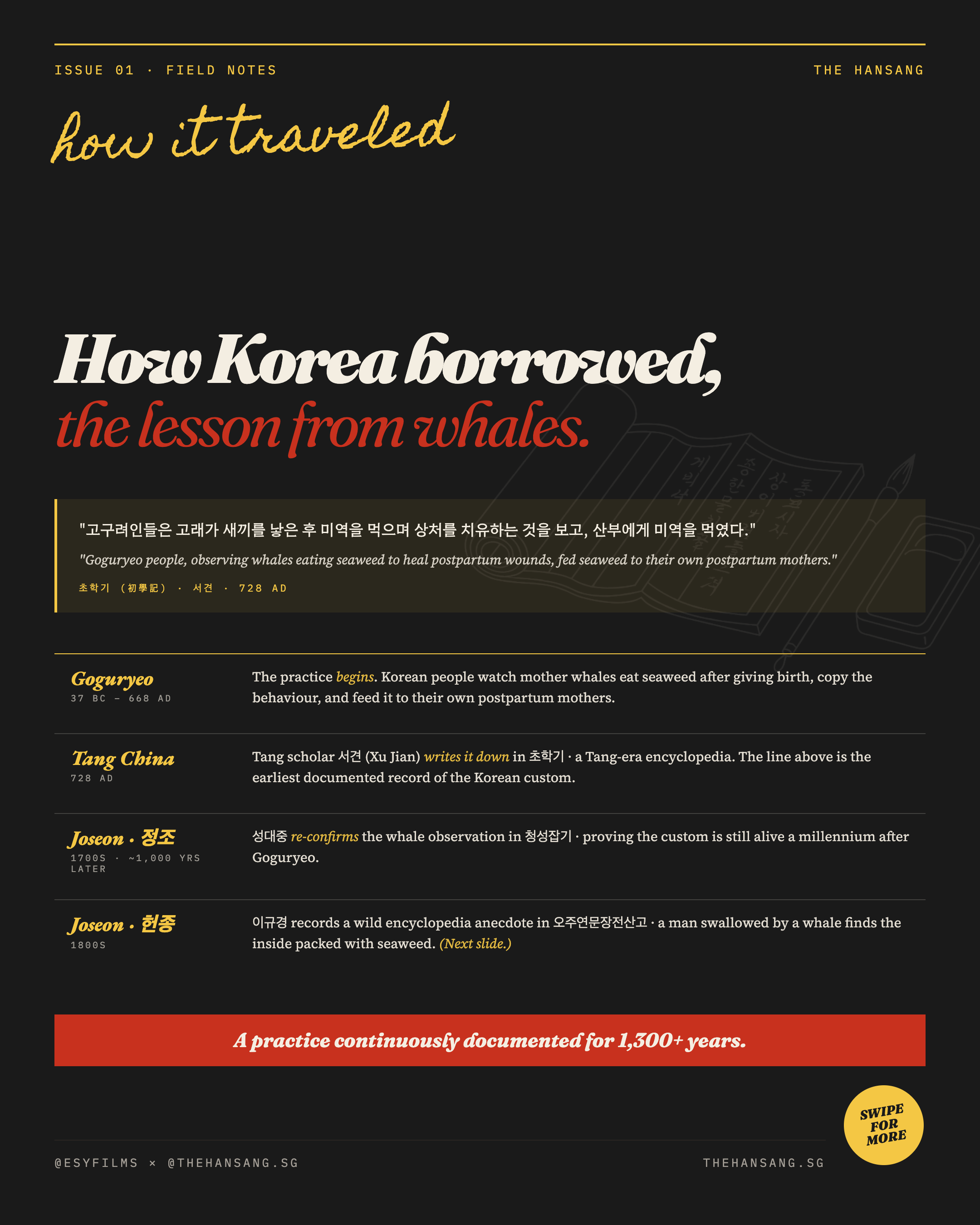
The custom is old enough to predate the record of it. Goguryeo people, observing whales eating seaweed to heal their postpartum wounds, fed seaweed to their own postpartum mothers. The Tang scholar Xu Jian (서견) wrote it down in the Chuxueji, a Tang-era encyclopedia. That line is the earliest documented record of the Korean custom.
Still alive a thousand years later
Then, around the 1700s under King Jeongjo, the scholar Seong Dae-jung re-confirmed the same whale observation in his Cheongseong Japgi, roughly a thousand years after Goguryeo. The custom had not faded. It had simply become ordinary.
That is what makes the bowl remarkable. The birthday soup on the table this morning is the same gesture a Goguryeo mother made after watching a whale, carried unbroken across a millennium.