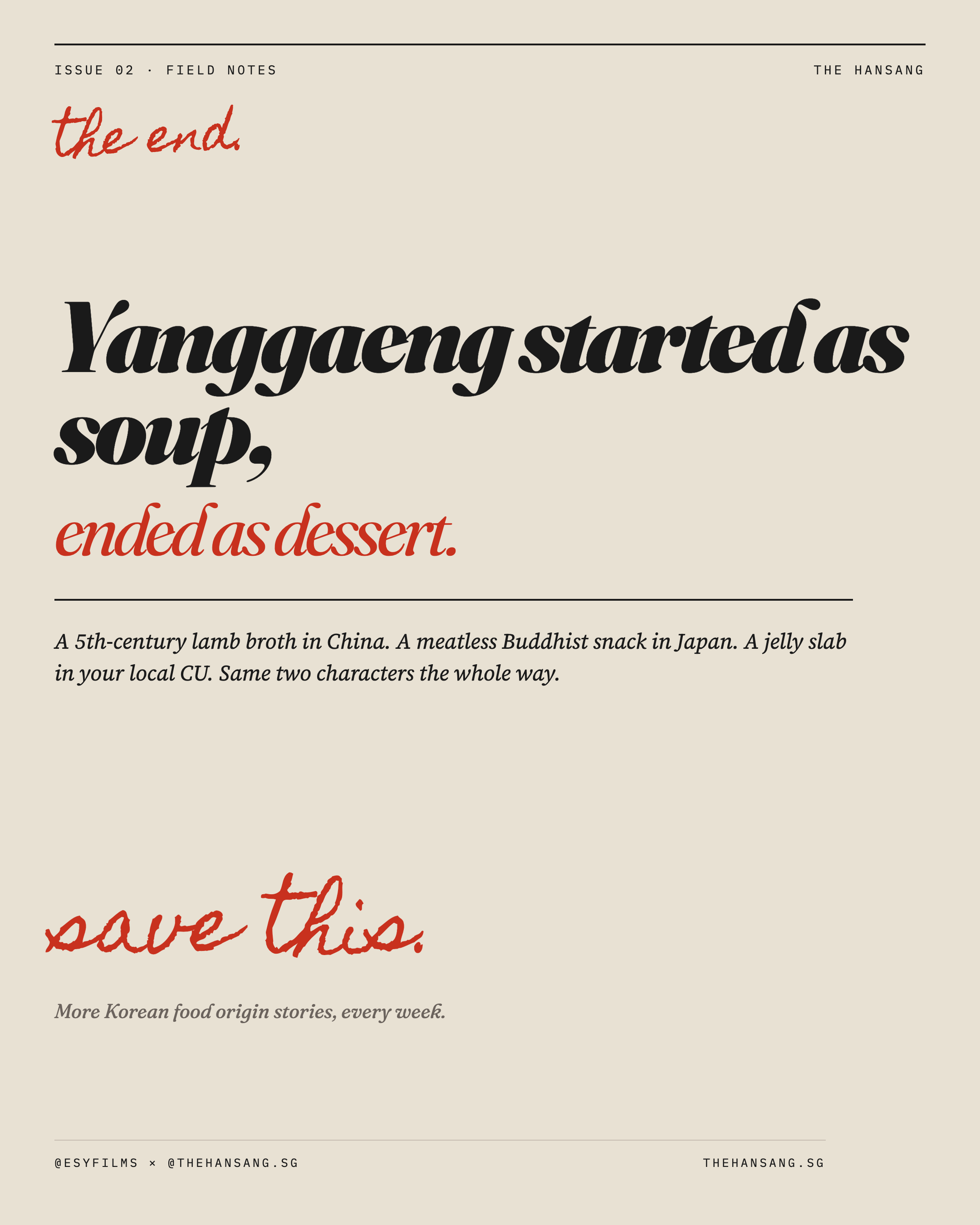
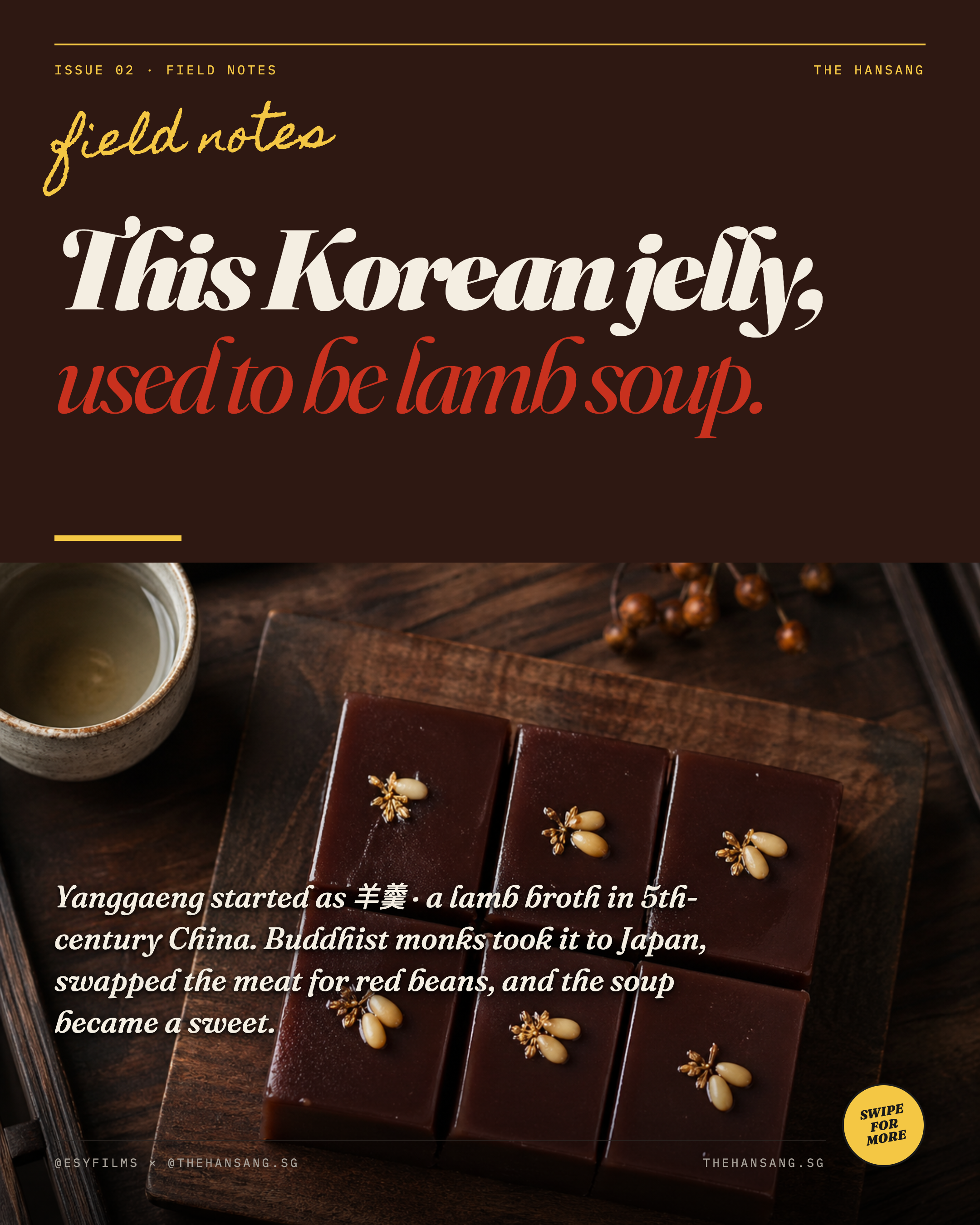
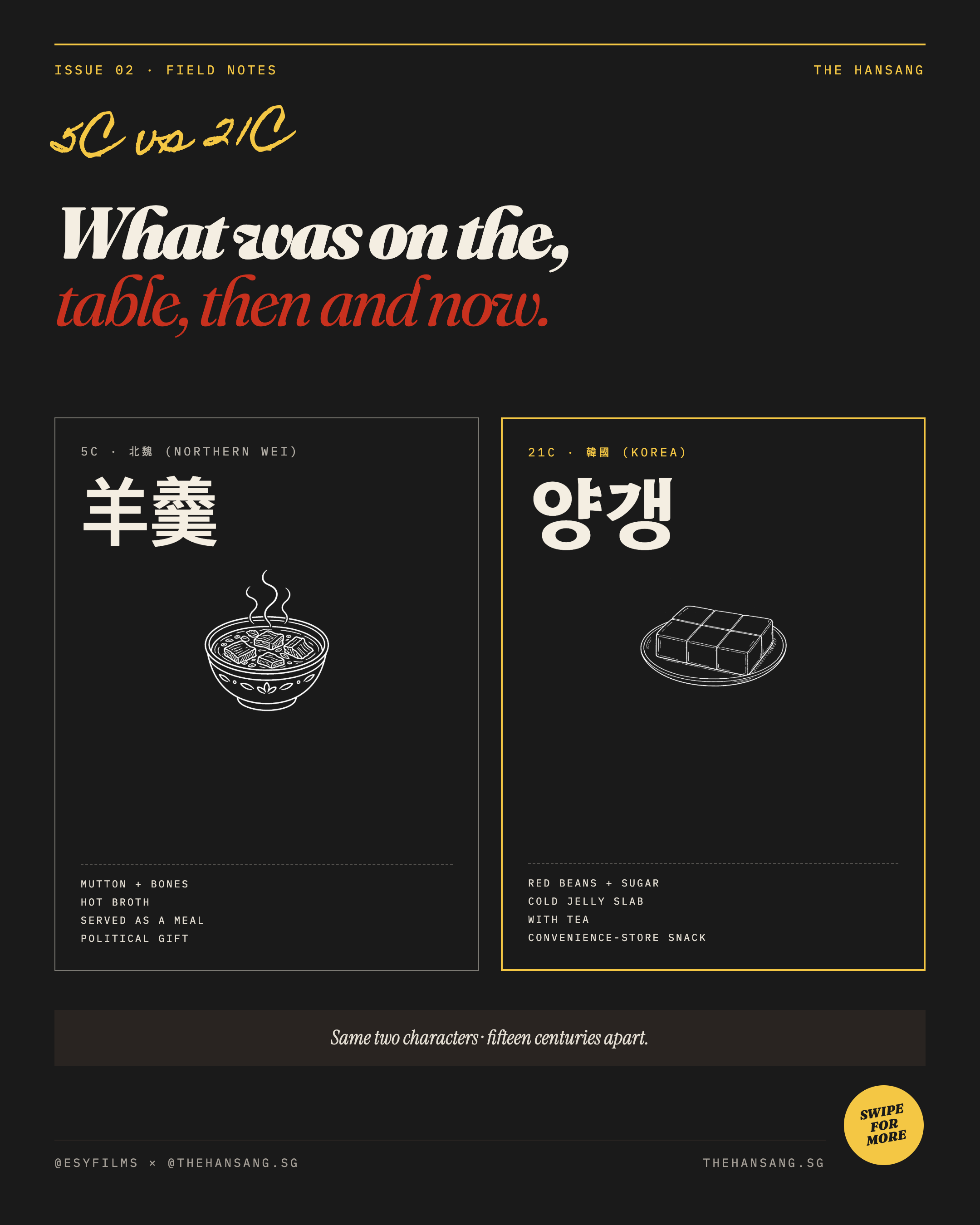
Yanggaeng is the neat little block of sweetened red bean jelly you find next to a cup of tea. It looks like it has always been a dessert. It has not. Fifteen hundred years ago, it was soup. Lamb soup.
A dish that was lamb, and political
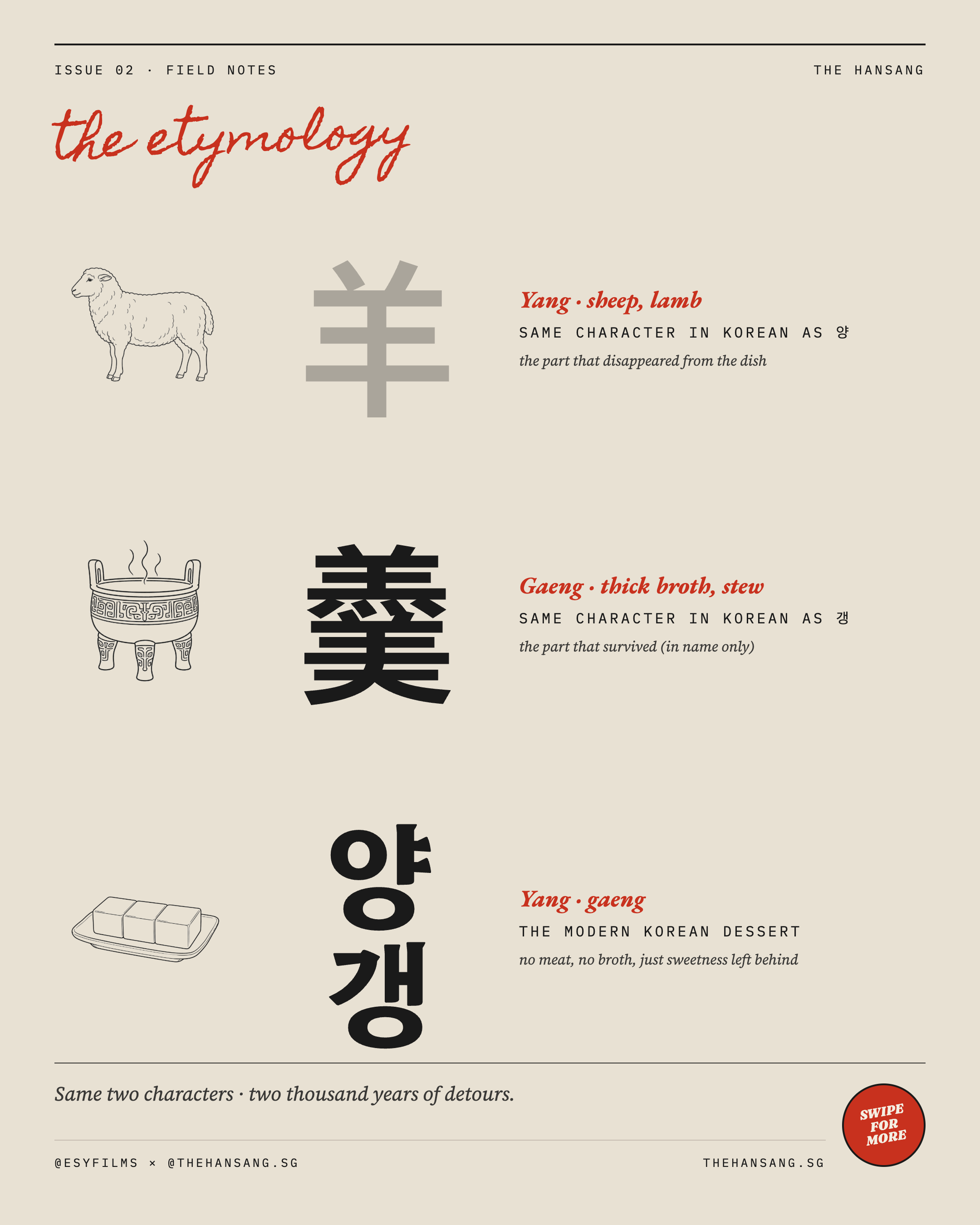
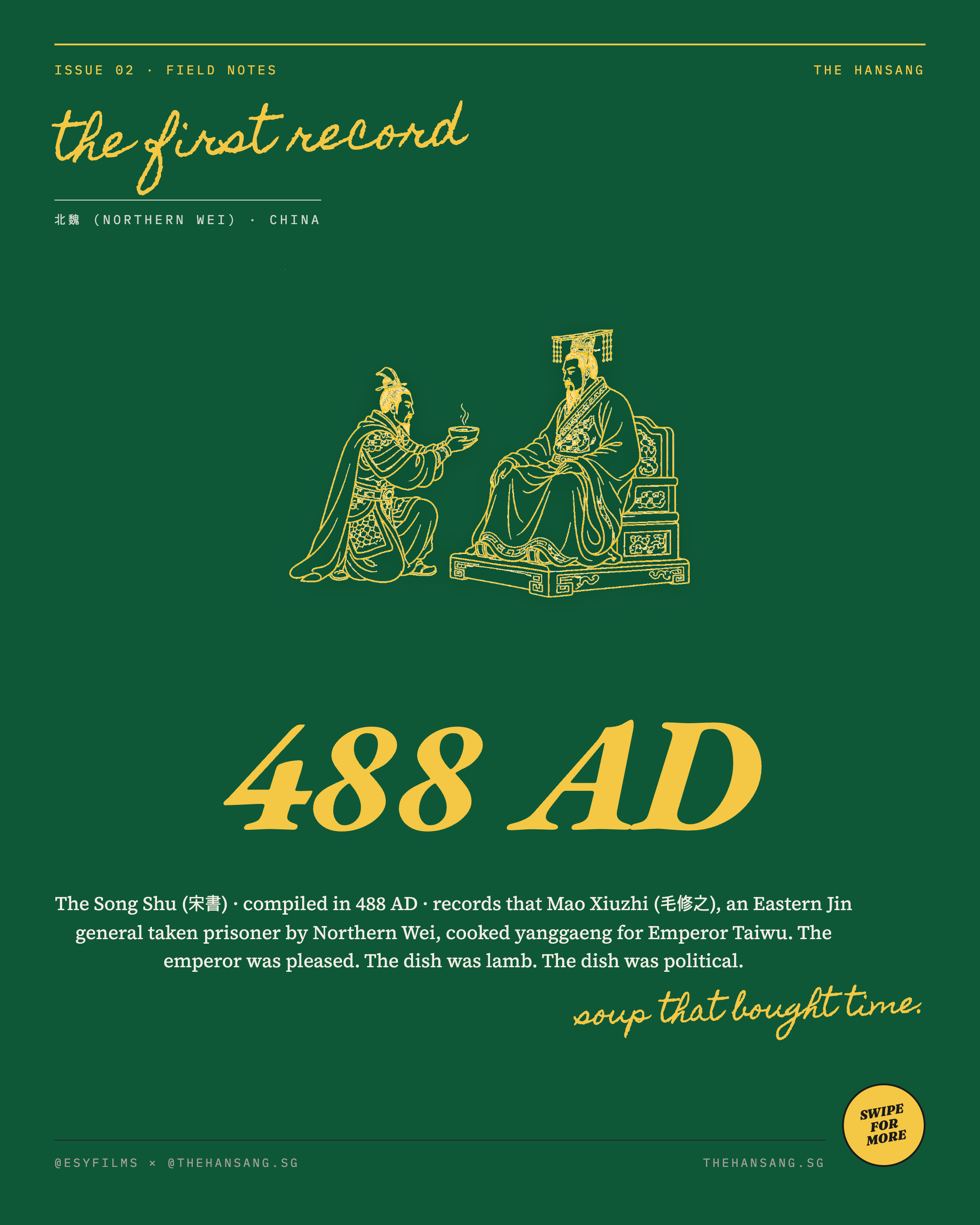
The Song Shu, compiled in 488 AD, records that Mosuzhi, an Eastern Jin general taken prisoner by the Northern Wei, cooked yanggaeng for Emperor Taiwu. The emperor was pleased. The dish was lamb, and the moment was political: a captive cooking to win the favour of the ruler who held him. The very name still carries it. The first character means sheep.
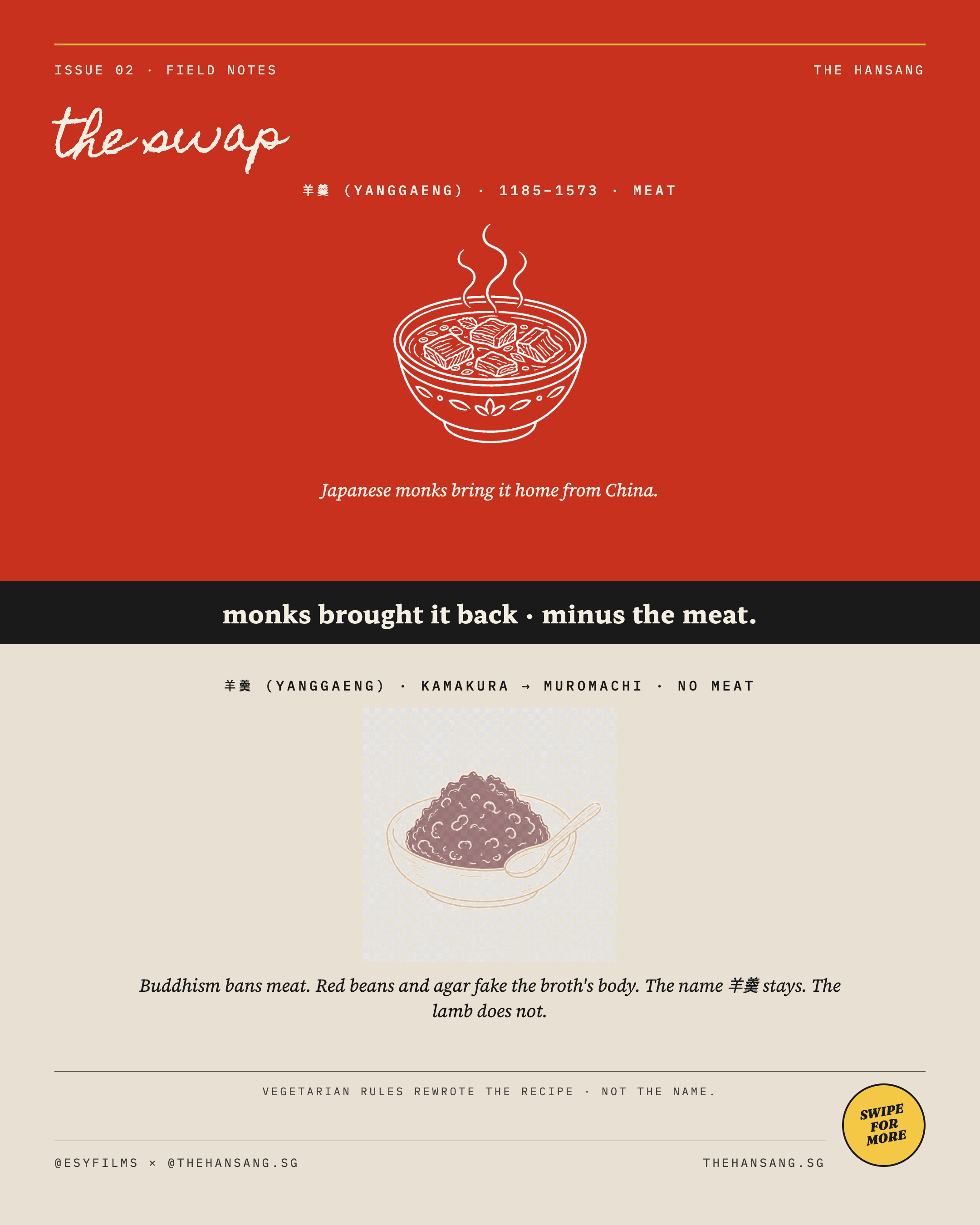
How the soup lost its meat
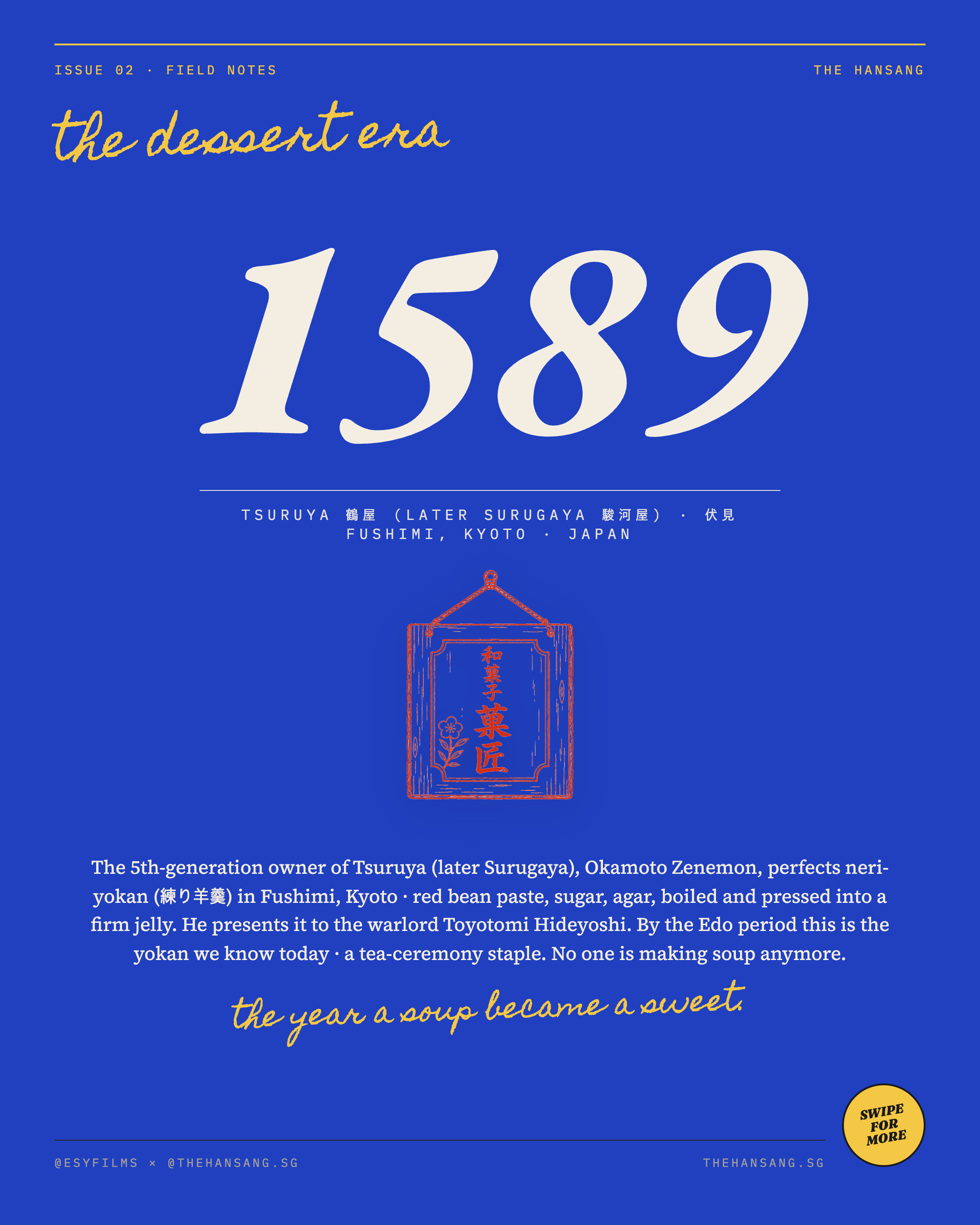
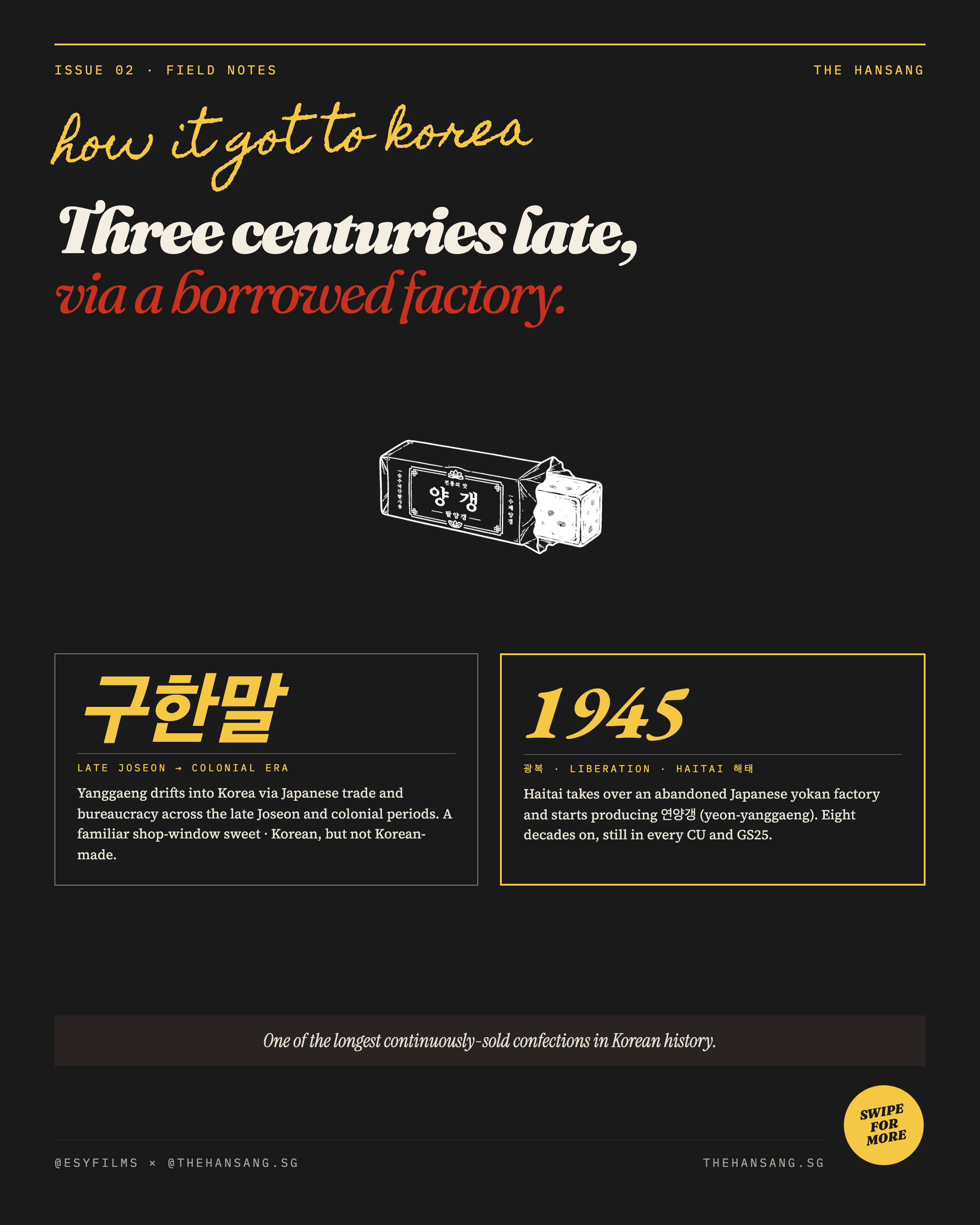
The dish travelled, and along the way the meat fell out of it. By the time it settled in Japan, Buddhist temple cooks, who avoided meat, were recreating the texture with red beans instead of lamb. The broth thickened into a paste. The savoury became sweet.
In 1589, the Surugaya confectionery in Wakayama set the modern recipe: red bean paste, sugar, and agar, boiled and pressed into a firm jelly. By the Edo period this had become the yokan we know today, a tea-ceremony staple. No one was making soup anymore.
A fifteen-hundred-year-old earworm
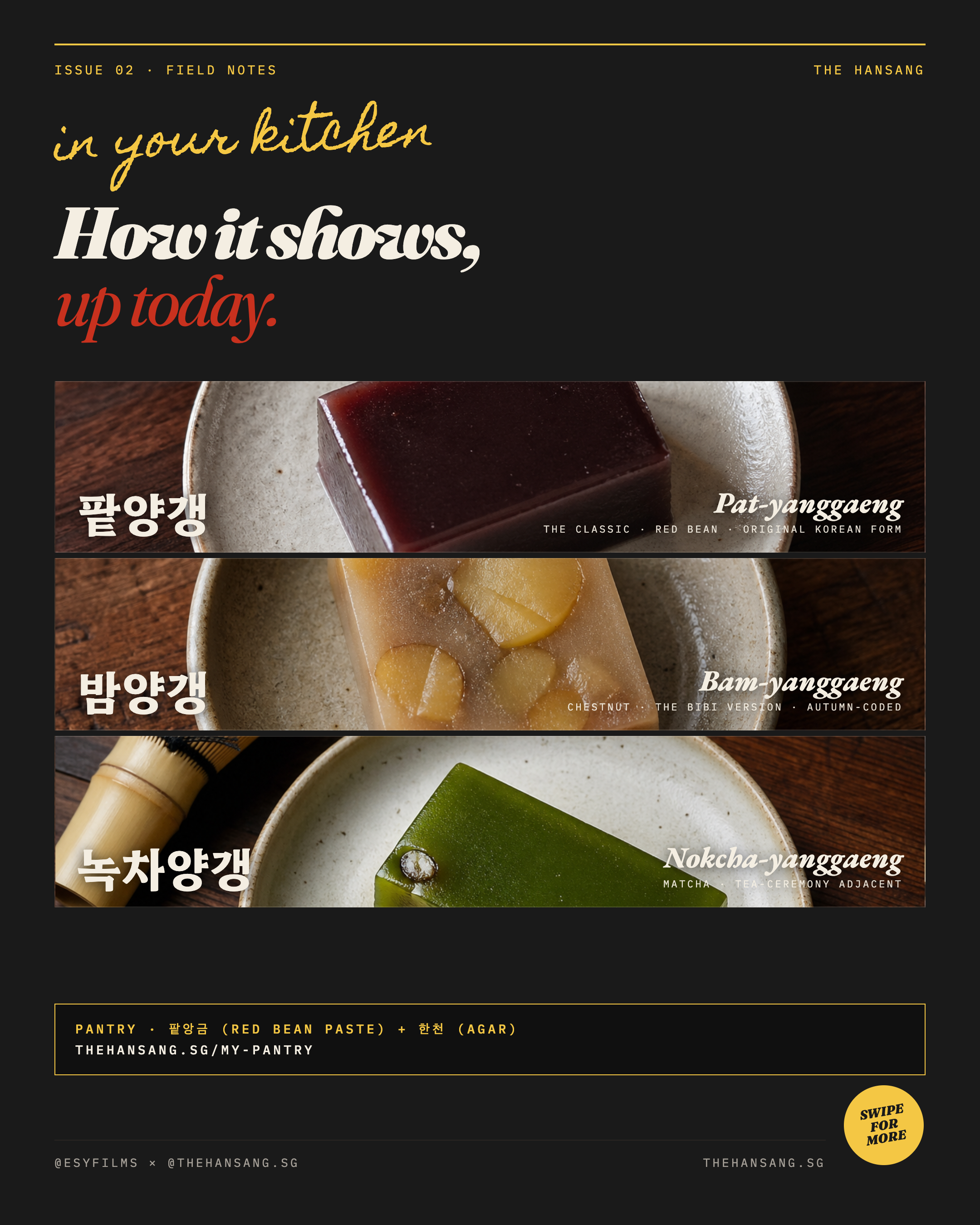
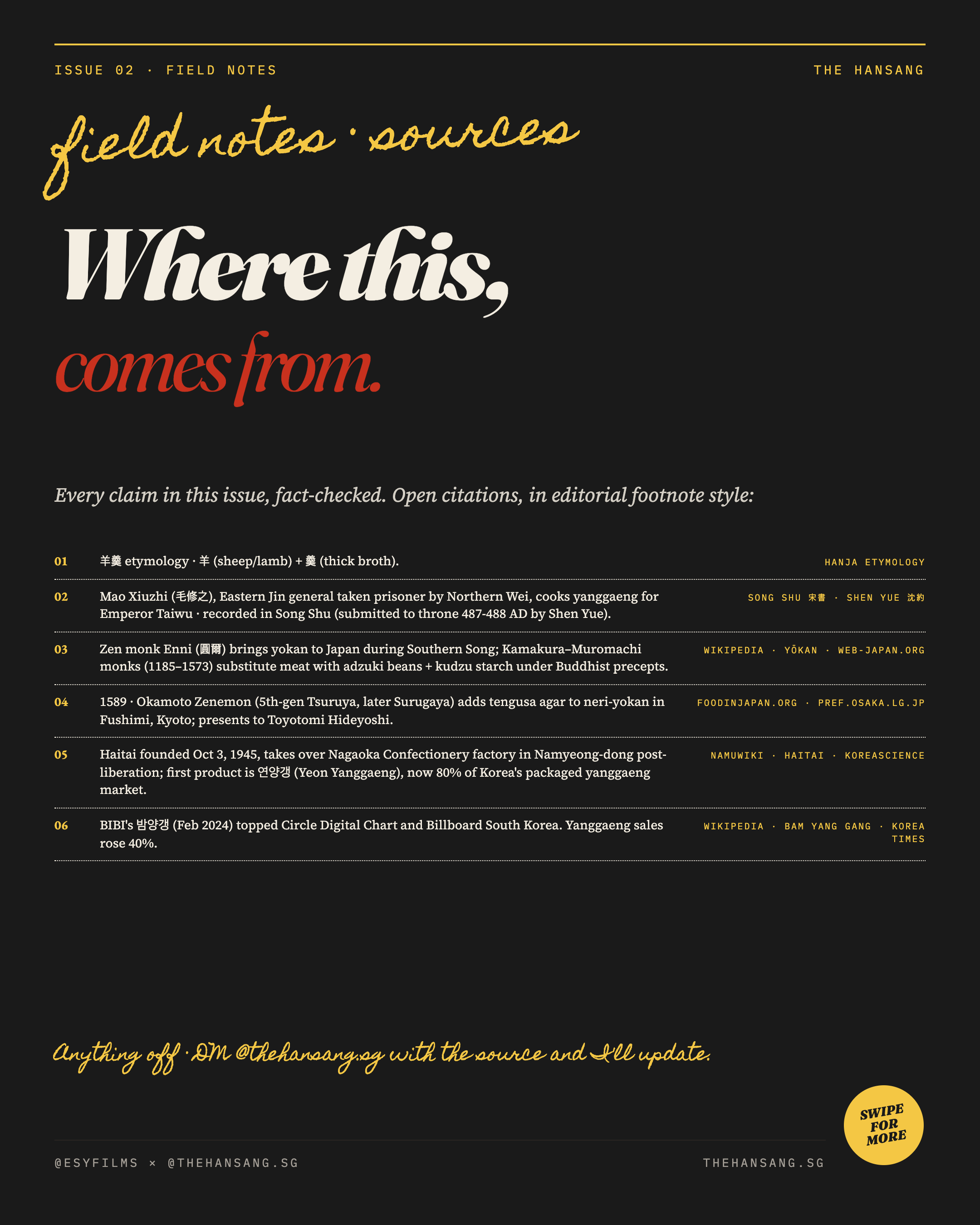
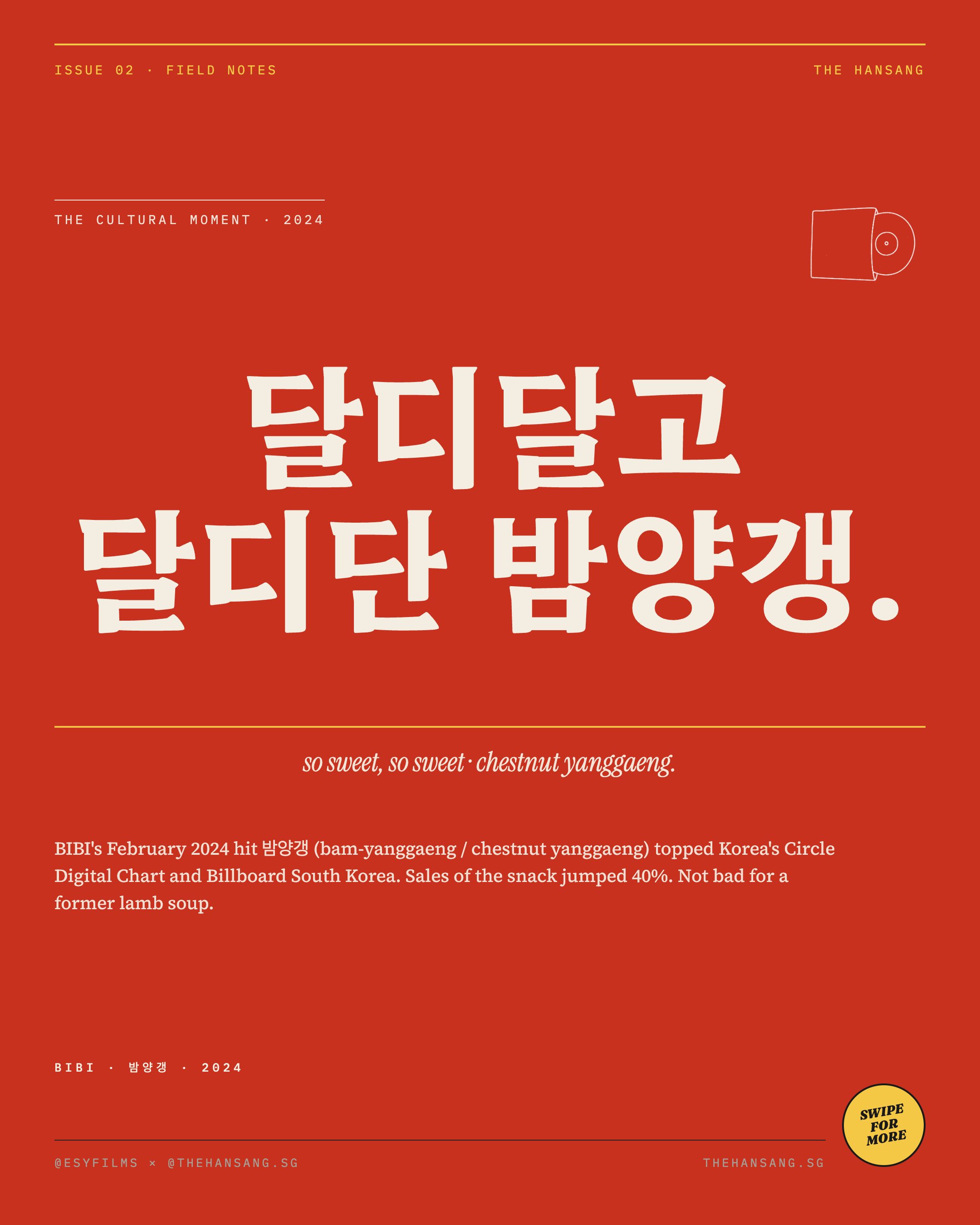
And then, in 2024, BIBI’s hit “밤양갱” (Bam Yanggaeng) turned this ancient dessert into a generation’s earworm. The song went to number one on every Korean chart. Not bad for a former bowl of lamb soup.