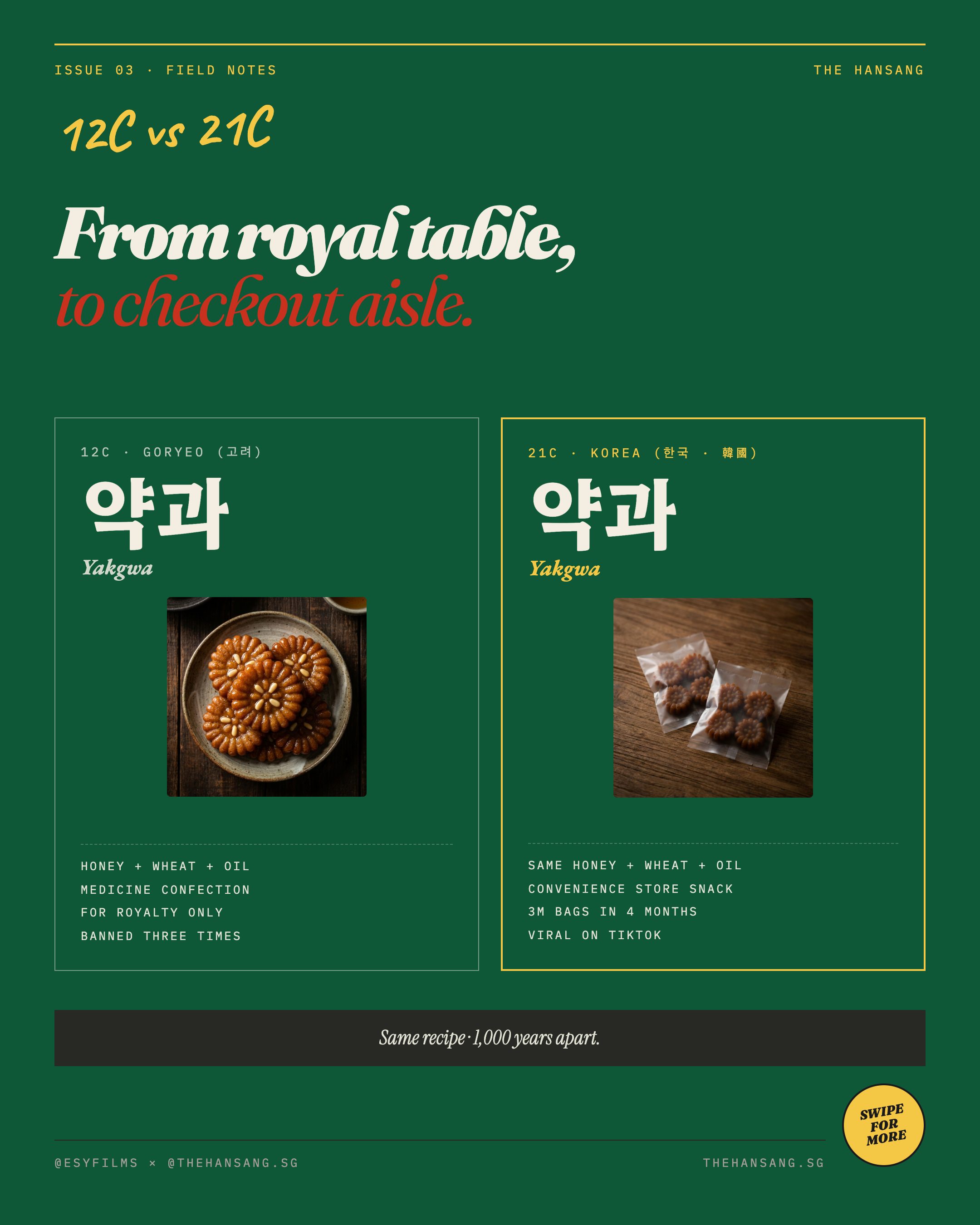
Most desserts are loved. Yakgwa was so loved that Korean kings tried to make it illegal. Three times. Across two different dynasties. And every time, people simply kept making it.
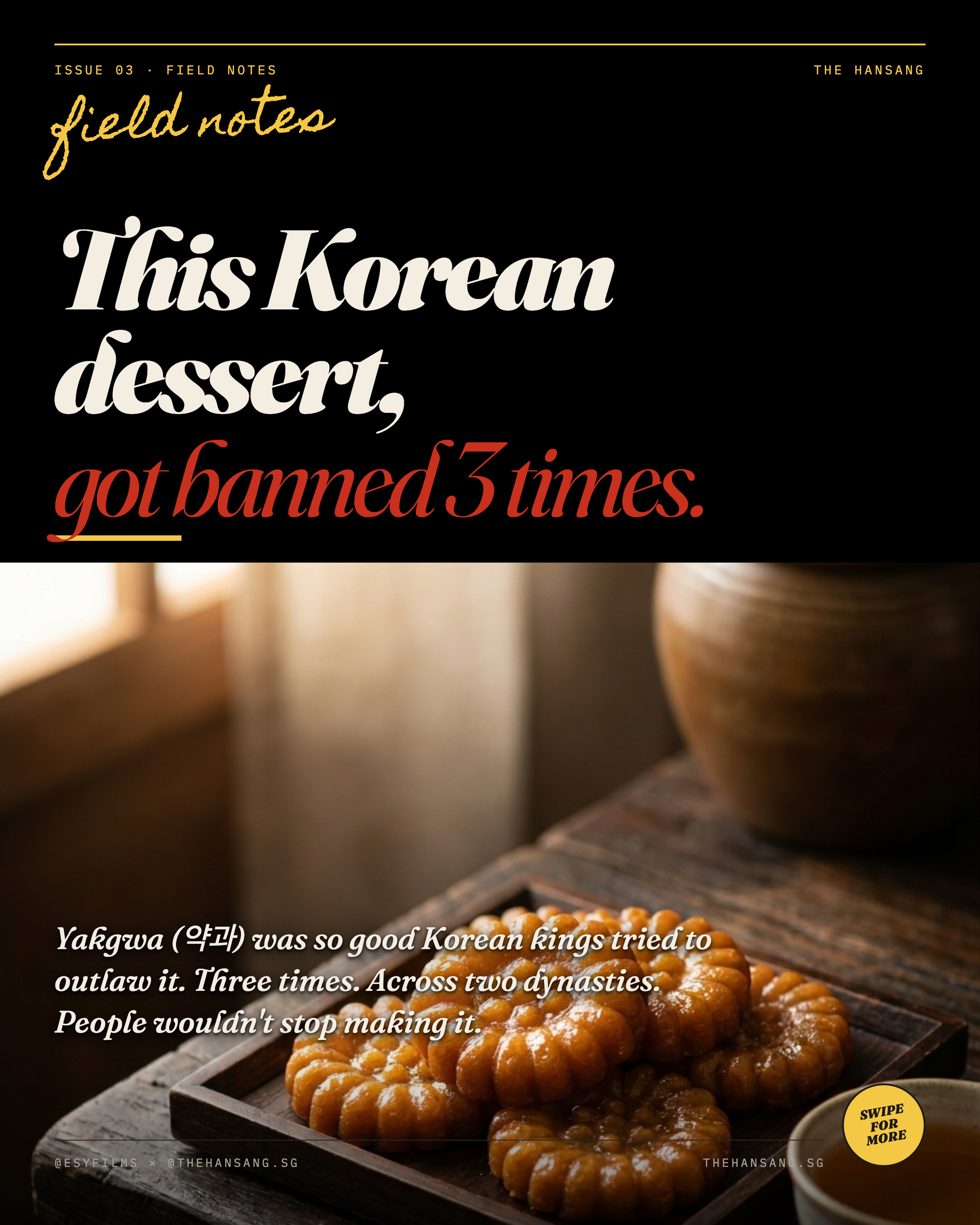
The name tells you why it mattered. Yak means medicine. Gwa means confection. Yakgwa is, literally, a “medicine confection”, and in its time that was not a metaphor.
Three luxuries fried into one cookie
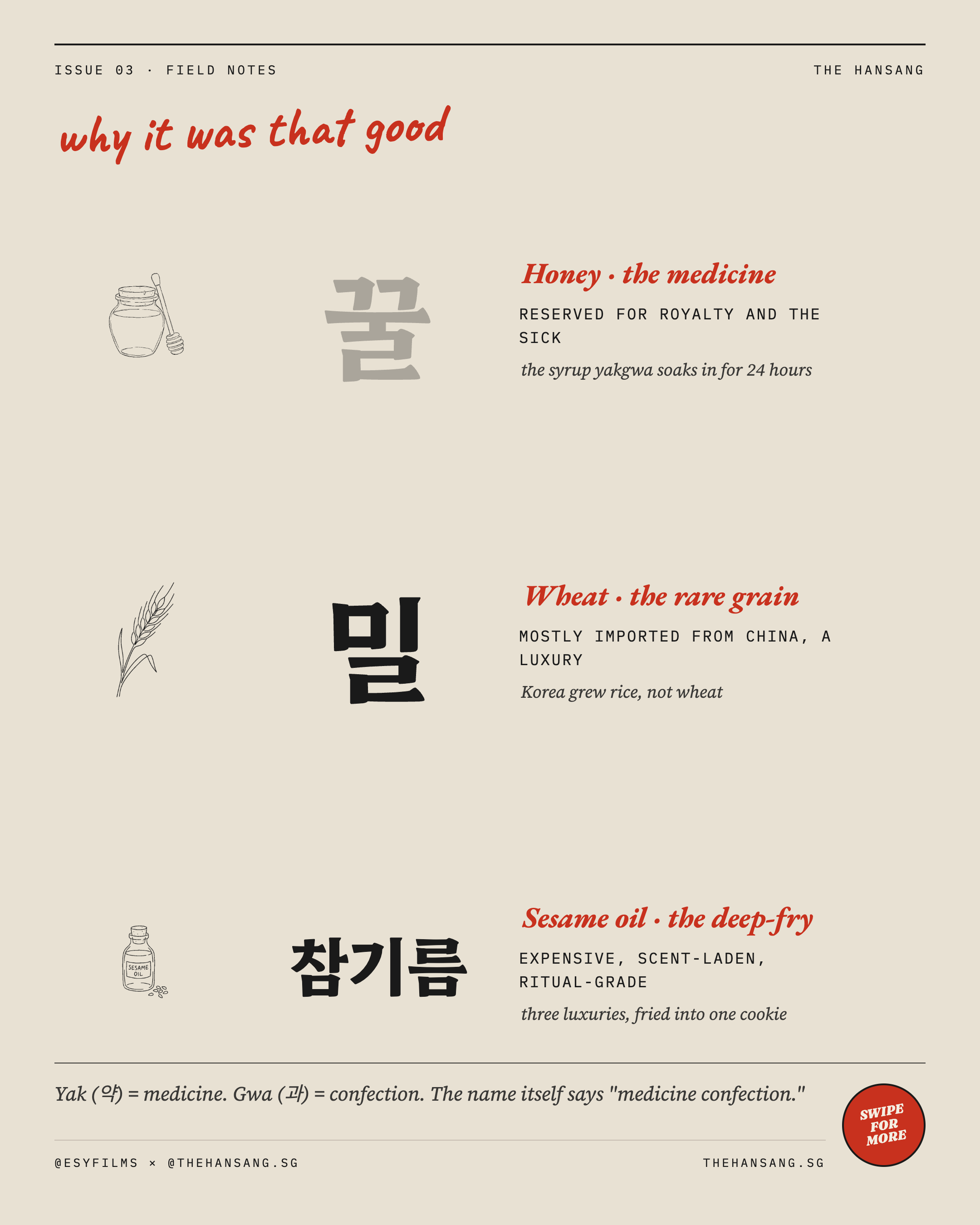
Every ingredient in yakgwa was a small fortune. Honey was treated as medicine, reserved for royalty and the sick, and the cookie soaks in it for a full 24 hours. Wheat was a rare grain, mostly imported from China, because Korea grew rice, not wheat. And the whole thing is deep-fried in sesame oil, an expensive, scent-laden, ritual-grade fat. Three luxuries, fried into a single bite.
When the king said stop
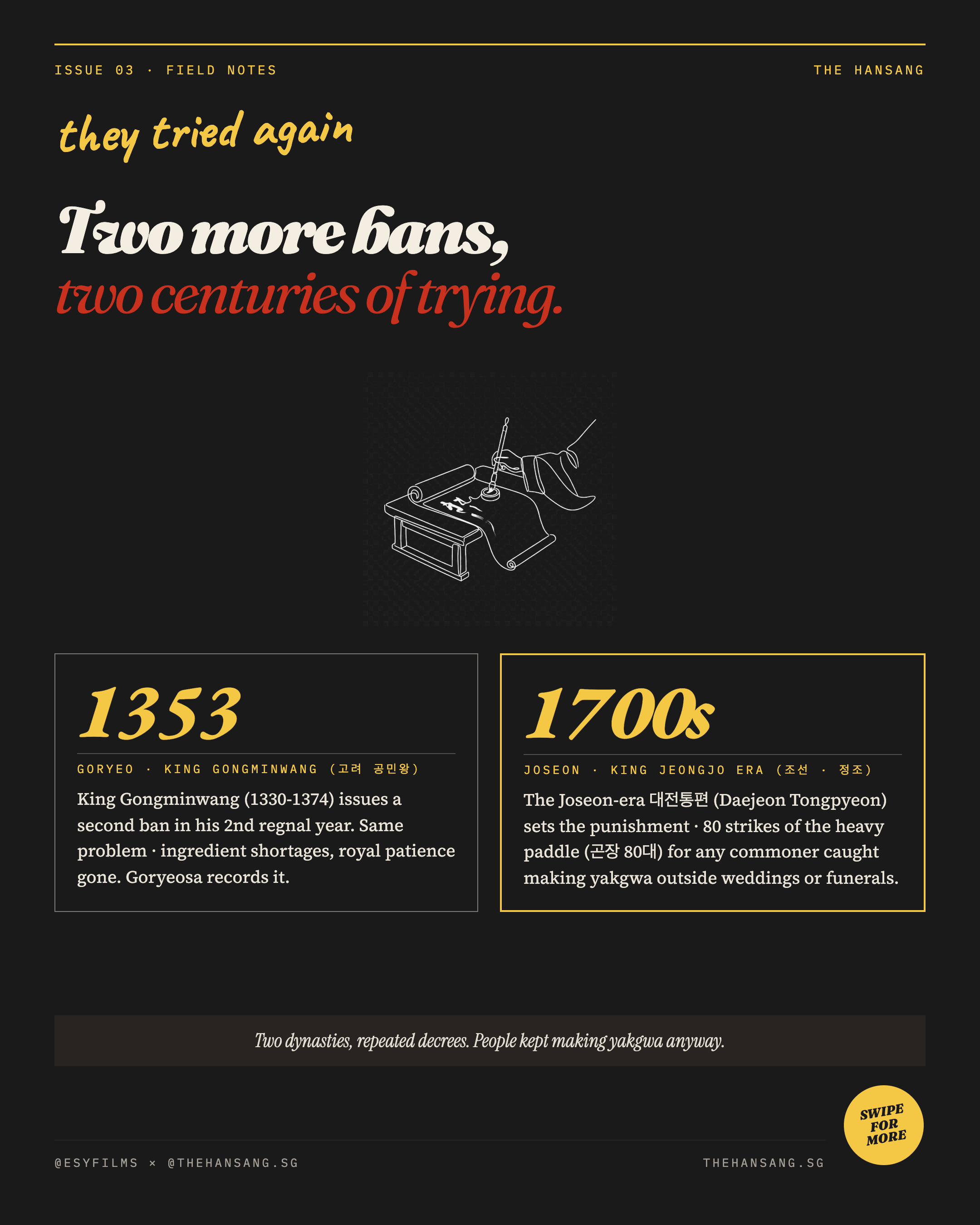
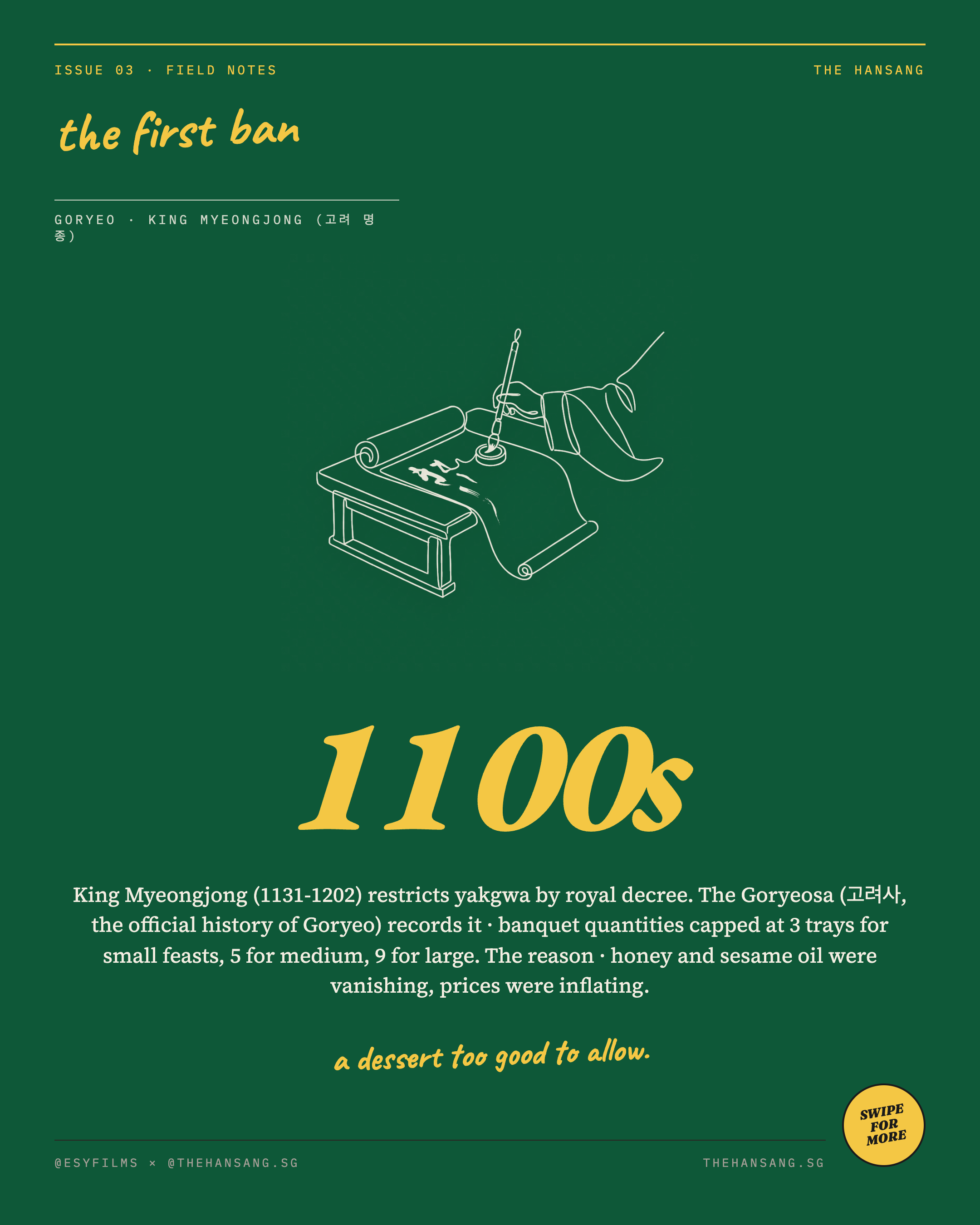
Honey and sesame oil started vanishing from the market, and prices inflated. So Goryeo’s King Myeongjong (1131 to 1202) restricted yakgwa by royal decree. The Goryeosa, the official history of Goryeo, records the limits directly: banquet quantities were capped at three trays for small feasts, five for medium, and nine for large.
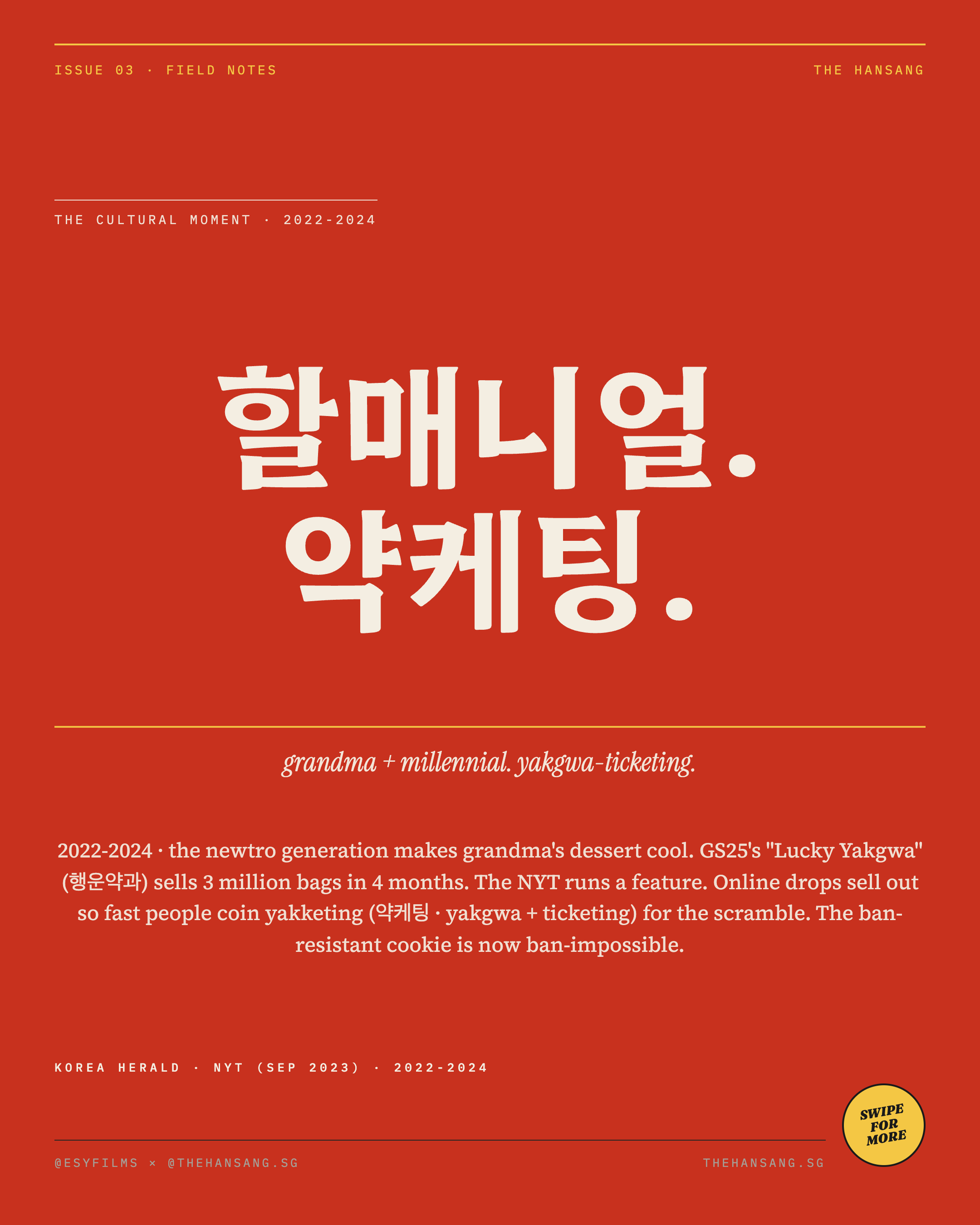
It did not work. The bans came back, across Goryeo and then Joseon, and each time the cookie outlived the law.
Why it never disappeared
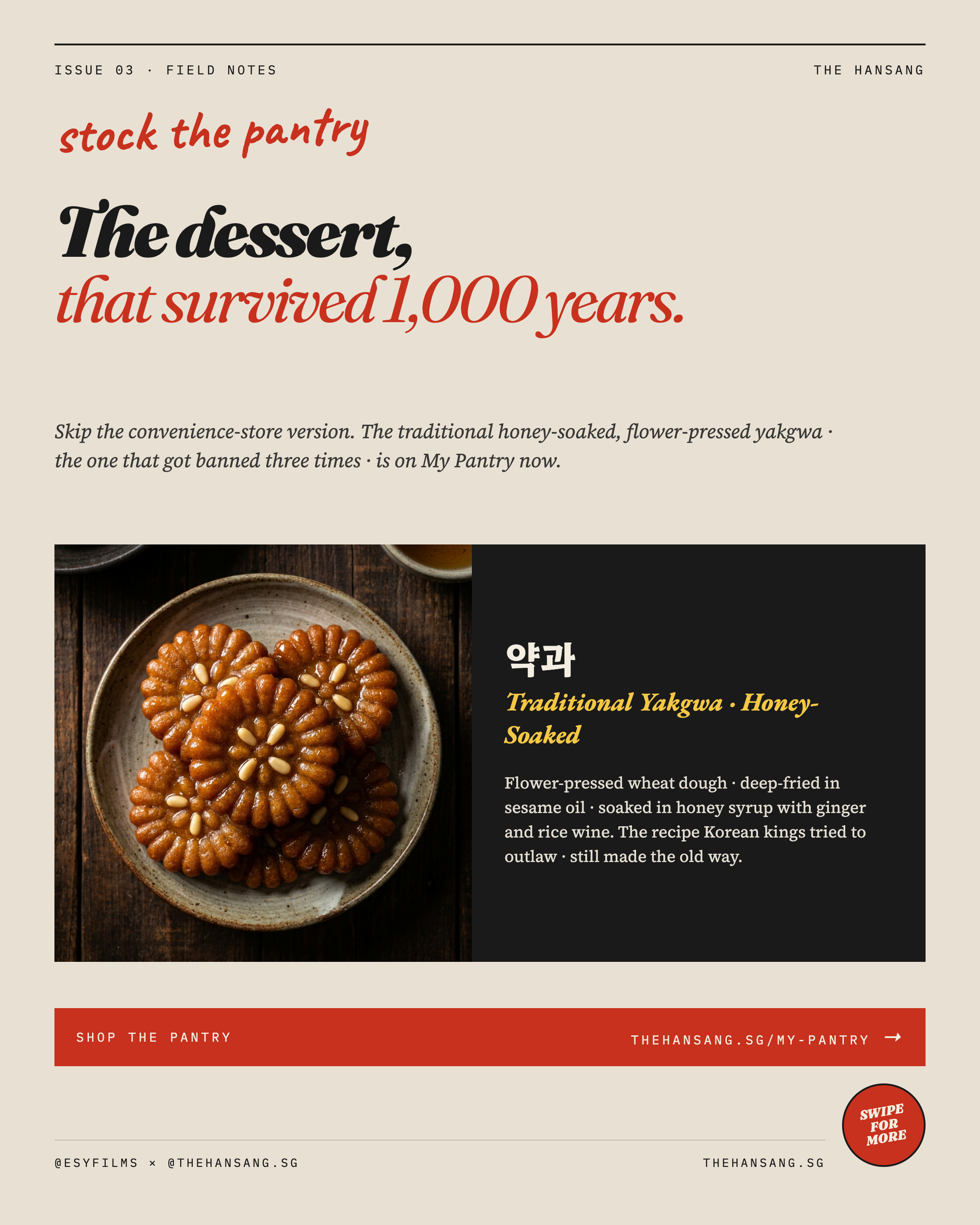

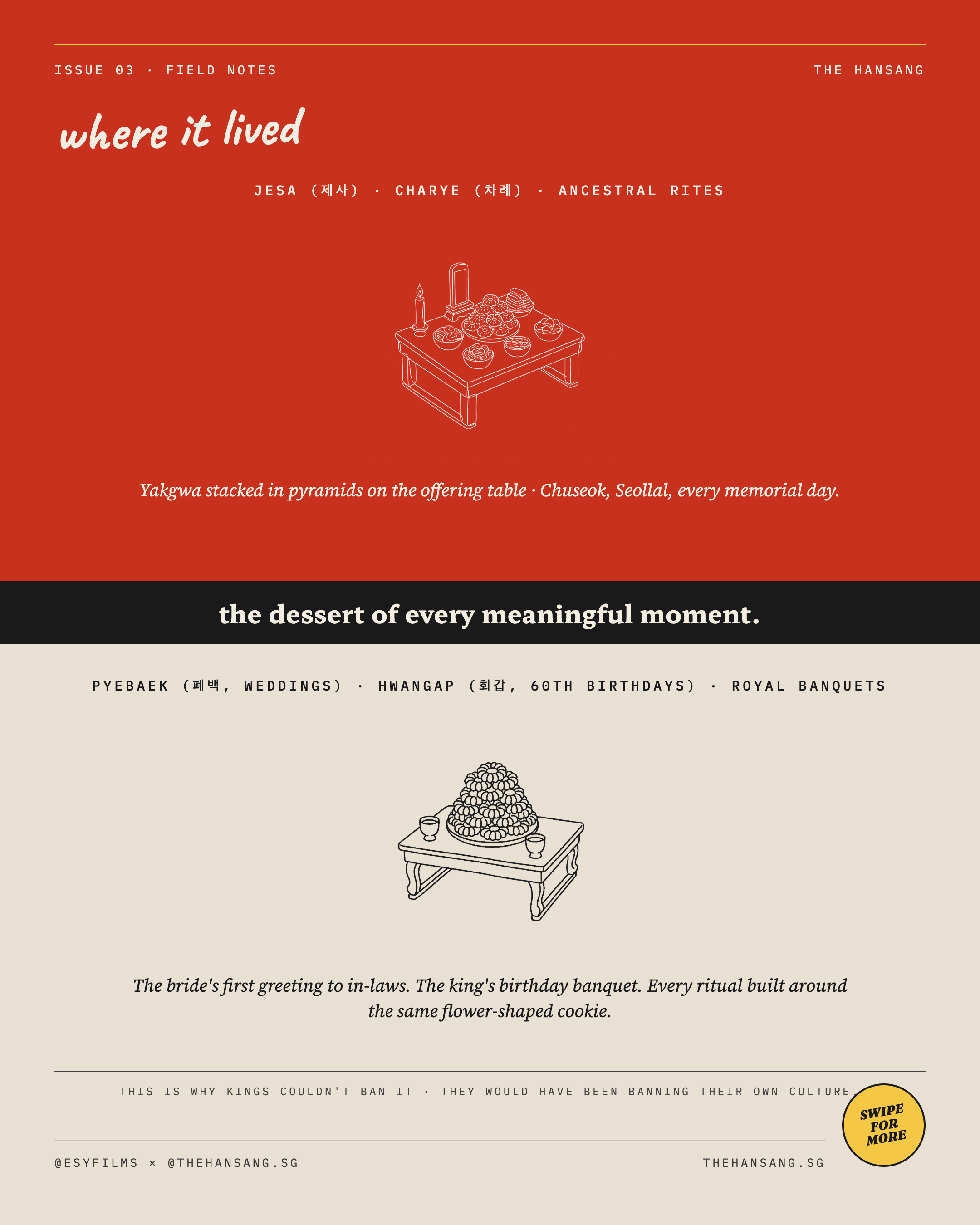
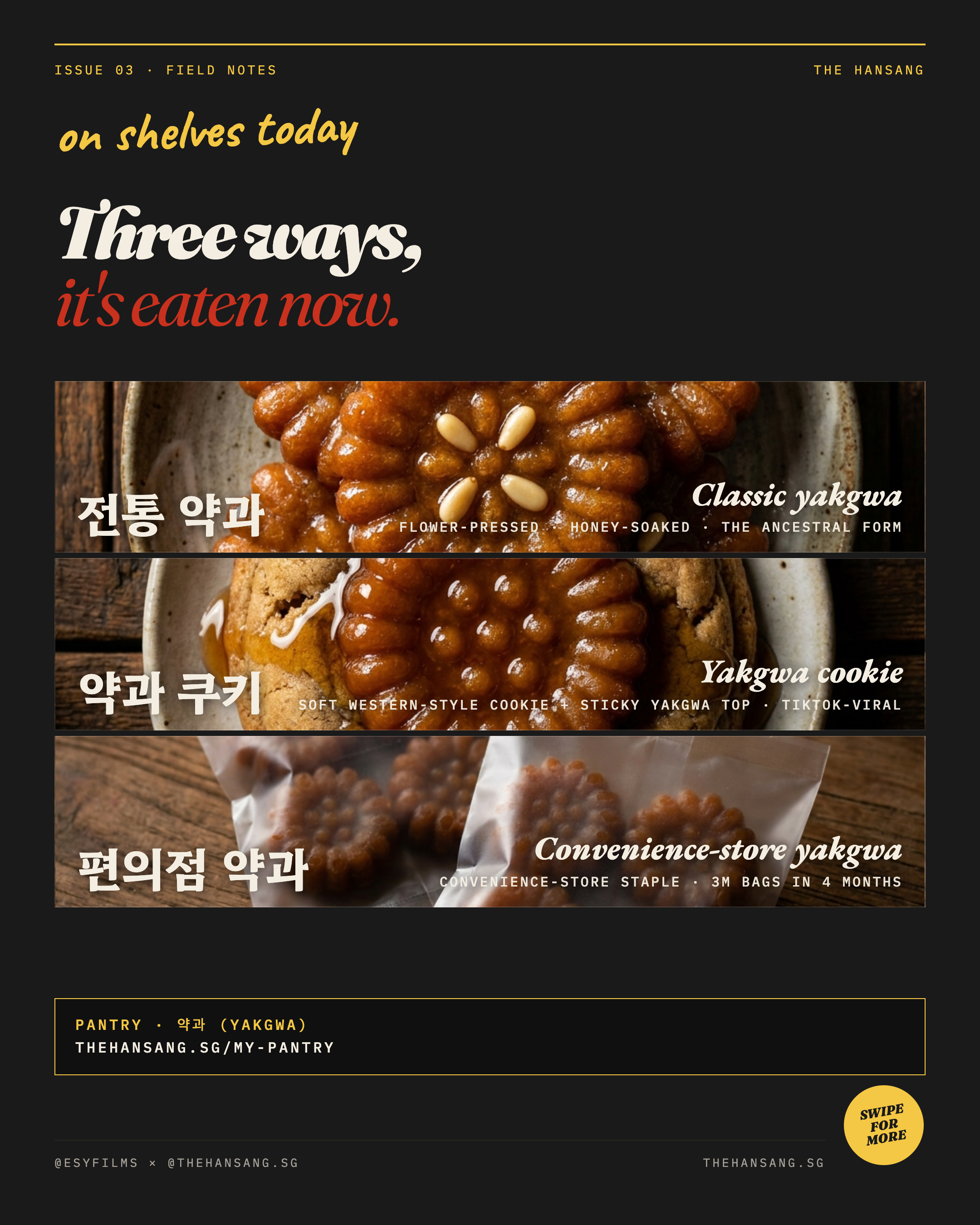
Yakgwa survived because it was never only a treat. It sat at the centre of jesa and charye, the ancestral rites, where the best of what a household had was offered to its ancestors. A food tied that deeply to ritual and respect does not disappear because a king finds it inconvenient. It just keeps getting made.