Ask most people to picture Korean food and they think of red. Gochujang-slicked tteokbokki, fiery stews, deep crimson kimchi. But the heat is the newcomer. Long before chili peppers ever reached the peninsula, Korean cooking was built on something quieter and far older: jang.
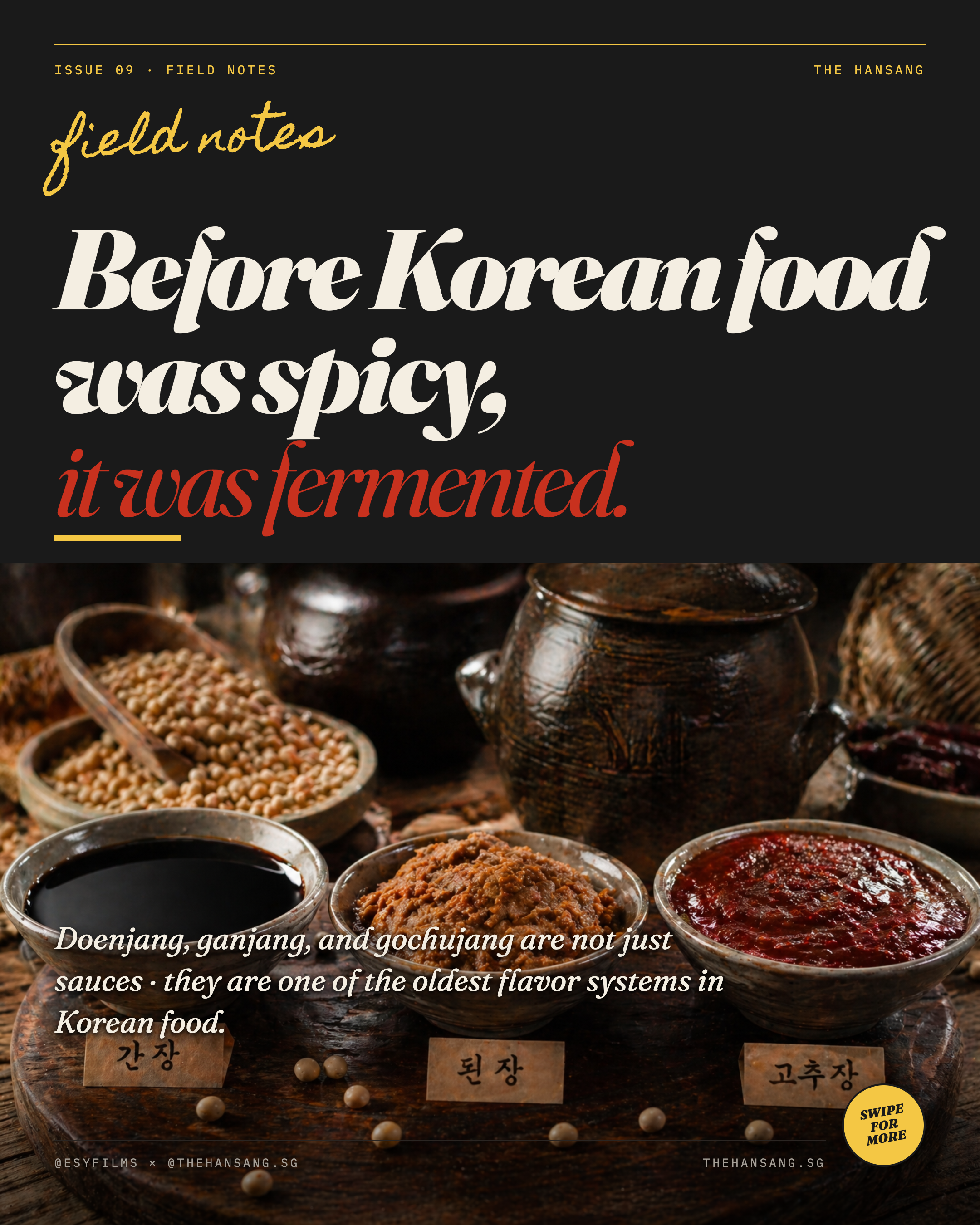
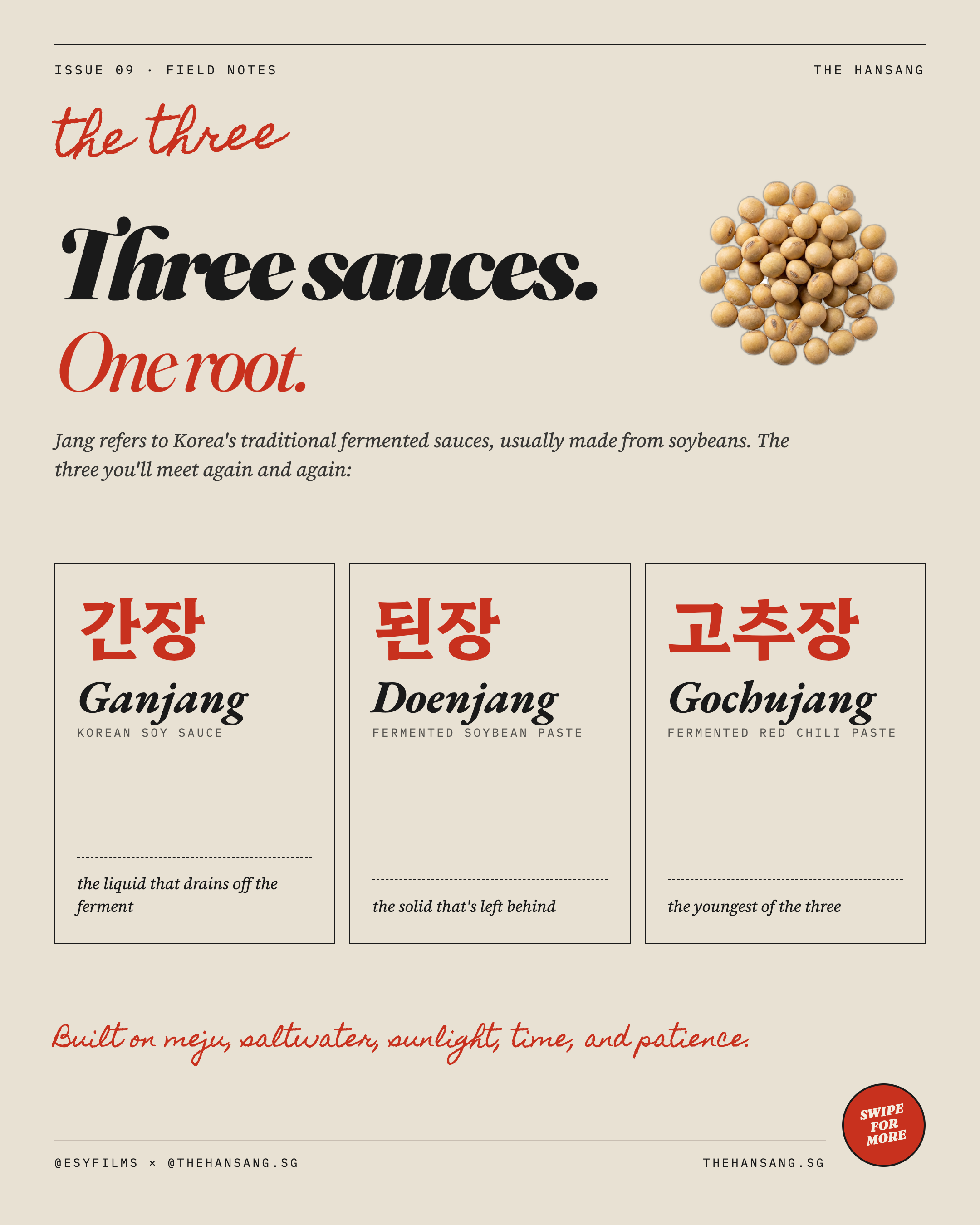
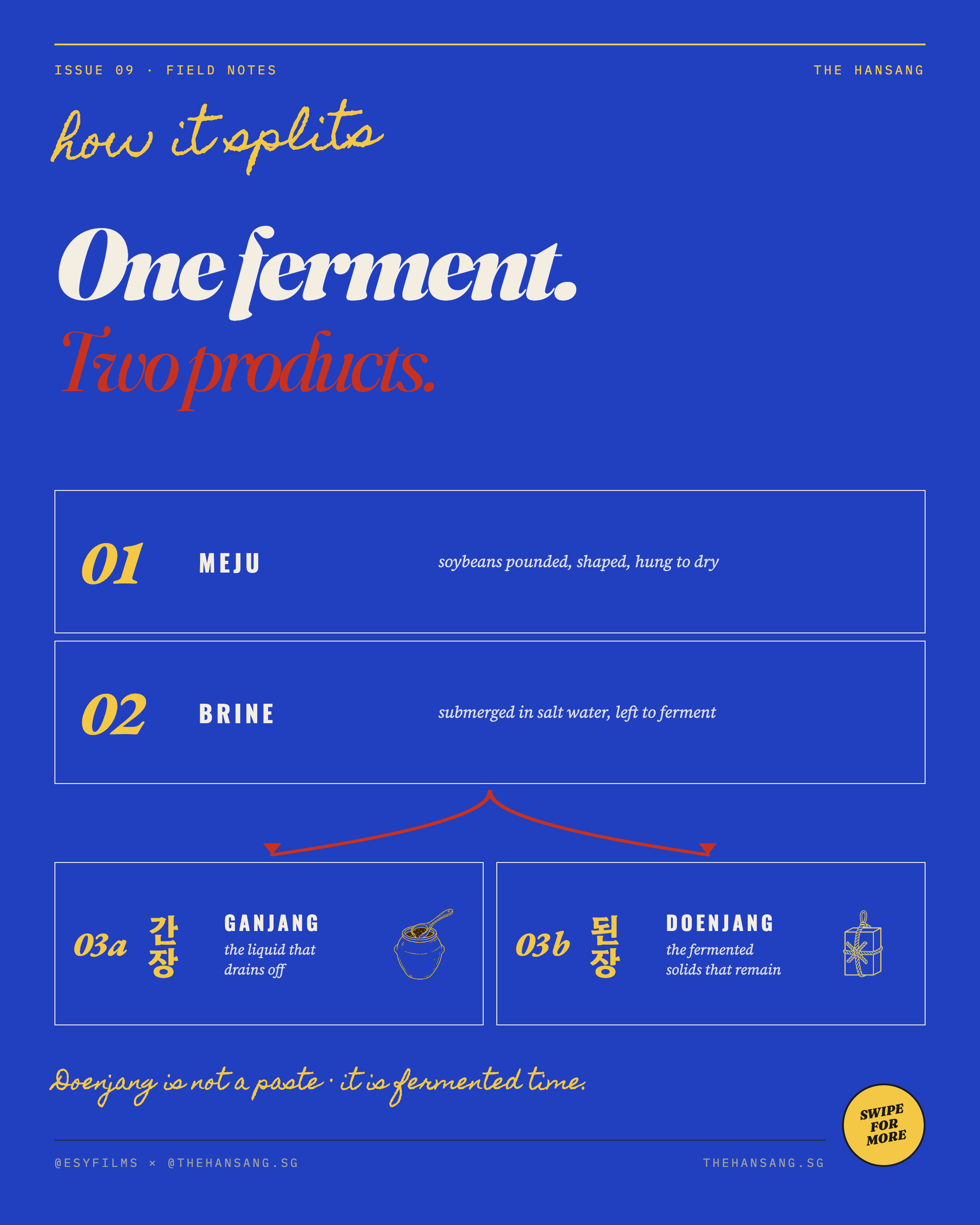
Jang is the family of fermented soybean seasonings that sits at the base of the cuisine. Doenjang, the soybean paste. Ganjang, the soy sauce drawn from it. And much later, gochujang, the red chili paste that everyone now treats as the headliner.
A royal record from 683 AD
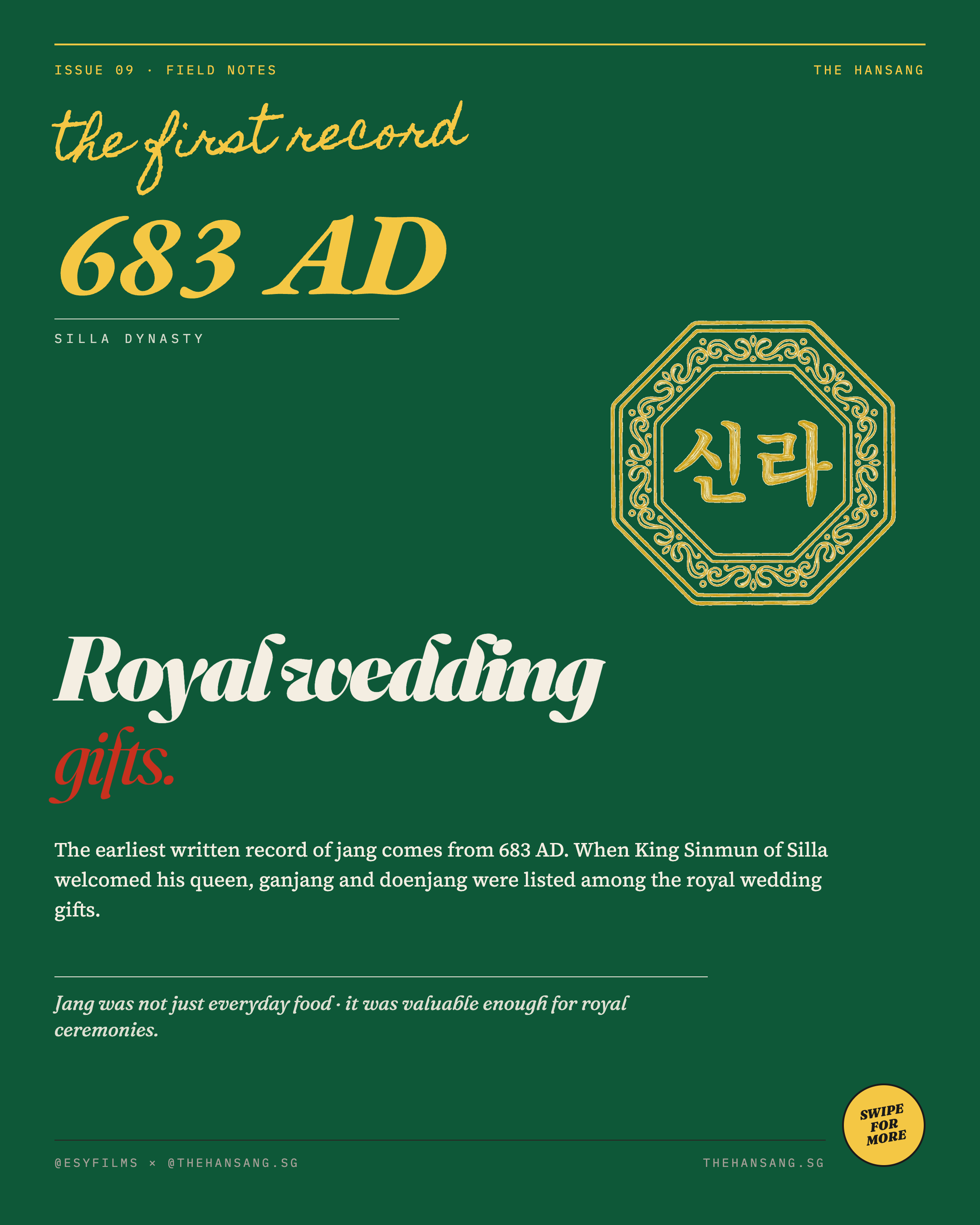
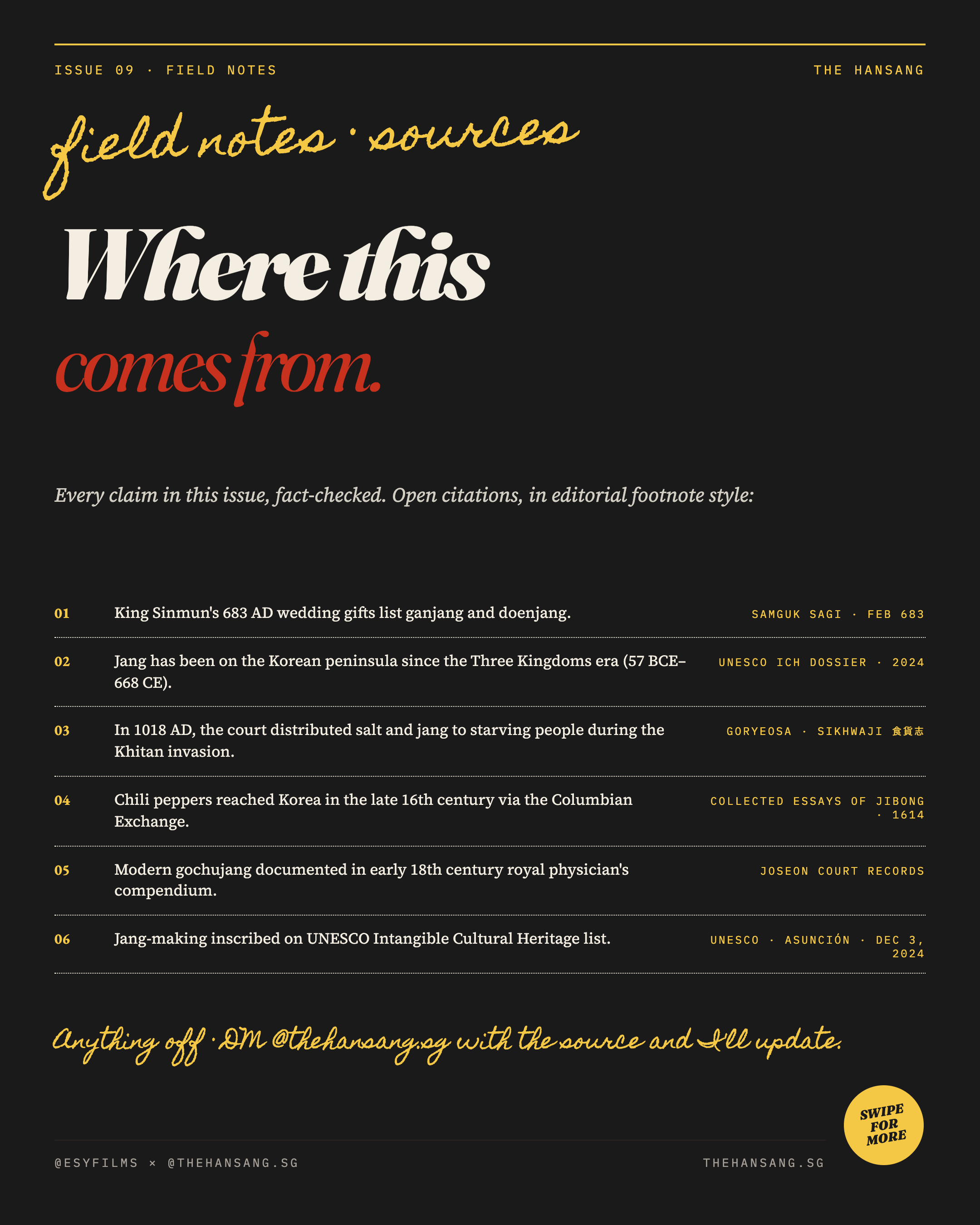
The earliest written record of jang comes from 683 AD. When King Sinmun of Silla welcomed his queen, ganjang and doenjang were listed among the royal wedding gifts. These were not ordinary pantry staples. They were treasures considered fit for a king’s marriage.
Survival rations, not seasoning
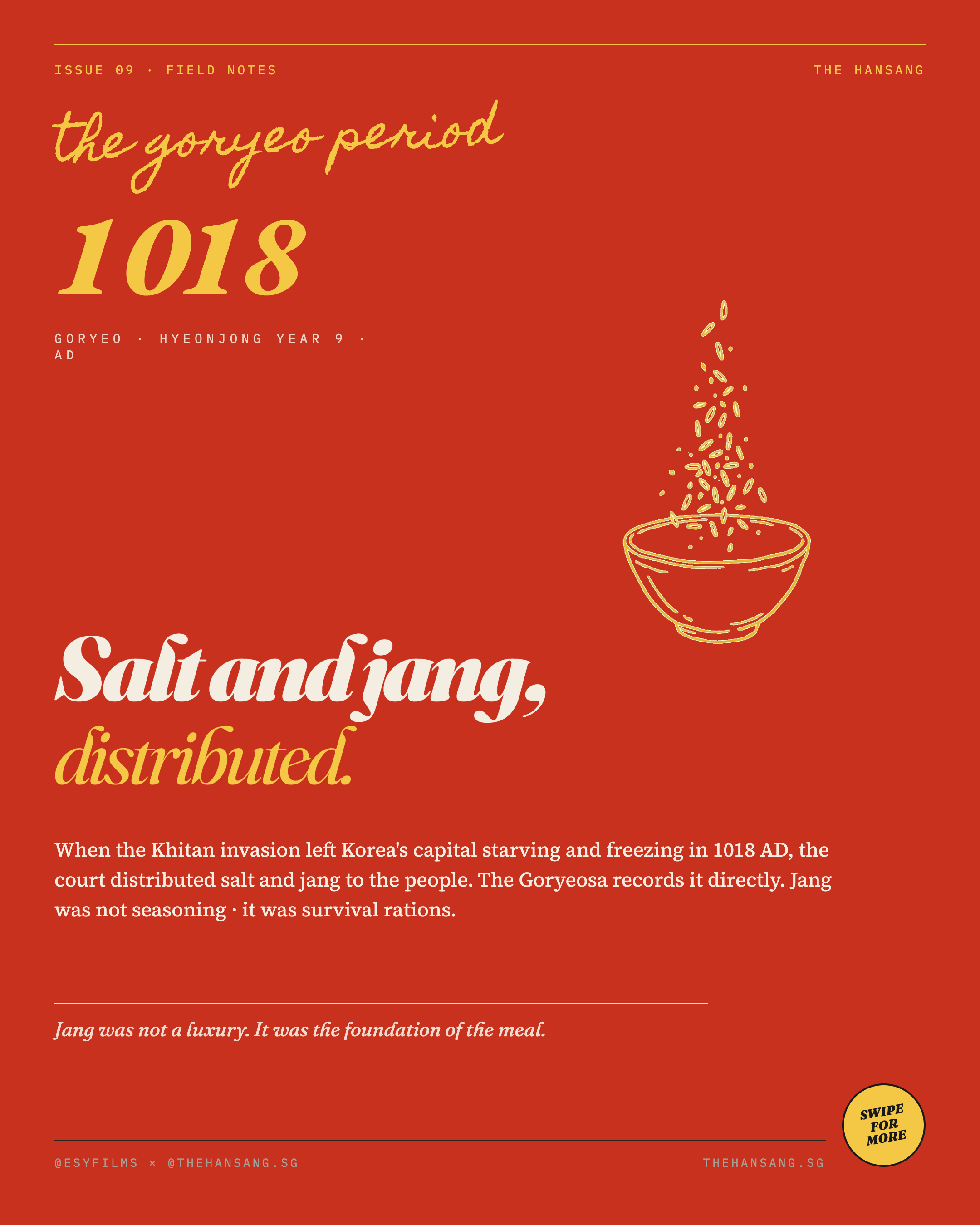
Jang’s value went far beyond flavour. When the Khitan invasion left Korea’s capital starving and freezing in 1018 AD, the court distributed salt and jang to the people. The Goryeosa records it plainly. In that winter, jang was not a condiment. It was survival.
The spice came late
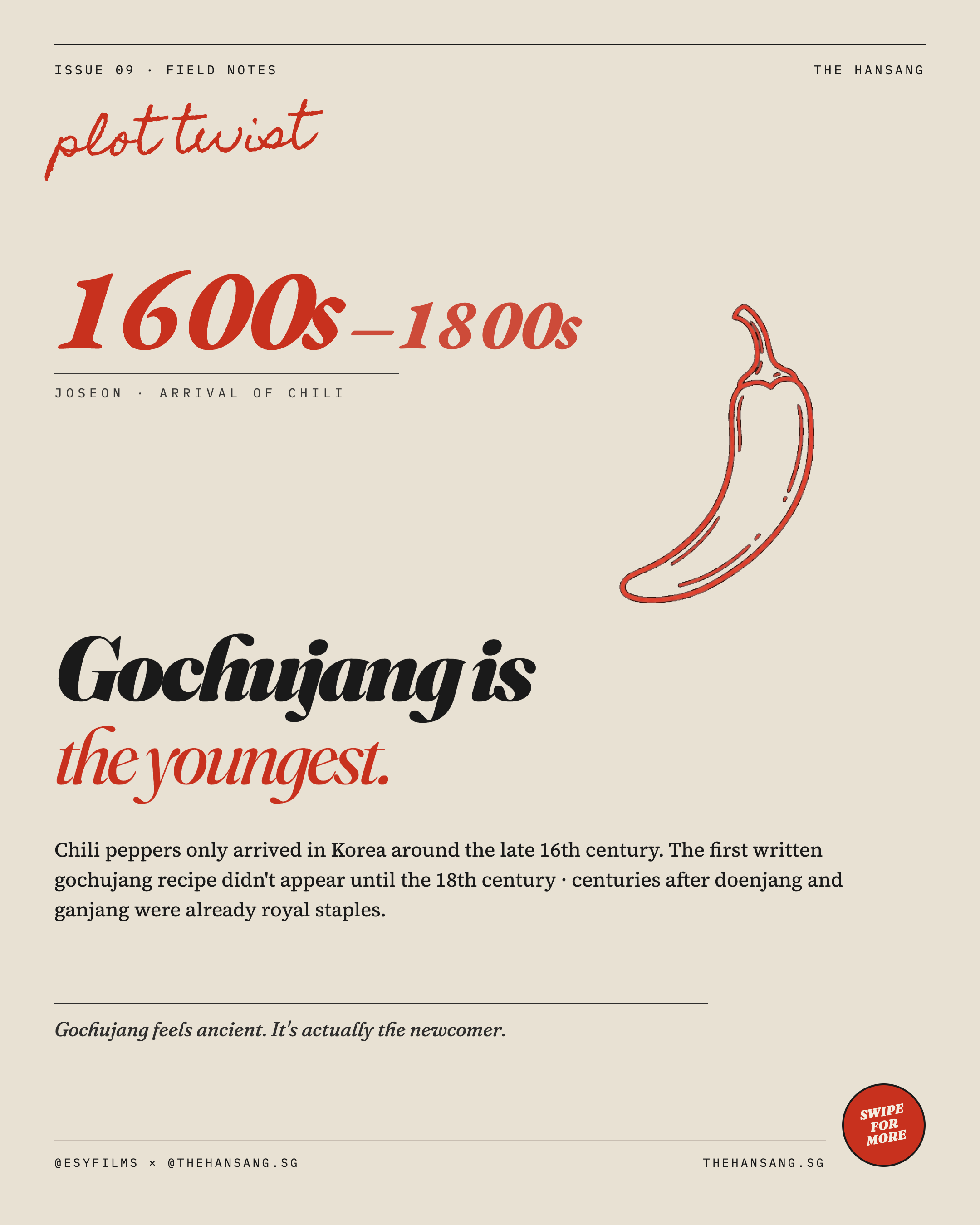
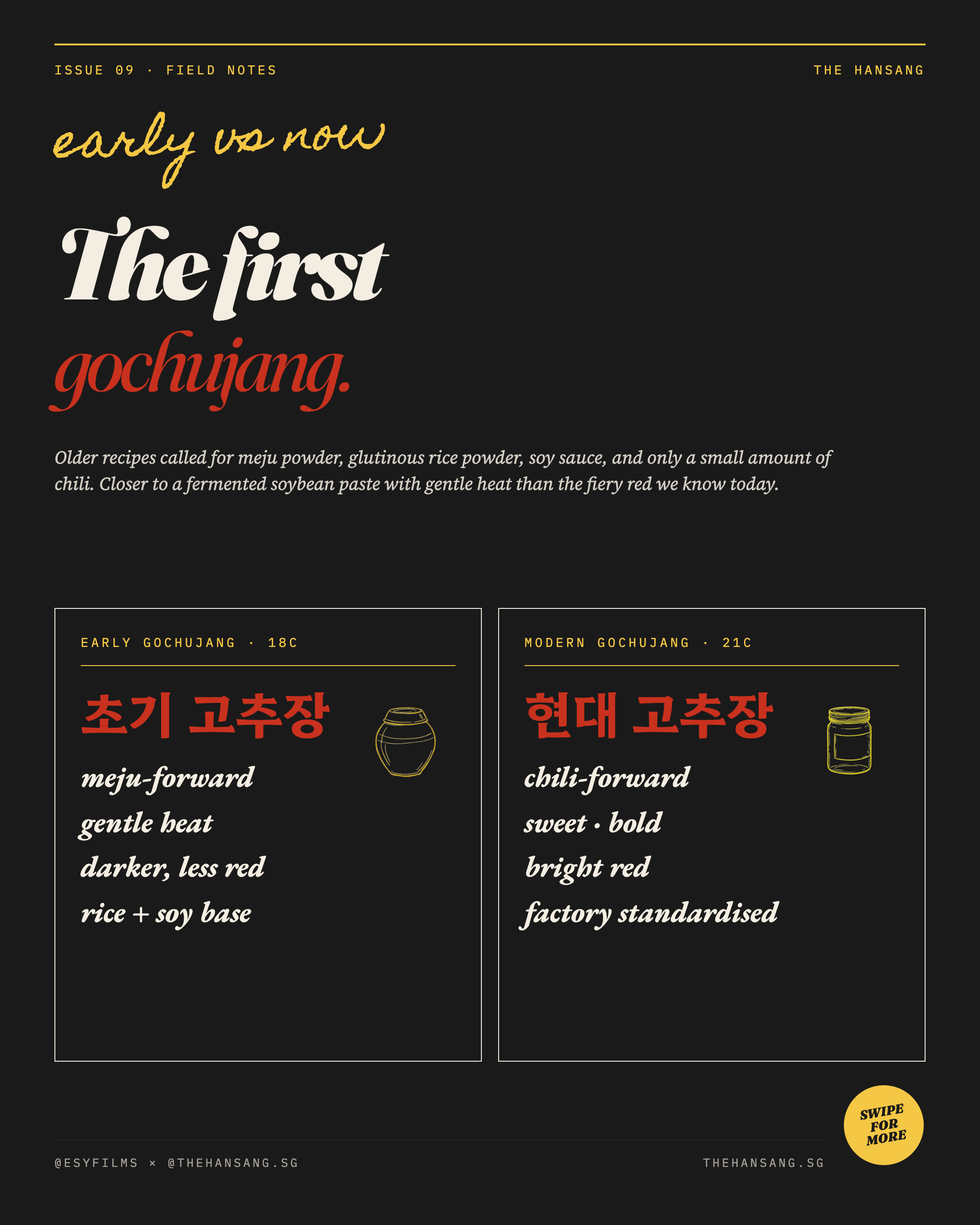
Gochujang feels eternal, but it is the youngest of the three. Chili peppers only arrived in Korea around the late 16th century, and the first written gochujang recipe did not appear until the 18th century, centuries after doenjang and ganjang were already royal staples. The flavour we now think of as definitively Korean is, historically, a recent guest at the table.
A jar that revealed the household
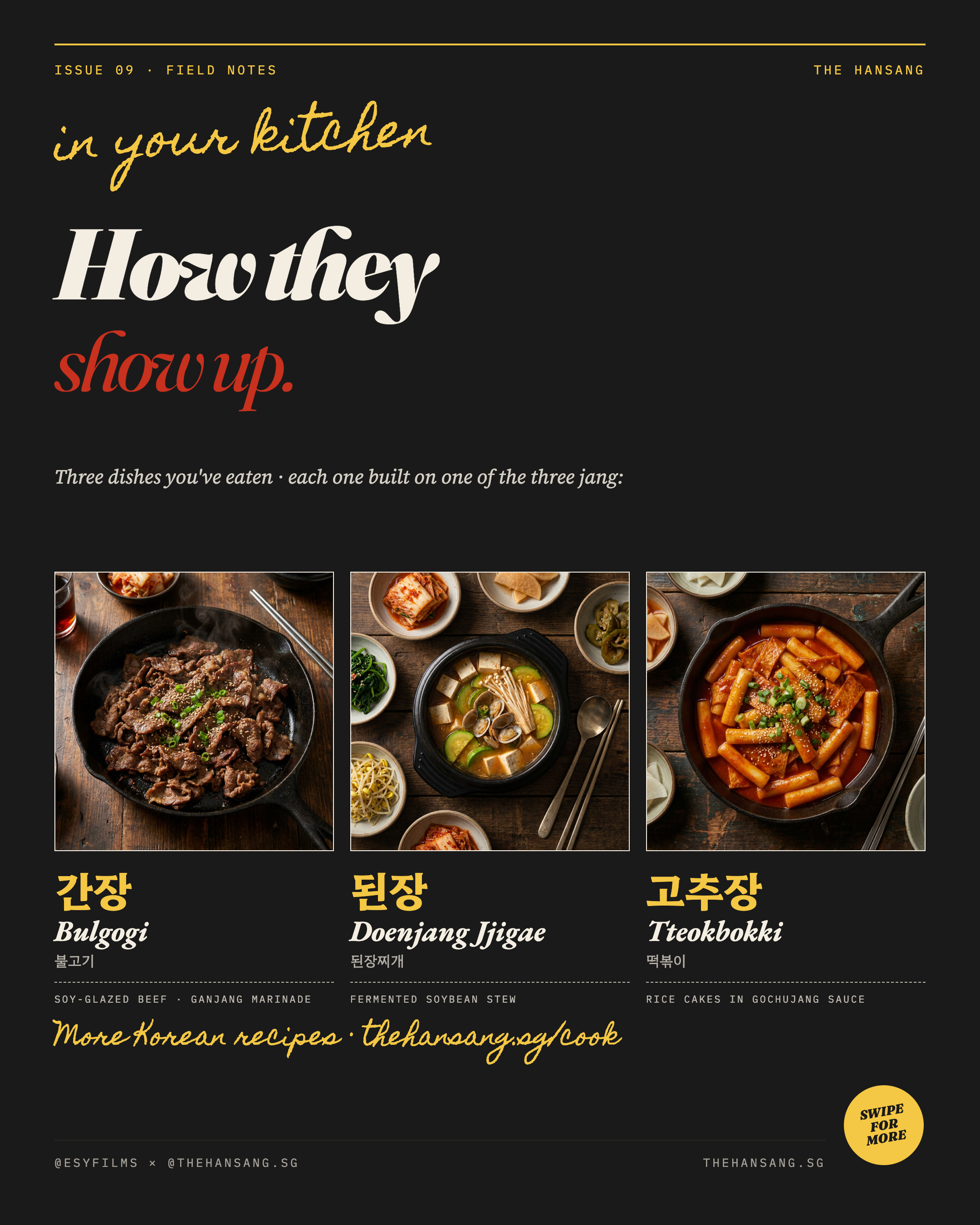
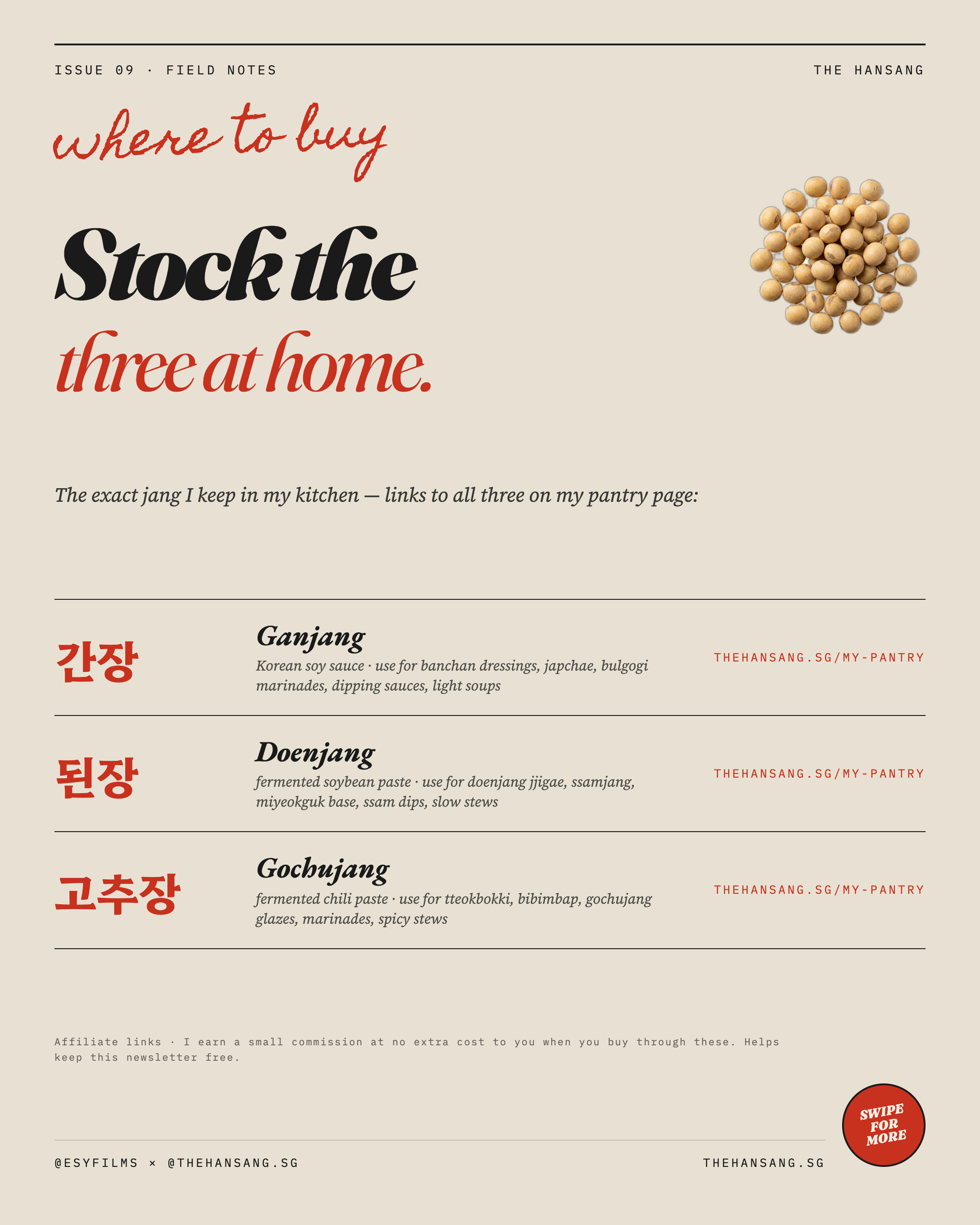
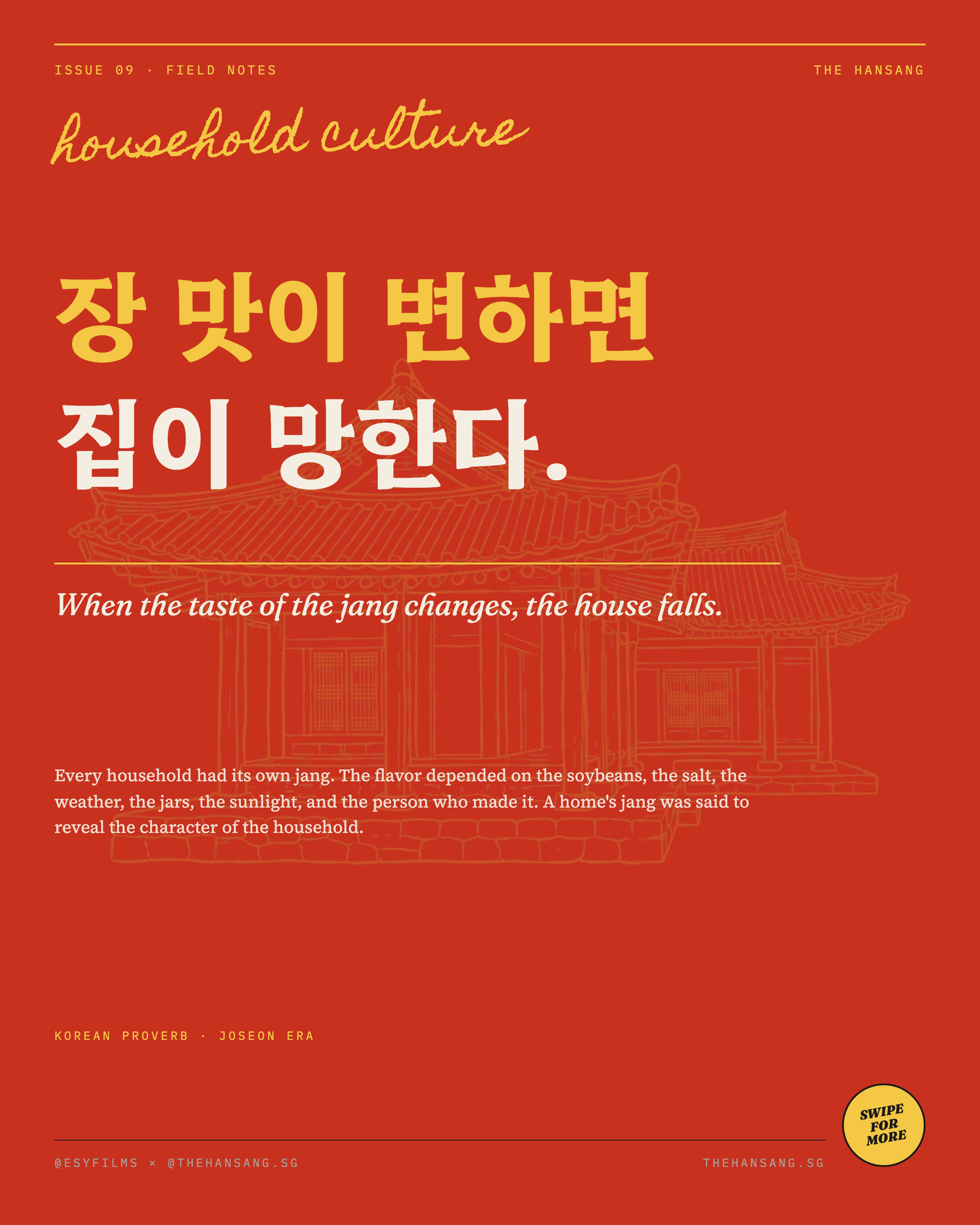
Every household had its own jang. The flavour depended on the soybeans, the salt, the weather, the jars, the sunlight, and the person who made it. A home’s jang was said to reveal the character of the household itself: how careful, how patient, and how generous the family was.
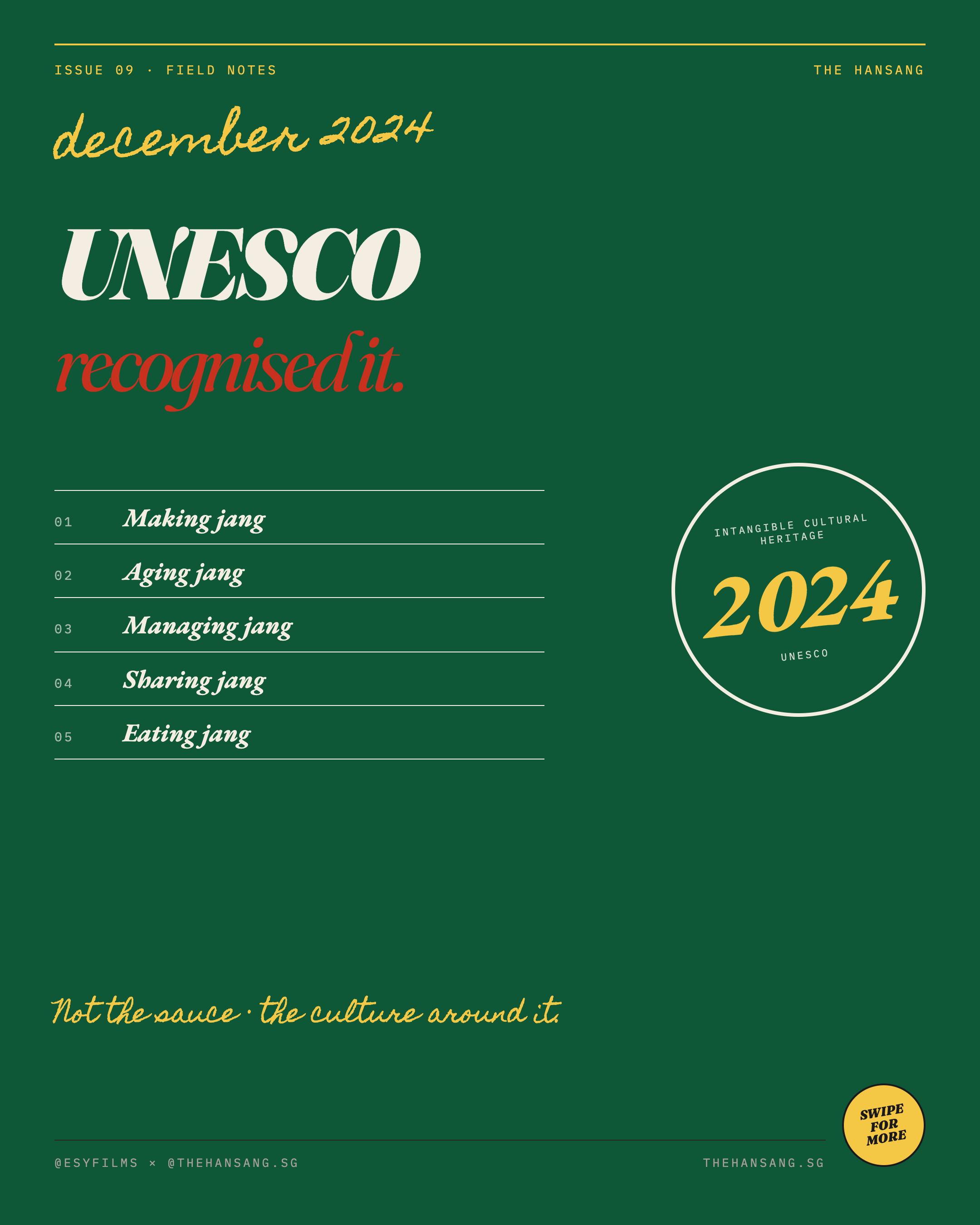
That is why jang was never simply made. It was made, aged, managed, shared, and eaten, a slow cycle that tied a family to its food across seasons and generations.